
Diseases
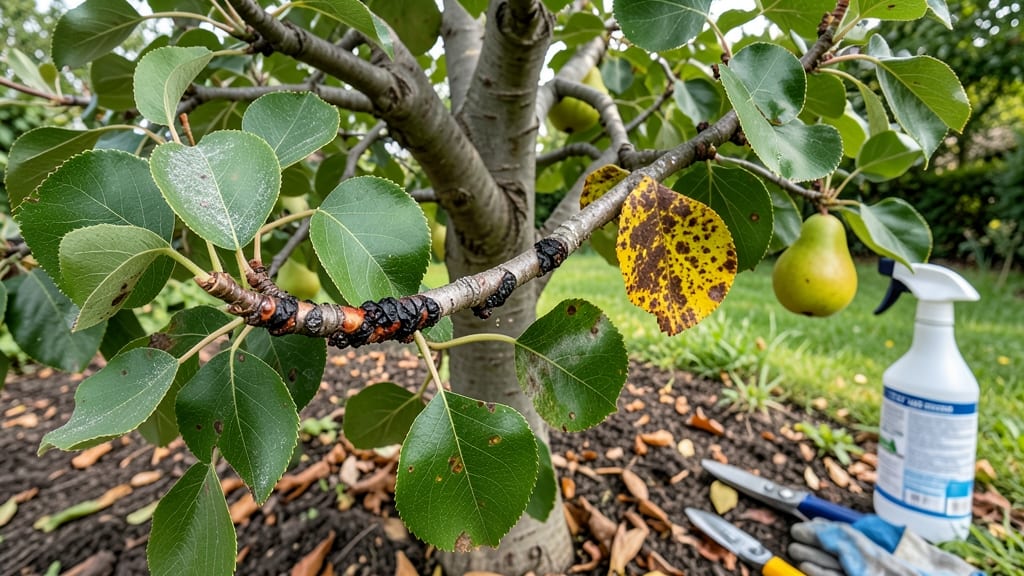
Seeing pictures of pear tree diseases early saves your harvest—and your tree. 🌳 I’ve seen fire blight turn lush branches into blackened skeletons overnight, and powdery mildew smother leaves until they crisp. This guide shows you exactly what to look for, from oily leaf spots to wilting cankers, so you can act before it’s too late.
Most fungal issues start with stress—overwatering, poor airflow, or weak branches after pruning. The good news? Prevention is simple: thin out dense growth, water at the base (not overhead), and pick up fallen fruit before it rots.
I’ve stopped entire outbreaks just by adjusting my care routine after spotting early signs.
You’ll learn to spot the three most destructive diseases—fire blight’s dramatic black streaks, black spot’s tar-like lesions, and powdery mildew’s white dust—plus how to treat them without harsh chemicals.
With these visual clues, you’ll catch problems before they spread, and your tree will reward you with years of sweet, healthy fruit.
Works for backyard orchards, urban yards, or even container-grown pears. The key is acting fast—once you recognize the patterns, you’ll never ignore those first warning signs again. Let’s get your tree back to thriving.
Root Causes Behind Tree Struggles
Pear trees, like any living organism, are susceptible to diseases when their natural defenses weaken. Understanding why these issues arise is the first step to preventing them. Below, we break down the most common culprits—from environmental stress to biological invaders—and explain the science behind their damage.
Pear trees thrive in specific conditions, and when those conditions shift—whether due to weather extremes, poor soil health, or improper care—they become vulnerable to disease.
- Excess Moisture: Prolonged wet conditions (like heavy rain or poor drainage) create the perfect breeding ground for fungal spores. Botryosphaeria and Valsa (canker diseases) flourish in damp bark crevices, while Phytophthora thrives in waterlogged soil, rotting roots and stunting growth.
- Drought Stress: While too much water weakens trees, chronic drought also lowers resistance. Trees under water stress produce fewer defensive compounds, making them easier targets for pests like borers or secondary infections.
- Temperature Swings: Sudden freezes or heatwaves disrupt cellular function. For example, fire blight (Erwinia amylovora) spreads faster in warm, rainy springs, while cold snaps can damage bark, creating entry points for pathogens.
Actionable Fix: Improve drainage with raised beds or mulch (but keep mulch 3–4 inches away from the trunk). Use drip irrigation to avoid wetting foliage, and monitor soil moisture with a moisture meter.
Diseases don’t just appear—they’re invited by pathogens that exploit weaknesses. Here’s how the most common offenders gain a foothold:
| Disease | Pathogen Type | How It Starts |
|---|---|---|
| Fire Blight | Bacteria (Erwinia amylovora) | Spreads via bees, rain, or pruning tools from infected blossoms or cankers. Warm, wet conditions accelerate bacterial ooze. |
| Black Rot | Fungus (Guignardia bidwellii) | Overwinters in fallen leaves or mummified fruit. Spores splash onto new leaves during rainy seasons, causing dark, V-shaped lesions. |
| Powdery Mildew | Fungus (Podosphaera leucotricha) | Thrives in shady, humid conditions. Spores land on leaves and germinate within 24 hours if humidity stays above 75% for 6+ hours. |
| Pear Scab | Fungus (Venturia nashicola) | Requires free water on leaves for 9+ hours to infect. Spores survive in bud scales over winter, then release in spring rains. |
Pro Tip: 💡 Sanitation is key. Remove and destroy (don’t compost) infected leaves, fruit, and prunings. Use sterilized tools between cuts to avoid spreading bacteria.
Even the best-intentioned gardener can accidentally create conditions that invite disease. Here’s how common practices backfire:
- Overhead Watering: Splashing water onto leaves or bark spreads fungal spores like pear scab or powdery mildew. Drip irrigation or soaker hoses deliver water to roots without wetting foliage.
- Poor Pruning Timing: Cutting during wet weather or dormancy (late fall/winter) opens wounds when trees are least able to heal, inviting fire blight or canker infections.
- Over-Fertilizing Nitrogen: While nitrogen promotes leafy growth, excessive use makes trees soft and susceptible to pests. Balance with potassium and phosphorus to strengthen cell walls.
- Ignoring Varietal Susceptibility: Some pear varieties (like Bartlett) are prone to fire blight, while others (like Kieffer) resist it. Choose disease-resistant cultivars for your climate.
Quick Fix: ⏰ Prune in dry, cool weather (early morning or late afternoon). Seal large cuts with pruning sealant (though small cuts <1 inch heal faster without it).
By addressing these root causes—whether through environmental adjustments, pathogen prevention, or smart gardening practices—you can dramatically reduce the risk of pear tree diseases. The next step? Learn to spot the early warning signs before they spread.
How to Fix Pear Tree Illnesses
Once you’ve identified the disease plaguing your pear tree, it’s time to act! Early intervention is key to saving your tree and preventing future outbreaks. Below are practical, step-by-step solutions tailored to the most common fungal and bacterial diseases, along with preventive tips to keep your tree thriving.
---
Fire blight (Erwinia amylovora) is aggressive but manageable with quick action.
🔥 Step 1: Prune Infected Branches - Use sterilized pruning shears (wipe with rubbing alcohol between cuts). - Cut 6–12 inches below the blackened, oozing branches—healthy wood is usually lighter green. - Dispose of infected branches in the trash (not compost) to prevent reinfection.
🍳 Step 2: Apply Copper-Based Bactericide - Spray copper fungicide (like Copper Sulfate or Bordeaux Mixture) on pruned wounds and nearby foliage. - Reapply every 10–14 days during blooming and fruiting seasons.
👨🍳 Step 3: Boost Tree Health - Water deeply at the base (avoid overhead spraying). - Fertilize with balanced nitrogen, phosphorus, and potassium to strengthen immunity.
✨ Prevention Tip: - Plant resistant varieties like ‘Seckel’ or ‘Moonglow’ pears. - Remove volunteer shoots (suckers) from infected trees—they can harbor bacteria.
---
Black spot (Diplocarpon mespili) thrives in humid conditions but can be controlled with consistent care.
🔪 Step 1: Remove Severely Infected Leaves - Rake and compost or bag fallen leaves (do not leave them near the tree). - Trim heavily spotted branches to improve airflow.
🌡️ Step 2: Apply Fungicide Early - Use sulfur-based or neem oil fungicides (organic options). - Spray before bud break in early spring, then every 7–10 days during wet seasons.
🎯 Step 3: Improve Air Circulation - Thin out dense branches to reduce humidity buildup. - Water in the morning so leaves dry quickly.
💡 Pro Tip: - Avoid overhead irrigation—use drip systems instead.
---
Powdery mildew (Podosphaera leucotricha) is unsightly but rarely fatal—prevention is easier than cure.
🥘 Step 1: Clean Up Debris - Remove mummified fruits and fallen leaves from the base. - Prune for sunlight—thick canopies trap moisture.
🌿 Step 2: Spray Baking Soda Solution - Mix 1 tsp baking soda + 1 tbsp horticultural oil + 1 gallon water. - Spray every 7–10 days (especially after rain).
🌡️ Step 3: Encourage Natural Predators - Ladybugs and lacewings feed on mildew spores—plant companion flowers like marigolds.
✨ Prevention Tip: - Space trees 8–10 feet apart for better airflow.
---
Canker (Nectria or Botryosphaeria) creates sunken, oozing wounds—aggressive pruning is critical.
⏰ Step 1: Prune in Dry Weather - Cut 4–6 inches below the canker edge (healthy wood is smooth and greenish). - Sterilize tools between cuts to avoid spreading spores.
🔪 Step 2: Seal Wounds (Optional) - Apply pruning sealant (like Tanglefoot Tree Wound Pruning Sealer) to large cuts.
🌿 Step 3: Monitor for Regrowth - If the tree sprouts new growth near the cut, it’s healing. - Do not fertilize heavily—stressed trees are more susceptible.
💡 Pro Tip: - Plant disease-resistant varieties like ‘Kieffer’ pears if canker is recurrent.
--- Regardless of the disease, these habits will fortify your pear tree:
✅ Sanitation: Remove fallen fruit, leaves, and debris year-round. ✅ Proper Spacing: Plant trees 6–10 feet apart to reduce humidity. ✅ Watering Wisdom: Deep watering at the base (avoid wetting foliage). ✅ Fungicide Schedule: Apply preventative sprays in early spring and fall. ✅ Soil Health: Test soil pH (6.0–7.0 is ideal) and amend with compost.
--- By acting fast and methodically, you can reverse damage and protect your pear tree for years of bountiful harvests. 🍐🌱
Frequently asked questions about pear tree diseases
How can I tell the difference between fire blight and canker?
Fire blight shows as blackened, oozing streaks on branches and leaves, often with a sheen of bacterial ooze in warm, wet weather. Canker appears as sunken, cracked wounds with raised edges and may ooze gum-like sap. The key difference? Fire blight spreads rapidly through the tree’s vascular system, while canker stays localized to specific branch areas.
Can I use the same fungicide for all pear tree diseases?
No—fungicides target specific pathogens. Copper-based sprays work for fire blight (bacterial), while sulfur or neem oil control powdery mildew and black spot (fungal). Always check the label for the exact disease you’re treating. For organic solutions, baking soda mixes help mildew, but won’t stop bacterial infections like fire blight.
What’s the fastest way to stop powdery mildew from spreading?
Immediately remove all infected leaves and prune for better airflow. Then spray a baking soda solution (1 tsp baking soda + 1 tbsp oil + 1 gallon water) every 7 days during humid conditions. Reduce overhead watering and avoid dense plantings—spreading trees 6–8 feet apart cuts humidity where mildew thrives.
Why does my pear tree keep getting the same disease every year?
Recurring issues usually mean poor sanitation or environmental conditions aren’t changing. Check for: leftover infected debris (don’t compost it!), overhead watering that spreads spores, or crowded branches trapping moisture. Test your soil pH—imbalanced levels weaken defenses. Switch to disease-resistant varieties like ‘Kieffer’ if problems persist.
Is it safe to eat fruit from a diseased pear tree?
Only if the disease is contained to leaves/branches (like powdery mildew) and hasn’t reached the fruit. Fire blight or black rot on fruit means discard it—these diseases can make fruit unsafe. When in doubt, peel fruit from trees with leaf/bark issues and cook thoroughly, but never eat fruit with visible lesions or ooze.