
Pruning
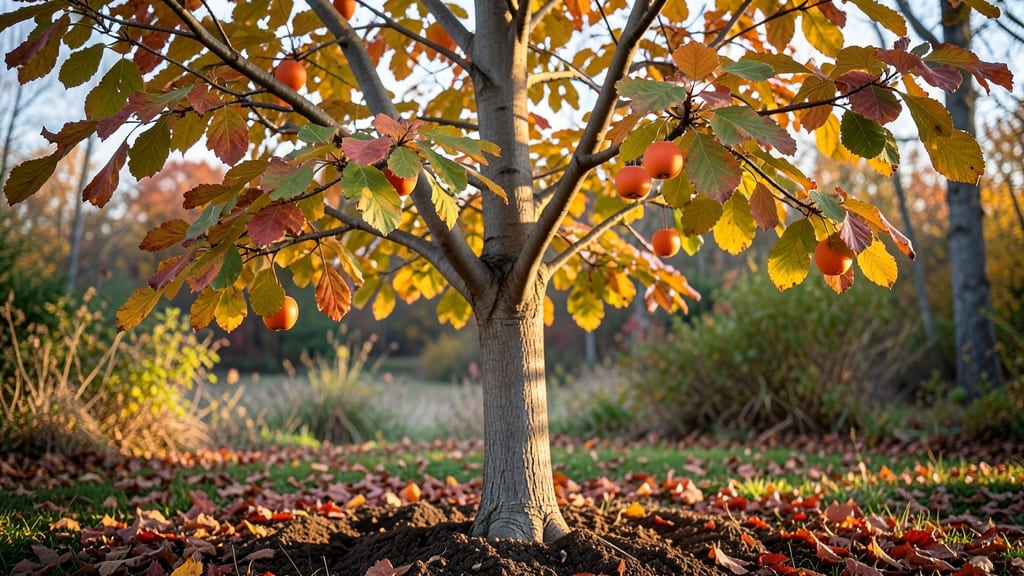
Fall pruning your persimmon tree when the leaves turn fiery gold is the secret to next summer’s harvest. 🍂 I’ve learned that timing matters—prune too early, and you risk stunting next year’s fruit; too late, and winter cold can stress the tree.
The sweet spot is right after leaf drop but before hard frost, when the tree’s energy shifts inward for dormancy.
You’ll need sharp pruning shears, a ladder (for taller trees), and a clear day—persimmons bleed sap when cut in cold weather. Focus on removing dead, crossing, or diseased branches first.
Then thin out crowded growth to improve airflow, which cuts down on fungal issues like anthracnose that love damp autumn leaves.
What you’ll end up with is a tree that wakes up in spring with strong new growth and fewer fruitless branches. The harvest the following year? More abundant, sweeter persimmons that ripen to a deep orange—no more bitter surprises.
Plus, the open canopy lets sunlight reach the ground, making it easier to spot those ripe fruits when they fall.
Works for both American and Asian persimmons, whether you’ve got a mature tree or a young sapling. Here’s how to do it without overcomplicating things—just a few cuts and a lot of patience.
📚 In This Guide
- What you need
- Instructions
- Tips and common mistakes
- Wrapping up and next steps
What you need
- ● Pruning shears: Sharp, bypass-style shears (for cuts under ½ inch in diameter). Quantity: 1 pair.
- ● Loppers: For thicker branches (½ to 2 inches). Quantity: 1 pair.
- ● Pruning saw: For branches over 2 inches in diameter. Quantity: 1 (handheld or folding).
- ● Disinfectant: 70% isopropyl alcohol or a 10% bleach-water solution (to sterilize tools between cuts). Quantity: Small bottle.
- ● Garden gloves: Heavy-duty, cut-resistant (to protect hands from thorns and sap). Quantity: 1 pair.
- ● Rubbing alcohol or hydrogen peroxide: For cleaning wounds on the tree (3% solution). Quantity: Small spray bottle.
- ○ Twine or zip ties: To secure temporary supports if needed (optional for weak branches). Quantity: 5–10 pieces.
- ● Trash bags or bucket: For collecting pruned branches and debris. Quantity: 1–2.
- ● Ladder: Extendable or sturdy step ladder (for taller trees). Height: 10–20 ft, weight capacity: 250+ lbs.
- ● Tree wound dressing: Pruning sealant (controversial—use sparingly if at all!).
- ● Marking spray: Non-toxic paint (to tag branches for removal). Color: Bright pink/red.
- ● Safety glasses: To shield eyes from debris.
- ● First-aid kit: For minor scrapes or sap irritation.
Step-by-step instructions for fall persimmon tree pruning
Fall is the perfect time to refresh your persimmon tree—here's how to do it right.
🌿 Step 1: Assess the Tree for Pruning Needs
Start by examining your persimmon tree for branches that need removal. Look for dead, diseased, or crossing branches—these are the first to go. Dead branches are easy to spot: they're brittle, have no leaves, and snap when you bend them slightly. Diseased branches may have dark spots, oozing sap, or unusual growths.
Next, identify any branches that are rubbing against each other or growing inward. These "crossing branches" compete for sunlight and nutrients, weakening the tree over time. You'll also want to remove any branches that are growing straight upward—these create weak crotches where the branch connects to the trunk. Use a sharp pruning saw for branches thicker than 1 inch.
✂️ Step 2: Remove Dead, Diseased, and Problem Branches
Make your first cuts just outside the branch collar—the swollen area where the branch meets the trunk. This ensures the tree can seal the wound properly. For branches thicker than 2 inches, cut in three steps: first, make an undercut about 1-2 feet from the trunk, then a top cut slightly outside the undercut, and finally, remove the remaining stub by cutting flush with the branch collar.
Sterilize your pruning tools between cuts by wiping them with rubbing alcohol or a 10% bleach solution to prevent spreading disease. Focus on removing branches that are more than ⅓ the diameter of the trunk—these can stress the tree. After each cut, step back and admire your work; you should see a more open, airy canopy that allows sunlight to reach the center.
☀️ Step 3: Thin the Canopy for Better Airflow and Light
Persimmon trees thrive when their canopies are open and well-ventilated. Aim to remove 10-20% of the tree's foliage to improve airflow and sunlight penetration. Start by thinning branches from the inside of the tree outward, removing smaller branches that are blocking light from reaching the center. This encourages fruit production and reduces the risk of fungal diseases.
Look for branches that are growing too close together—remove the weaker of the two to avoid competition. You'll know you're doing well when you can see light filtering through the canopy. Avoid over-thinning, though; persimmon trees need enough foliage to produce energy for next year's growth. Step back every few cuts to check your progress.
🪴 Step 4: Clean Up and Protect the Tree for Winter
After pruning, rake up and dispose of all debris, especially diseased branches, to prevent pests and pathogens from overwintering in the soil. If you notice any signs of pests like aphids or scale insects, treat the tree with a horticultural oil spray before winter sets in. This helps protect the tree while it's dormant.
Apply a 2-3 inch layer of mulch around the base of the tree, keeping it 6 inches away from the trunk to prevent rot. Mulch helps retain moisture and insulate the roots during cold winters. Water the tree deeply before the first hard frost to ensure it's hydrated for dormancy. By the time winter arrives, your persimmon tree will be healthy, well-prepared, and ready to burst into growth next spring.
Tips & tricks for perfect fall persimmon tree pruning
Here's what nobody tells you about pruning your persimmon tree the right way—these little details make all the difference for next year's harvest.
Branch Collar Precision: When making cuts in Step 2, focus on the branch collar—the swollen ridge where the branch meets the trunk. Cutting too close to the trunk (below the collar) creates wounds that won't heal properly. If you accidentally cut too far, don't worry—just make a new cut in the right spot. The collar acts like a natural seal, helping the tree recover faster. This is especially important for branches thicker than 2 inches where you're making that three-step cut.
Seasonal Timing Secret: Fall pruning works best when you do it after leaf drop but before hard frost—typically late October through November. This timing gives the tree just enough time to heal before winter dormancy. If you miss this window, you can still prune in early spring, but fall pruning helps prevent winter damage from heavy snow or ice. Watch for the first frost dates in your area and plan to prune 2-3 weeks before the average first frost.
Tool Sterilization Tip: The 10% bleach solution mentioned in Step 2 is crucial for preventing disease spread between cuts. I learned this the hard way after seeing fungal infections spread across my trees. For a gentler option, you can use rubbing alcohol (70% isopropyl) or even a diluted vinegar solution (1 part white vinegar to 3 parts water). Always sterilize between trees if you're working with multiple persimmons, and consider using a separate saw for diseased branches to avoid cross-contamination.
Canopy Light Test: In Step 3, when thinning the canopy, use the "light filter test" to gauge your progress. Stand under the tree and look up—you should see light filtering through the branches like sunlight through a window. If you can't see light, you're not thinning enough. For a quick check, hold a flashlight under the tree during daylight hours and see how much light reaches the center. This visual cue helps prevent both under-thinning and over-thinning, which can stress the tree.
Pro Tips for Persimmon Tree In Fall
- Here's what nobody tells you about pruning your persimmon tree the right way—these little details make all the difference for next year's harvest.
- Branch Collar Precision: When making cuts in Step 2, focus on the branch collar—the swollen ridge where the branch meets the trunk.
- Seasonal Timing Secret: Fall pruning works best when you do it after leaf drop but before hard frost—typically late October through November.
Frequently asked questions
about pruning your persimmon tree in fall—because even experts need a little clarity! Here are answers to the most common questions to keep your tree thriving.When is the best time to prune a persimmon tree in fall?
Prune your persimmon tree after the first hard frost (typically late fall) but before winter dormancy sets in. This timing (November–December in most regions) reduces stress on the tree and minimizes disease risk. Avoid pruning in early fall when pests and diseases are still active!
Can I prune a persimmon tree in winter?
Yes, but it’s not ideal. Winter pruning (January–February) is only recommended in mild climates. Cold weather slows sap flow, reducing stress, but it also limits the tree’s ability to heal wounds. If you must prune in winter, do so on a warmer day (above 40°F) and avoid heavy cuts.
What if I missed fall pruning? Can I still do it in spring?
Spring pruning (March–April) is a great backup plan. Focus on removing dead, diseased, or crossing branches first. However, avoid heavy pruning in spring, as it can stimulate new growth that may be damaged by late frosts. Light shaping is best until fall’s next window.
How do I know if I’m pruning too much?
Persimmon trees are resilient, but over-pruning can stress them. Never remove more than 25% of the canopy in a single session. Look for signs like excessive leaf drop, weak new growth, or oozing sap—these signal you’ve pruned too aggressively. Stick to structured cuts and prioritize air circulation.
Should I seal pruning cuts on a persimmon tree?
No, sealing cuts with paint or pruning sealant is not recommended. Persimmon trees (like most fruit trees) heal better with open wounds. Sealants can trap moisture, promoting rot. Instead, use sharp, clean tools to make smooth cuts at a 45-degree angle just outside the branch collar.
What’s the difference between fall and summer pruning for persimmons?
| Fall Pruning | Summer Pruning |
|---|---|
| Focuses on structural cuts, removing dead/diseased wood. | Targets light shaping and thinning to improve airflow. |
| Reduces winter pest/disease entry points. | Helps control overgrowth and fruit production. |
| Best for major pruning tasks. | Ideal for minor adjustments and training young trees. |
Wrapping up and next steps
Fall is the perfect time to give your persimmon tree the care it deserves—pruning now ensures a healthier, more fruitful tree for seasons to come! 🍂 Whether you’re trimming for shape, sunlight, or disease prevention, a little effort now pays off with vibrant blooms and delicious fruit later.
Ready to roll up your sleeves? Grab your tools, follow the steps, and enjoy the satisfaction of a well-maintained tree!
👉 Next step: Mark your calendar for late fall or early winter—another great time to assess and prune. Happy gardening! 🌳✨