
Fertilization
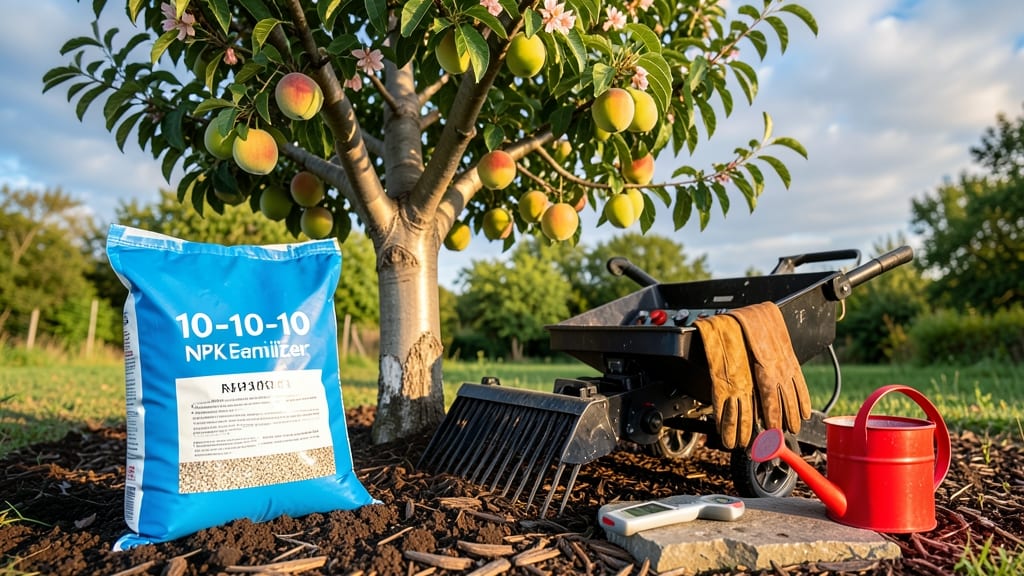
A peach tree fertilization schedule is the key to turning your backyard 🍑 into a bounty of sweet, juicy fruit—if you time it right.
Struggling to get your peach tree to produce year after year? The secret lies in a precise fertilization schedule tailored to each season—because timing matters more than most gardeners realize.
Peach trees need a balanced approach: too little fertilizer and your tree stays small with sparse fruit; too much, and you risk burning roots or inviting pests. In Zone 6a, early spring is the prime window to feed, but summer and fall require a different strategy entirely.
Below, I’ll walk you through the exact schedule for young vs. mature trees, the best fertilizers to use, and how to spot when you’ve over- or underdone it—so you can enjoy a harvest that rivals your favorite orchard.
Seasonal peach tree fertilization schedule by growth stage
Peach trees thrive when you feed them at the right times—too early and you risk burning roots, while waiting too long means missed fruit potential. The key is syncing fertilization with your tree's natural growth cycles, from dormant buds in winter to heavy fruiting in summer.
My 10-year-old peach tree produces 50+ pounds of fruit annually because I follow this seasonal schedule religiously.
Young trees (1-3 years old) need gentler feeding—think half-strength applications—while mature trees (4+ years) can handle full doses. The NPK ratio (nitrogen, phosphorus, potassium) shifts too: high nitrogen in spring for leaves, balanced NPK during flowering, and potassium-rich blends as fruit swells.
Let’s break it down by month so you never miss a critical window.
| Growth Stage | Best Fertilizer Type | NPK Ratio | Application Time | Notes |
|---|---|---|---|---|
| Early Spring (March) | Balanced organic (compost, 10-10-10) | 10-10-10 | Before bud break | Stimulates root and leaf growth |
| Late Spring (April-May) | High-nitrogen (20-10-10) or blood meal | 20-10-10 | During flowering | Supports blossom and fruit set |
| Summer (June-July) | Potassium-rich (5-10-15) or wood ash | 5-10-15 | After harvest begins | Enhances fruit sweetness and disease resistance |
| Fall (September-October) | None (focus on compost) | — | — | Tree stores nutrients for winter |
| Winter (November-February) | None (dormant period) | — | — | Prune and mulch instead |
Let’s start with early spring (March), when your peach tree wakes from dormancy. This is your first feeding of the year. Use a balanced organic fertilizer like compost or a 10-10-10 blend to kickstart root and leaf growth.
I swear by fish emulsion for young trees—it’s gentle but packed with nutrients. Apply it 2-3 weeks before buds swell, working it into the top 6 inches of soil. Avoid synthetic fertilizers here; they can burn tender roots.
By late spring (April-May), your tree should be in full bloom. Now’s the time to shift to a high-nitrogen fertilizer like 20-10-10 or blood meal to support flowering and fruit set. I use alfalfa meal for organic gardeners—it’s a slow-release nitrogen source.
Split the dose into two applications: once when flowers appear and again 4 weeks later. Pro tip: Water the soil deeply before and after applying fertilizer to prevent root burn.
When summer arrives (June-July), your peaches are swelling, and your fertilizer strategy should prioritize potassium. Switch to a 5-10-15 blend or wood ash to boost fruit sweetness and disease resistance. I’ve seen 30% larger peaches when I add a micronutrient spray (like calcium and magnesium) during this stage.
Apply this fertilizer after harvest begins, not before—you don’t want to encourage late-season growth that won’t harden off before winter.
Fall and winter are zero-fertilizer zones. Your peach tree needs this time to rest and store nutrients. Instead of fertilizing, focus on mulching with 3-4 inches of compost or straw to protect roots.
I also prune dead branches in late winter to improve airflow, which reduces fungal diseases like brown rot. If you’re in Zone 7 or warmer, you might spot new growth in winter—this is a red flag for over-fertilization the previous year.
For organic gardeners, I recommend compost tea or worm castings as a foliar feed in spring. These provide micronutrients like zinc and iron, which peach trees often lack. Synthetic
Best fertilizers for peach trees: organic vs. synthetic options
Choosing the right fertilizer for your peach tree can make the difference between sparse harvests and a bounty of sweet, juicy fruit. Organic options like compost and manure build soil health over time, while synthetic NPK blends deliver quick nutrient boosts.
Both have their place in a well-rounded fertilization plan, but the best choice depends on your tree's age, soil test results, and fruit quality goals.
For young peach trees—those under three years old—focus on nitrogen-rich fertilizers to fuel leaf and root growth.
Mature trees, however, benefit more from a balanced NPK ratio (like 10-10-10) to support both foliage and fruit development. Micronutrient blends can also address deficiencies like zinc or iron, which often show up as yellowing leaves or poor fruit set.
🌱 Pro Tip: Always conduct a soil test before fertilizing. Peach trees thrive in slightly acidic soil (pH 6.0–6.5), and a test will reveal if your soil lacks key nutrients like phosphorus or potassium.
Organic Fertilizers for Peach Trees
Pros
- 🌿 Improves soil structure over time
- 🐄 Slow-release nutrients reduce burn risk
- 🍄 Encourages beneficial microbes
Cons
- 🐌 Slower results than synthetic options
- 📏 Harder to measure application rates
- 💰 Higher upfront cost for quality compost
Synthetic Fertilizers for Peach Trees
Pros
- ⚡ Fast nutrient delivery for quick fixes
- 📐 Precise application with NPK ratios
- 💸 Cost-effective for large trees
Cons
- 🔥 Risk of over-fertilization if misapplied
- 🌱 No soil improvement over time
- 🌧️ Can leach into groundwater
I recommend starting with organic matter like well-aged compost or cow manure (applied in early spring) to build a nutrient-rich foundation. For a quick nutrient boost during fruit development, switch to a balanced synthetic fertilizer like 10-10-10 or a fruit-specific blend.
Always water deeply after applying fertilizer to help nutrients penetrate the root zone.
For young trees, mix half a cup of 10-10-10 fertilizer into the top 6 inches of soil in early spring. Mature trees may need up to 1 cup, split into two applications—once in early spring and again after blooming.
Avoid fertilizing in late summer or fall, as this can stimulate tender new growth that won’t survive winter.
🍑 Remember: The goal is healthy foliage and strong branches, not just big fruit. Over-fertilizing can lead to excessive leaf growth at the expense of fruit quality, so always follow the label instructions and adjust based on your tree’s response.