
Pruning
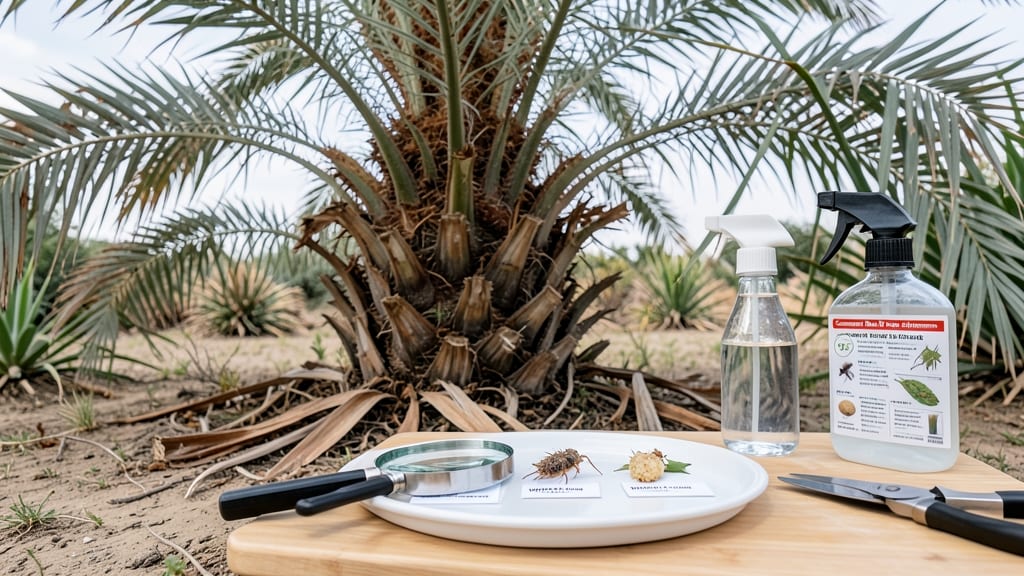
Few things strike fear into a gardener's heart like discovering palm tree pests gnawing away at your investment. 🌿 I've battled everything from sneaky palm weevils to stubborn spider mites, and the key to saving your tree isn't brute force—it's knowing exactly which pest you're dealing with and how to stop them before they cause permanent damage.
The damage tells the story: brown fronds, oozing sap, or tiny webs between leaves all signal trouble. I learned the hard way that waiting too long means losing branches—or worse, the whole tree. The good news? Most infestations respond quickly to targeted treatments once you identify the culprit.
You'll walk away with a step-by-step plan to inspect, treat, and prevent future outbreaks, whether you're dealing with organic solutions or targeted chemical defenses. The goal is a thriving, healthy palm that looks like the showpiece of your landscape again. This works for both outdoor palms and container-grown specimens.
Let's get your tree back on track—before the pests win.
Why it happens
Palm trees, with their lush fronds and tropical charm, can quickly become a pest magnet if conditions align. Understanding why these pests target your palms is the first step in preventing infestations.
Below, we break down the key factors—from environmental triggers to plant vulnerabilities—that turn your palms into a buffet for unwanted critters.
🌡️ Climate and Weather Conditions
Pests thrive when the environment is just right—too hot, too humid, or too dry can all create the perfect storm for infestations. Here’s how weather plays a role:
- High Humidity: Many palm pests, like palm weevils or mealybugs, love moist conditions. Stagnant air around fronds or soil traps moisture, signaling pests that it’s time to feast. Pro tip: Improve airflow with strategic pruning (remove dead fronds) and spacing plants to reduce humidity hotspots. 🌬️
- Warm Temperatures: Pests are cold-blooded—warmer climates (especially in coastal or subtropical zones) accelerate their life cycles. For example, red palm mite populations explode in temperatures above 80°F (27°C). Actionable fix: Monitor temperature trends and apply preventive treatments before peak pest seasons. ⏳
- Drought Stress: Weakened palms from underwatering become easy targets. Stressed trees produce less sap (a natural pest repellent) and attract sap-sucking insects like scale insects. Solution: Deep-water palms during dry spells—aim for 1–1.5 inches of water weekly. 💦
🌱 Poor Plant Health and Weakness
A healthy palm is resilient, but neglect or disease opens the door to pests. Here’s what makes your tree vulnerable:
| Weakness | How It Attracts Pests | Fix It Now |
|---|---|---|
| Nutrient Deficiencies | Yellowing fronds or stunted growth signal weak defenses. Pests like thrips target stressed palms for easy access to sap. | Test soil and fertilize with balanced palm-specific fertilizer (high in potassium and magnesium). 🌿 |
| Fungal Infections | Fungi (e.g., Ganoderma) create entry points for pests like palm borers, which exploit rotting tissue. | Prune infected fronds immediately and apply copper-based fungicides to prevent spread. ⚔️ |
| Physical Damage | Cracks or wounds from storms or pruning tools invite weevils to lay eggs inside the trunk. | Seal wounds with pruning sealant and avoid over-pruning. 🛡️ |
🌳 Overcrowding and Habitat
Pests don’t just appear—they’re drawn to environments that offer shelter and food. Overgrown landscapes or dense plantings create the ideal hideout:
- Shady, Dense Areas: Pests like mealybugs and spider mites thrive in low-light conditions where natural predators (like ladybugs) can’t survive. Solution: Thin out nearby vegetation to allow sunlight and predator access. ☀️
- Debris and Mulch: Leaves, bark, or thick mulch layers trap pests and their eggs. For example, palm aphids hibernate in leaf litter over winter. Action: Clear organic debris within 3 feet of the tree base. 🧹
- Water Stagnation: Standing water in palm crowns or at the base attracts mosquitoes (which can carry fungal diseases) and soft-bodied pests. Fix: Ensure proper drainage with gravel or sand around the trunk. 💧
🐛 Human Activity and Spread
Sometimes, pests hitch a ride from other plants or tools. Here’s how humans accidentally introduce infestations:
- Contaminated Tools: Pruning shears or saws used on infected palms can transfer bacteria or pest eggs to healthy trees. Prevent it: Sterilize tools with 70% isopropyl alcohol between uses. 🧼
- Nursery or Landscape Debris: Buying palms with hidden pests (e.g., palm weevil larvae) or using infested mulch spreads problems. Check: Inspect new plants for frass (insect droppings) or sticky residue (honeydew). 🔍
- Traveling Pests: Wind or wildlife (like birds) can carry pests from nearby infested palms. Mitigate: Install fine mesh netting around young palms in high-risk areas. 🕸️
Targeted Fixes for Common Palm Tree Pests
Palm trees are stunning additions to any landscape, but pests can quickly turn their beauty into a battle. The good news? Most issues have straightforward, effective solutions—if you know what to do.
Below, we’ve mapped out practical fixes for the most common palm tree pests, along with prevention tips to keep your trees thriving long-term. Let’s get your palms back in top shape!
The red palm weevil is one of the most destructive pests, often going undetected until it’s too late. If you spot frass (sawdust-like debris), wilting fronds, or oozing sap, act fast.
🔪 Immediate Treatment Steps
- 🚨 Confirm the Infestation
- Split open the trunk (wear gloves!) to check for larvae or adult weevils. If you see white, worm-like grubs, you’ve got a problem.
- Pro tip: 💡 Use a flashlight and magnifying glass for a closer look—early detection saves the tree!
- 💉 Chemical Injection (Most Effective Method)
- What you’ll need: A systemic insecticide like imidacloprid or fipronil, a syringe, and a drill.
- How to do it:
- Drill a small hole (about ¼ inch) into the trunk, 12–18 inches above ground level.
- Inject the insecticide directly into the vascular tissue. Follow the product’s dosage instructions carefully.
- Seal the hole with pruning sealant to prevent secondary infections.
- 🌳 Remove Severely Infested Trees
- If the weevil has already killed the tree or spread extensively, remove and destroy the palm immediately (burn or bag it—do not compost!). This prevents the pest from spreading to other palms.
🛡️ Prevention for the Future
- 🌱 Monitor regularly: Check your palms every 2–4 weeks for early signs of weevils.
- 🪴 Keep the area clean: Remove dead palm fronds and debris where weevils might hide.
- 🔒 Install traps: Use pheromone traps (available at garden centers) to catch adult weevils before they lay eggs.
Tiny but mighty, these pests drain nutrients from your palm leaves, causing yellowing, stippling, or sticky residue (honeydew). Here’s how to kick them to the curb.
👨🍳 Manual & Chemical Control
- 💦 Blast Them Off
- What you’ll need: A hose with a strong spray nozzle or a pressure washer (low setting).
- How to do it:
- Spray the undersides of fronds (where mites love to hide) until the water runs clear.
- Repeat every 5–7 days for severe infestations.
- 🧴 Apply Horticultural Oil or Insecticidal Soap
- Best for: Scale insects and spider mites (but avoid if temps are below 50°F).
- How to do it:
- Mix 2.5 tbsp of insecticidal soap or horticultural oil per gallon of water.
- Spray thoroughly on all leaf surfaces, including the trunk.
- Reapply every 7–10 days until pests are gone.
- 🐝 Introduce Beneficial Predators (Long-Term Fix)
- Ladybugs, lacewings, or predatory mites eat spider mites naturally.
- Buy them from a garden center and release them at dusk when pests are active.
🌡️ Prevention Tips
- 💧 Water deeply and infrequently: Spider mites thrive in dry conditions. Keep soil moist but well-drained.
- 🍃 Prune for airflow: Remove dead or crowded fronds to reduce hiding spots.
- 🌿 Use reflective mulch: Aluminum mulch around the base can confuse mites and reduce infestations.
Mealybugs leave behind white, fluffy cotton-like clusters and sticky honeydew. While they’re easier to treat than weevils, they can still weaken your palm if ignored.
✨ Quick Removal & Treatment
- 🧼 Scrub Them Off
- What you’ll need: A soft brush, soapy water (mild dish soap), and rubbing alcohol.
- How to do it:
- Dip the brush in soapy water and gently scrub off mealybugs from fronds and crevices.
- For stubborn clusters, dab with rubbing alcohol on a cotton swab.
- 🌿 Neem Oil Spray (Natural & Effective)
- What you’ll need: 1 tsp neem oil + 1 tsp mild soap + 1 quart water.
- How to do it:
- Mix and spray directly on mealybugs (they’ll die within hours).
- Reapply every 5–7 days until no more cottony residue appears.
- 🐝 Release Parasitic Wasps (Biological Control)
- How it works: Tiny Leptomastix dactylopii wasps lay eggs in mealybugs, killing them naturally.
- Where to get them: Order from online pest control suppliers or local garden stores.
🎯 Prevention Strategies
- 🔍 Inspect new plants: Quarantine new palms for 2 weeks before planting to spot hitchhiking pests.
- 🍃 Avoid over-fertilizing: Mealybugs love soft, nutrient-rich growth. Use a balanced fertilizer sparingly.
- 🌿 Keep ants away: Ants farm mealybugs for honeydew. Use ant bait stations to keep them off your palms.
An ounce of prevention is worth a pound of cure! Follow these year-round tips to keep pests at bay:
| Do This | Why It Works |
|---|---|
| 💧 Water at the base | Avoids wetting fronds, reducing fungal diseases that attract pests. |
| 🪴 Mulch properly | 3-inch layer of mulch retains moisture and deters weevils. |
| 🍃 Prune regularly | Removes dead fronds where pests hide and breed. |
| 🌡️ Monitor seasonally | Pests are most active in spring and summer—check palms monthly. |
| 🛡️ Use pest-resistant varieties | Some palms (like Sabal palmetto) are tougher against weevils. |
With these targeted solutions, you can rescue an infested palm or stop pests before they start. Remember: early action is key—the sooner you treat an issue, the easier (and cheaper) it is to fix. Happy palm parenting! 🌴✨
Frequently asked questions
How do I tell if my palm tree has a pest problem?
Look for these red flags: brown or yellow fronds, sticky residue (honeydew), tiny webs between leaves, or sawdust-like debris at the trunk base. For weevils, check for oozing sap or sudden wilting. Early signs like these mean it's time to investigate further.
Can I use the same treatment for all palm tree pests?
No—each pest requires different approaches. For example, spider mites respond well to horticultural oil sprays, while palm weevils need systemic insecticide injections. Always identify the pest first before choosing a treatment to avoid wasting time or harming your tree.
Are chemical treatments safe for my palm tree?
When used correctly, most chemical treatments are safe. Always follow label instructions carefully and avoid overapplying. For sensitive palms, start with organic options like neem oil or insecticidal soap. If using systemic insecticides, inject only into healthy tissue to prevent damage.
How often should I inspect my palm trees for pests?
Check your palms every 2-4 weeks during growing seasons (spring and summer) when pests are most active. For container palms, inspect more frequently since they're more vulnerable. Look under fronds and at the trunk base where pests often hide.
What's the best time of day to treat palm tree pests?
Early morning or late afternoon works best. These times are cooler and reduce stress on your palm while allowing treatments to work effectively. Avoid treating during peak sun hours (10am-4pm) when temperatures exceed 85°F (29°C), as this can harm both the tree and beneficial insects.