
Trees
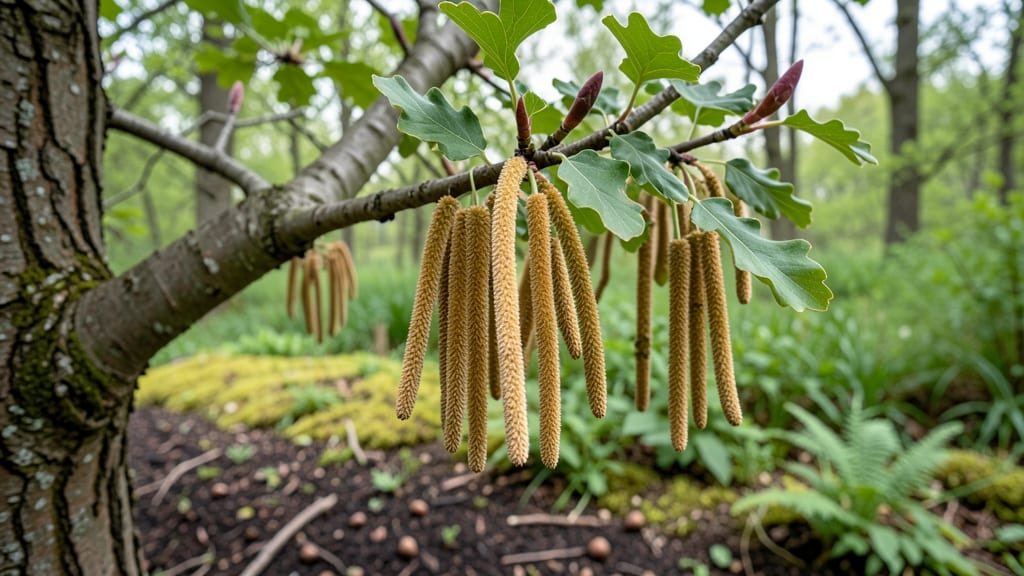
Oak tree pollen tassels appear in early spring as long, dangling catkins that signal the tree's reproductive cycle, typically between February and April depending on climate and species. These fuzzy clusters release pollen to fertilize female flowers, which later develop into acorns.
These fuzzy, yellowish strands aren't just decorative—they're oak trees' way of reproducing. 🌳 The timing varies by species, with southern live oaks often blooming earlier than northern red oaks, and warmer climates triggering appearance weeks ahead of colder regions.
What's fascinating is how temperature swings can delay or accelerate this process, sometimes causing tassels to appear in late winter if conditions are just right. For gardeners, recognizing healthy tassels (bright yellow, plentiful) versus diseased ones (brown, sparse) helps monitor tree vitality during this critical reproductive phase.
While these tassels don't harm the tree, they can be problematic for allergy sufferers. The pollen they release is a common spring allergen, often lingering in the air for weeks after initial release.
I've found that strategic watering during dry spells can help reduce airborne pollen, though it won't eliminate the issue entirely. Understanding this natural cycle helps both gardeners and allergy sufferers plan accordingly.
💡 In This Article
- Understanding Oak Tree Pollen Tassels: Biology and Seasonal Timing
- Managing Oak Pollen Tassels: Gardening and Allergy Tips
Understanding oak tree pollen tassels: biology and seasonal timing
Oak tree pollen tassels, also called catkins, are specialized male flowers that play a critical role in the tree's reproductive process.
Unlike female flowers that develop into acorns, these fuzzy clusters hang from branches in early spring to release vast amounts of pollen—up to 10 million grains per catkin—that must travel to female flowers for fertilization.
This process is essential because oak trees rely on wind pollination, making their catkins more visible and abundant to maximize pollen dispersal.
The timing of these catkins varies dramatically by species and climate. Southern live oaks often bloom as early as January in warmer zones, while northern red oaks may wait until April in cooler regions. Temperature thresholds trigger their appearance—catkins typically emerge when daytime temperatures consistently reach 50-55°F for several days.
Moisture also plays a role: prolonged dry spells can delay catkin development, while adequate rainfall ensures healthy pollen production.
What sets these catkins apart from leaves or buds is their pendulous structure—they hang downward to release pollen efficiently into the wind. Unlike buds, which are compact and protected, catkins are elongated and fuzzy, designed to maximize surface area for pollen release.
This adaptation explains why they appear so prominently before leaves fully emerge, giving trees a chance to pollinate before focusing on photosynthesis.
Interestingly, the color of catkins can indicate tree health. Healthy catkins are bright yellow, while brown or blackened catkins suggest disease, drought stress, or poor nutrition. For example, oak wilt disease often causes catkins to darken prematurely.
Gardeners can monitor these visual cues to assess tree vitality during spring, as stressed trees may produce fewer acorns later in the season.
Post-pollination, female flowers develop into acorns over 6-9 months, with timing varying by species. White oaks, for instance, produce acorns in 18 months, while red oaks take 12 months.
This delayed development explains why oak trees often appear "barren" after catkins fall—what seems like dormancy is actually the hidden process of acorn maturation.
The entire cycle is a remarkable example of nature's efficiency. While catkins may seem like mere spring decorations, they're the driving force behind oak forests' survival, ensuring the next generation of trees through careful timing, environmental cues, and specialized adaptations. 🌿