
Pruning
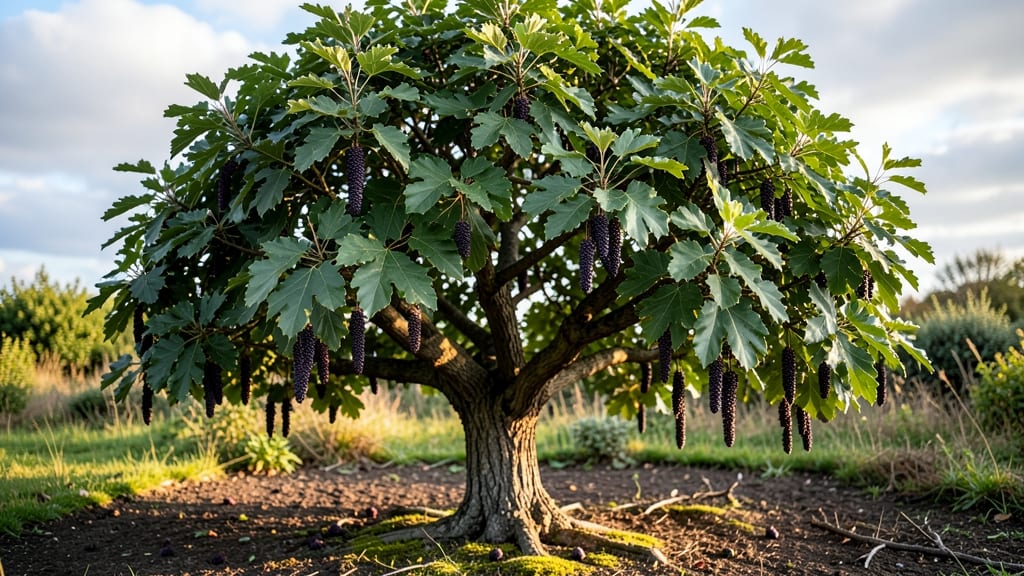
A mature mulberry tree 🌳 can reach heights of 20 to 60 feet—taller than your two-story house—if left unchecked, transforming your yard into a shady giant.
If you’re dreaming of a towering mulberry tree in your backyard, knowing its mature height—and how to manage its growth—could save you from unexpected pruning battles or space constraints. But here’s the catch: mulberry varieties grow wildly different heights, from compact shrubs to towering giants.
Some, like the Illinois Everbearing, stay under 15 feet with the right care, while others, like the classic Black Mulberry, can soar past 50 feet if you don’t prune them. The key is understanding your tree’s potential early so you can shape it before it shapes your landscape.
In this guide, I’ll break down the height ranges by variety, the best pruning timelines to control growth, and how to keep even the tallest mulberry tree from becoming a backyard monster.


Mulberry tree mature height by variety: from dwarf to giant
Choosing a mulberry tree variety is like picking between a backyard giant and a manageable shrub. Some varieties like the Texas Mulberry can soar to 50-60 feet, while others like ‘Illinois Everbearing’ stay compact at 12-15 feet.
Understanding these differences helps you plan spacing and pruning strategies from day one.
Mulberry trees grow aggressively—some varieties add 3-5 feet per year in ideal conditions. Without proper spacing, branches can crowd power lines or shade out your entire garden. Let’s break down the mature heights by variety so you can pick the perfect fit for your space.
🌳 Key Takeaway: Always plant mulberries at least 20-30 feet from structures and other trees to prevent root competition and overcrowding.
The Texas Mulberry is the undisputed giant of the group, capable of reaching 60 feet with its sprawling branches. If you’re in a rural area with ample space, this variety thrives with minimal care—just be prepared for its rapid growth and potential to overshadow smaller plants.
For urban or suburban gardens, the Illinois Everbearing or Dwarf Mulberry are game-changers. These varieties stay under 15 feet, making them perfect for small yards or even large containers. Their slower growth rates also mean less aggressive pruning, which is a win for busy gardeners.
If you’re aiming for a balance between height and fruit production, the Black Mulberry is a top pick. It matures at 40-50 feet but produces abundant, sweet berries that birds and humans alike will love. Just remember to give it space—this tree isn’t shy about spreading its roots.
Pro Tip: Always check your local regulations before planting. Some areas restrict tall trees near power lines or property boundaries, and mulberries can easily violate these rules if not planned properly.
Spacing is just as critical as choosing the right variety. A Texas Mulberry planted too close to your house could mean dealing with invasive roots or branches scraping your roof. Aim for at least 30 feet of clearance for giant varieties, while dwarf options need only 10-15 feet.
One common mistake I see is underestimating a mulberry’s horizontal spread. These trees don’t just grow tall—they spread wide, often 2-3 times their height in diameter. Plan for this by leaving extra room around the base, especially for varieties like the Red Mulberry.
For container growing, stick to Dwarf Mulberry varieties. With proper root pruning and regular repotting, you can
When and how to prune a mature mulberry tree for controlled growth
Pruning your mature mulberry tree isn’t just about keeping it from reaching 60 feet—it’s about shaping its future fruit production and health. The key is timing, technique, and knowing which branches deserve attention.
If you’ve ever stared up at a towering mulberry with branches blocking your roof, you’ll appreciate how strategic pruning can transform that wild giant into a manageable, productive tree.
Let’s break down the best seasons, essential tools, and step-by-step methods to tame its growth while boosting those sweet berries.
Most gardeners make two critical mistakes when pruning mulberries: cutting at the wrong time of year or removing too many branches at once. Both can stress the tree, reduce fruit yield, and even invite pests.
Instead, think of pruning as a year-round conversation with your tree—light trims in winter to shape its skeleton, and heavier cuts in late winter or early spring to encourage new growth. The goal? Balance height control with fruit production, ensuring you don’t sacrifice one for the other.
Step-by-Step Pruning Guide for Mulberry Trees
- 1 Choose the Right Season: Prune in late winter or early spring (just before buds swell) to avoid disturbing the tree’s dormancy. Winter pruning also prevents disease spread during wet seasons.
- 2 Gather Your Tools: Use sharp pruning shears for small branches, loppers for thicker limbs (up to 2 inches), and a pruning saw for anything larger. Sterilize tools with rubbing alcohol to prevent bacterial infections.
- 3 Remove Dead or Diseased Wood: Start by cutting out dead branches, those with fungal spots, or limbs crossing the center of the tree. These are low-hanging fruit—literally and figuratively—because they’re already compromising the tree’s health.
- 4 Thin Out the Canopy: Aim to remove 20-30% of the foliage to improve air circulation and sunlight penetration. Focus on suckers (shoots growing from the base) and water sprouts (vertical shoots) to redirect energy to fruit-bearing branches.
- 5 Shape for Fruit Production: Prioritize branches with fruit clusters by cutting back competing vertical growth. Use the open-center method: remove branches growing inward to create an open vase shape, which maximizes sunlight and air flow to the center.
- 6 Limit Height Incrementally: Never reduce the tree’s height by more than 25% in one year. For dramatic height reduction, spread cuts over 3-4 years to avoid shocking the tree. Always cut just above a bud or branch collar to promote healing.
- 7 Clean Up and Monitor: Collect and dispose of pruned branches off-site to prevent pests. After pruning, monitor the tree for new suckers or aggressive regrowth—these often appear in spring and should be pruned back immediately to maintain your desired shape.
One of the biggest myths about pruning mulberries is that you can “top” the tree like you would a hedge. Never cut the top flat—this leads to a messy, bushy growth pattern and weakens the tree’s structure. Instead, focus on selective pruning to guide the tree’s natural shape.
If you’re aiming for a shorter mulberry, prioritize removing the uppermost branches first, then work your way down over multiple seasons. Patience is key here; a 20-foot reduction over 4 years is far healthier than a drastic cut that stunts the tree for years.
After pruning, your mulberry tree will reward you with larger fruit clusters and a more manageable silhouette. Just remember: the best pruning sessions are planned, not reactive. Mark your calendar for February or March each year, gather your tools, and approach the task like a sculptor—your goal is to