
Pruning
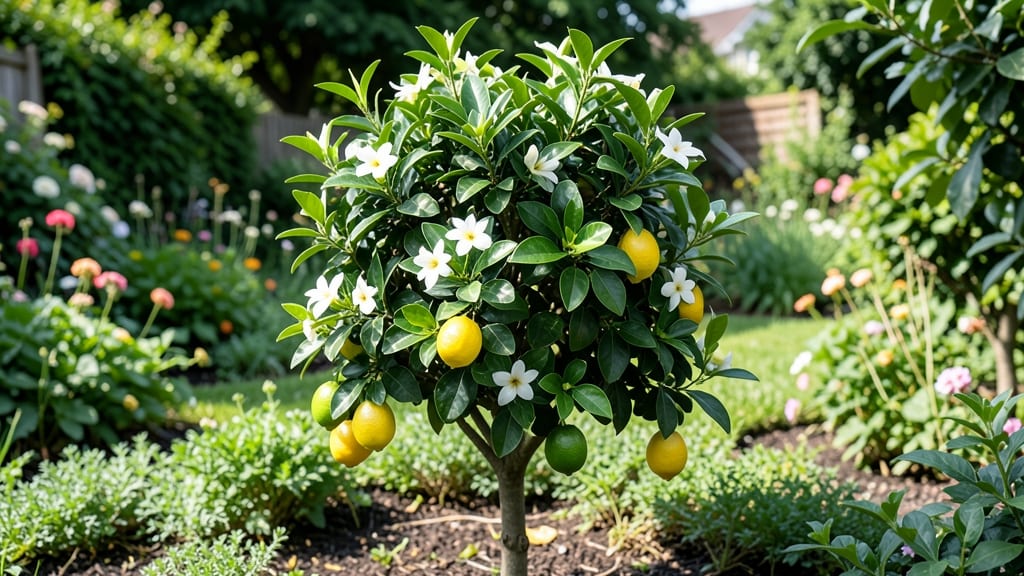
Growing a miniature lemon tree indoors requires bright, indirect sunlight for 6-8 hours daily, consistent moisture without overwatering, and occasional fertilization with citrus-specific nutrients to mimic outdoor conditions and encourage healthy fruit production.
Indoor lemon trees thrive best when you replicate their natural Mediterranean environment. 🌿 The right balance of light—especially those blue and red wavelengths—stimulates photosynthesis and flowering, while proper soil drainage prevents root rot.
I've found that dwarf varieties like 'Meyer' adapt well to indoor conditions, but they still need regular pruning to maintain their compact shape and encourage bushier growth.
Seasonal adjustments, such as moving the tree closer to a window in winter, can make all the difference in keeping your miniature lemon tree productive and healthy.
For optimal results, I recommend using a well-draining potting mix with perlite or sand, and maintaining humidity levels between 40-50% using a pebble tray or humidifier. Fertilizing every 4-6 weeks during the growing season with a citrus-specific formula provides the nutrients needed for vibrant foliage and potential fruit production.
The key is consistency—your tree will reward you with glossy leaves and occasional blossoms if you meet its basic needs.
💡 In This Article
- Optimal Light Conditions for Indoor Miniature Lemon Trees
- Pruning and Care Tips for Compact Lemon Tree Growth
Optimal light conditions for indoor miniature lemon trees
Miniature lemon trees rely on specific light wavelengths to thrive indoors. The blue light spectrum (400-500nm) promotes leafy growth, while red light (600-700nm) triggers flowering and fruiting. South-facing windows provide the closest natural match, delivering 6-8 hours of bright, indirect light daily—similar to their Mediterranean habitat.
Without this balance, your tree may develop sparse foliage or fail to produce blossoms entirely. 🌞
Grow lights become essential during winter months when daylight diminishes. LED grow lights with a 12-hour photoperiod (6 hours on/6 hours off) mimic natural cycles and can be positioned 6-12 inches above the tree.
I've seen full-spectrum LEDs (like those with 2700K-6500K color temperatures) work best—they replicate sunlight's natural spectrum without overheating the leaves. For comparison, a standard incandescent bulb lacks these critical wavelengths and won't support healthy growth.
Seasonal adjustments are key to maintaining consistent light exposure. In summer, filter harsh afternoon sun with a sheer curtain to prevent leaf scorch, while in winter, rotate the pot quarter-turn weekly to ensure even growth.
The goal is to keep the tree receiving light from all directions, preventing lopsided development. A simple trick: Place a white card near the tree—if shadows appear crisp, the light is too direct.
Light intensity matters just as much as duration. A good test: Hold your hand near the tree's leaves. If you can't see your shadow clearly, the light is too diffuse. For optimal photosynthesis, aim for 1,000-2,000 foot-candles of light (measured at leaf level).
This is roughly equivalent to the light 3 feet from a south-facing window on a sunny day. Without sufficient light, your tree's metabolic processes slow down, leading to weak stems and poor fruit development.
For those with limited natural light, consider supplementing with a T5 fluorescent grow light (2700K-6500K). These are energy-efficient and provide the blue-red spectrum ratio citrus trees need. Position it 6 inches above the tree and use it for 14-16 hours daily during winter.
The trade-off? These lights generate minimal heat, so they won't dry out the air like high-wattage bulbs. 💡
What most people overlook is the importance of circadian rhythms—your tree needs periods of darkness too. Avoid leaving grow lights on 24/7, as this disrupts the plant's natural sleep cycle, leading to stress and reduced flowering.
A simple timer set to 6 hours on/18 hours off replicates natural day-night cycles, encouraging healthier growth patterns.