
Container Gardens
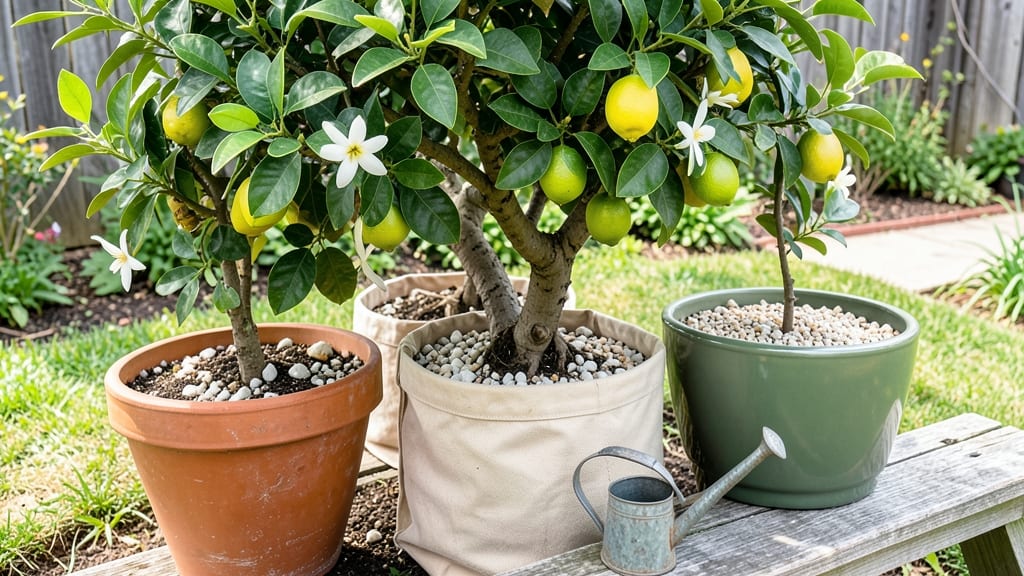
The perfect Meyer lemon tree pot size is the absolute minimum for healthy growth—any smaller, and you’re asking for stunted roots, sparse fruit, and a plant that fights you every step of the way.
Picture this: your 🍋 thrives for a year in a cozy 5-gallon, then suddenly drops leaves, flowers but never fruits, or its roots circle the pot like a frustrated squirrel.
That’s not just a pot problem—it’s a growth ceiling. But here’s the kicker: upgrading too soon (or to the wrong material) can backfire just as badly.
In this guide, I’ll break down the exact pot sizes you need at every stage—from a 1-gallon seedling to a 15-gallon mature tree—plus the materials (terracotta vs. plastic) and drainage tricks that keep your tree happy without wasting space (or money).
You’ll also learn the 3 signs your tree has outgrown its home before it’s too late, how to repot without shocking the roots, and why a bigger pot isn’t always better—unless you do it right.


Why 5-Gallon pots are the minimum for Meyer lemon trees (and when to upgrade)
Your Meyer lemon tree 🍋 isn't just another houseplant—it's a tropical citrus that demands space, drainage, and root freedom to thrive. While a 5-gallon pot might seem large enough for a small sapling, it’s actually the absolute minimum for healthy growth.
This size is non-negotiable because Meyer lemon trees develop aggressive root systems that need room to explore, absorb nutrients, and store moisture.
Think of the pot as a root prison if it’s too small. Roots circling tightly (a condition called root-bound) strangle the tree’s ability to uptake water and nutrients, leading to stunted growth, yellowing leaves, and—worst of all—failed fruiting.
Science backs this up: studies show that citrus trees in containers reduce growth by 40% or more when roots are restricted to less than 5 gallons of soil volume.
Here’s the hard truth: A 5-gallon pot is only a starting point. As your tree matures, you’ll need to upgrade to 15-gallon, 30-gallon, and eventually 50+ gallon containers to support its height (up to 12 feet in standard varieties) and fruit production.
The key is understanding why size matters and how to transition smoothly without shocking the plant.
| Growth Stage | Minimum Pot Size | Diameter (inches) | Key Signs It’s Time to Upgrade |
|---|---|---|---|
| Seedling (0-6 months) | 5 gallons | 12-14" | Roots circling pot bottom |
| Juvenile (6-24 months) | 15 gallons | 18-20" | Leaves yellowing despite watering |
| Mature (2+ years) | 30+ gallons | 24-30" | Fruit drops prematurely |
| Fruiting (3+ years) | 50+ gallons | 30+" | Roots emerging from drainage holes |
The drainage requirement is another critical factor. Meyer lemon trees hate soggy roots, which lead to root rot—a silent killer in small pots. A 5-gallon container must have at least 4 drainage holes to prevent waterlogging.
Without proper drainage, excess moisture suffocates roots, cutting off oxygen and triggering fungal infections.
I’ve seen too many growers assume "bigger pots = more drainage," but the truth is size alone doesn’t solve poor drainage—you still need holes and a well-aerated potting mix (like a 50/50 blend of citrus soil and perlite).
Let’s talk root system biology for a moment. Meyer lemon trees develop fibrous roots that spread outward and downward to anchor the plant and access nutrients. In a 5-gallon pot, these roots hit the container walls within 6 months, forcing them to grow in circles.
This root-bound stress triggers a cascade of problems: reduced photosynthesis (fewer leaves), nutrient starvation (even with fertilizer), and stunted flowering. The result? A tree that looks healthy but never produces fruit.
Here’s how to spot a root-bound Meyer lemon tree before it’s too late: - Roots growing out of drainage holes (a clear SOS signal). - Soil drying out too quickly (roots can’t reach moisture deep enough). - Leaves curling or dropping despite consistent watering. - Stunted new growth (twigs shorter than 2 inches in spring).
If you see these signs, upgrade immediately—don’t wait for the next season. The best time to repot is late winter or early spring, when the tree is dormant and less stressed by the transition.
One common myth is that "bigger pots mean less frequent watering." That’s dangerously wrong for Meyer lemon trees. Larger pots hold more water, but the tree’s roots also expand to fill the space, increasing water demand.
A 50-gallon pot might need twice the water of a 15-gallon pot to keep soil evenly moist. Always check the top 2 inches of soil—if it’s dry, water deeply until it drains from the bottom. Overwatering in big pots is just as harmful as underwatering in small ones.
Pro tip: Use a pot with a saucer to catch drainage, but empty it after 10 minutes to prevent the tree from sitting in standing water. And if you’re using fabric pots (a popular trend), remember they dry out 30% faster—so monitor soil moisture daily in summer.
The goal is consistently moist, never soggy soil.
Finally, material matters. Terracotta pots wick away moisture (great for hot climates) but dry out faster, while plastic pots retain moisture longer but can overheat in full sun. My recommendation? Glazed ceramic or high-quality plastic with insulated sides to regulate temperature.
And always choose pots with wide diameters—roots spread horizontally more than they grow deep, so a 15-inch diameter is better than a tall, narrow pot for a 15-gallon container.
Best pot sizes for Meyer lemon trees by growth stage (with upgrade timelines)
Choosing the right pot size for your Meyer lemon tree isn't just about aesthetics—it's about supporting its growth and fruit production. Young trees need cozy spaces, but as they mature, their roots demand more room to thrive. Root-bound stress is a silent killer, causing stunted growth and poor fruiting.
Let's break down the ideal pot sizes at each stage and when to upgrade.
Start with a 1-gallon pot for seedlings, but don’t keep them there long. Meyer lemon trees grow surprisingly fast, and their roots need space to explore. The key is to upgrade gradually—too big too soon can cause water retention issues, while too small too long leads to root circling.
Think of it like shoes: you wouldn’t wear the same pair from toddlerhood to adulthood, right?
Pot Size: 1-3 gallon | Diameter: 8-12 inches | Upgrade When: Roots circle pot or exceed pot depth
Pot Size: 5-15 gallon | Diameter: 12-18 inches | Upgrade When: New leaves appear smaller than 2 inches or roots escape drainage holes
Pot Size: 20-30 gallon | Diameter: 18-24 inches | Upgrade When: Tree reaches 6+ feet tall or fruit production slows
Pot Size: 30-50+ gallon | Diameter: 24+ inches | Upgrade When: Roots fill pot or tree shows yellowing leaves despite care
When repotting, time it right: late winter or early spring before new growth starts. Gently loosen roots to prevent root shock and use fresh well-draining citrus mix.
If you see roots growing in circles or poking out of drainage holes, it’s time to upgrade—don’t wait for visible stress signs like yellowing leaves or dropped fruit.
Material matters too. Terracotta pots wick away moisture but can dry out fast in hot climates. Plastic or fabric pots retain moisture longer but may trap heat.
For large mature trees, consider a half whiskey barrel (20+ gallons) or custom-built planter with built-in irrigation. Just ensure it has drainage holes—no exceptions!
Remember, bigger isn’t always better. A 50-gallon pot won’t make a 6-month-old seedling grow faster—it’ll just hold too much soil and risk root rot. Match the pot size to the tree’s current needs, not its future potential.
And always choose pots that are 2-3 inches wider than the current root ball when upgrading.
Watch for these root-bound signs: roots growing out of drainage holes, soil drying out too quickly, or the tree looking top-heavy. If you see these, it’s time to repot—your Meyer lemon tree will thank you with bigger leaves, more flowers, and juicier fruit!