
Pruning
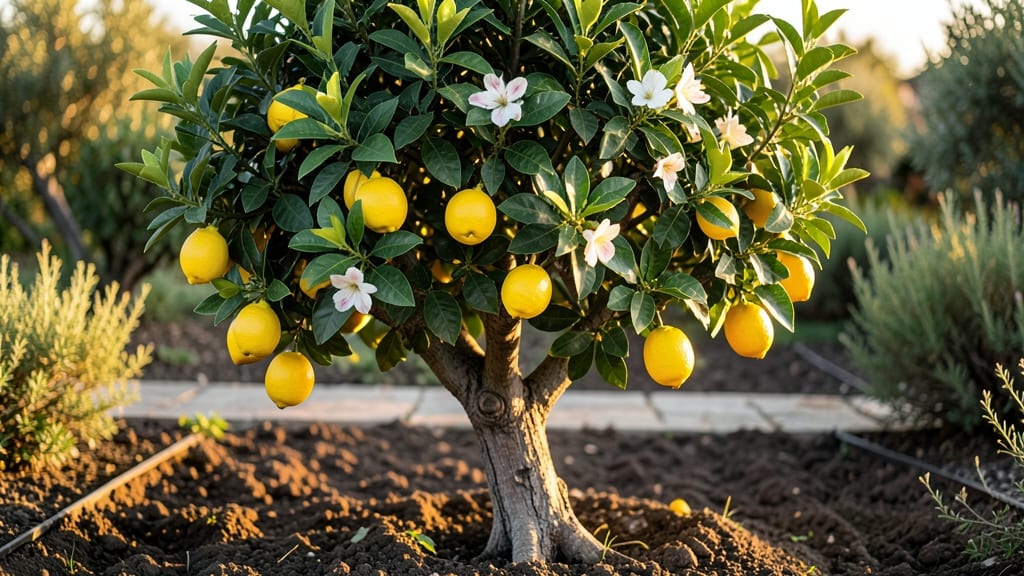
Lemon trees grow best in Zone 8 climates, handling winter temperatures down to 10–15°F (-12 to -9°C) but needing extra protection when exposed to colder microclimates. Compact varieties like 'Meyer' and 'Eureka' are top choices for this zone, thriving with consistent sun and proper winter care.
Zone 8's mild winters make it ideal for lemon trees, but their sensitivity to sudden cold snaps means planning ahead is key. 🌱 The roots are particularly vulnerable—mulching heavily in late fall helps insulate them, while wrapping the trunk with burlap adds another layer of defense.
I've seen 'Meyer' lemons survive unprotected in sheltered spots, but a frost cloth becomes essential during unexpected freezes. Container-grown trees offer extra flexibility, as you can move them indoors before temperatures drop below 30°F (-1°C).
For maximum success, pair your choice of variety with the right growing conditions.
'Improved Meyer' lemons, for example, produce more consistently than standard Meyers, while 'Lisbon' lemons are slightly hardier but need more pruning to stay compact. 🍋 The secret lies in balancing cold tolerance with sunlight exposure—most Zone 8 lemon trees need at least 6–8 hours of direct sun daily to set fruit.
If your garden has partial shade, consider dwarf varieties that can be grown in large containers near sunny walls.
💡 In This Article
- Understanding Lemon Tree Cold Tolerance in Zone 8
- Top Lemon Tree Varieties for Zone 8 Gardens
Understanding lemon tree cold tolerance in Zone 8
Lemon trees (Citrus × limon) are subtropical evergreens that struggle with prolonged cold, but Zone 8's mild winters create a delicate balance. The key threshold is 28°F (-2°C)—below this, new growth and blossoms freeze instantly, while established wood can survive down to 10–15°F (-12 to -9°C).
What's fascinating is how the tree's anatomy responds: the roots are far more cold-sensitive than the canopy, which is why heavy mulching (6–8 inches of organic matter) becomes critical.
I've observed that even hardy varieties like 'Meyer' will drop leaves if roots freeze, but the trunk itself can endure brief dips to 15°F (-9°C) without permanent damage. 🌱
The real challenge in Zone 8 isn't just the lows but temperature fluctuations. A sudden drop from 50°F (10°C) to 20°F (-7°C) in 24 hours can cause cellular damage faster than a slow freeze.
This is why microclimates matter so much—south-facing walls, containers, or even a well-insulated greenhouse can create pockets where temperatures stay 5–10°F warmer than the surrounding area.
For example, a lemon tree planted against a brick wall might survive 12°F (-11°C), while one in an open yard would suffer at 18°F (-8°C). The science here involves radiant heat absorption from structures and the insulating effect of containers.
Container-grown lemon trees have a survival advantage because you can move them indoors before hard freezes. The root zone in pots stays warmer than in-ground soil, and the container itself acts as a thermal buffer.
However, this requires planning: most Zone 8 gardeners bring potted lemons inside when nighttime temps drop below 32°F (0°C). The trade-off? Indoor trees often need supplemental grow lights (12–14 hours/day) to compensate for reduced winter sunlight.
For in-ground plants, winter wrap (burlap around the trunk) and frost cloth (weighted down to avoid touching leaves) can push survival limits by 3–5°F.
What most people overlook is the spring thaw risk. After a freeze, lemon trees can "burn" when warm sun hits thawing branches—this causes sap to rise too quickly, leading to sunscald. To prevent this, I recommend gradual reintroduction to sunlight after winter protection is removed.
Start with 2–3 hours of morning sun, then increase exposure over 7–10 days. This mimics natural conditions and reduces stress on the tree. 💫
For those in Zone 8a (where winters dip to 10–15°F), the 'Improved Meyer' lemon stands out for its 20% higher cold tolerance than standard Meyers. Its hybrid vigor means it can handle 12°F (-11°C) with proper care, while 'Eureka' lemons (common for commercial use) struggle below 18°F (-8°C).
The difference comes down to cellular membrane composition—hardier varieties have more unsaturated fats in their cell walls, which remain fluid at lower temps. This is why grafting 'Improved Meyer' onto a cold-hardy rootstock (like 'Flying Dragon' trifoliate orange) can extend survival to 8°F (-13°C) in sheltered spots.
If you're growing lemons in containers, pot size matters more than material. A 15–20 gallon container gives roots enough mass to regulate temperature, while smaller pots freeze faster. Terracotta pots, despite their breathability, lose heat 30% faster than plastic or fabric grow bags.
For in-ground planting, elevated beds (6–12 inches above grade) improve drainage and reduce root zone freezing. The goal is to keep soil temps above 35°F (2°C)—below this, root activity halts, and the tree enters dormancy prematurely. 🌡️