
How To
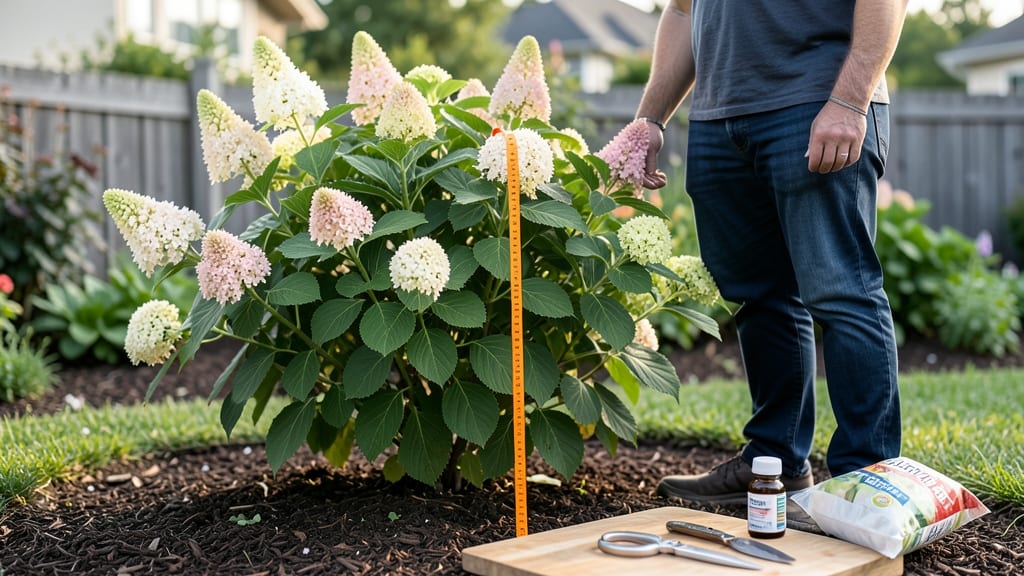
Hydrangea trees grow anywhere from 3 to 15 feet tall, depending on the variety and care you give them 🌸 — but knowing the exact range for your pick is the key to planning your garden layout.
If you're dreaming of a stunning hydrangea tree but unsure whether it’ll dwarf your patio or soar over your roof, you’re in the right place. These showstopping shrubs come in surprising sizes—some stay compact while others grow tall enough to rival small trees—so let’s break down exactly what to expect.
For example, the Hydrangea paniculata varieties like 'Limelight' can reach 8 to 15 feet, making them perfect for tall hedges or focal points in large yards.
On the other hand, Hydrangea arborescens like 'Annabelle' typically max out around 3 to 5 feet, ideal for smaller spaces or container gardening.
In this guide, you’ll discover how sunlight, pruning, and soil all play a role in shaping your hydrangea’s height—and how to choose the perfect variety for your space.


Hydrangea tree height ranges by variety: small to towering options
Choosing a hydrangea tree means picking between compact shrubs that fit cozy patios and towering specimens that make bold statements in large landscapes. The height differences between varieties can be dramatic—some stay under 5 feet while others reach 15 feet or more.
Understanding these ranges helps you plan your garden layout with confidence.
Hydrangea trees belong to different species, each with distinct growth habits. Hydrangea arborescens varieties like 'Annabelle' tend to stay shorter, while Hydrangea paniculata types like 'Limelight' can grow significantly taller. Even within species, cultivars vary widely—some are bred for dwarf growth, while others are designed to create vertical drama.
Here’s where things get interesting: the mature height of a hydrangea tree isn’t just about genetics—it’s also shaped by your pruning habits, soil quality, and sunlight exposure.
A well-pruned 'Grandiflora' might stay at 8 feet, while one left unchecked could stretch to 12 feet. Let’s explore the most popular varieties and their height expectations.
If you’re working with limited space, dwarf varieties like 'Little Lime' or 'Annabelle' are perfect for container gardening or small yards. Their 3-5 foot height makes them ideal for foundation plantings or as accent plants near walkways.
Meanwhile, taller varieties like 'Limelight' or 'Grandiflora' thrive as specimen plants in larger gardens or as focal points in landscape designs.
For landscape planning, consider how a hydrangea tree’s height will interact with other plants and structures. A 10-foot specimen like 'Grandiflora' can create a stunning backdrop for perennial borders, while a 4-foot 'Endless Summer' fits neatly into mixed shrub beds.
Always check the spread too—some varieties grow wider than they do tall, which affects placement.
One common mistake is assuming all hydrangeas follow the same growth pattern. Hydrangea arborescens types (like 'Annabelle') grow more slowly and stay compact, while Hydrangea paniculata varieties (like 'Limelight') shoot up quickly and need regular pruning to control their height.
If you’re unsure, start with a smaller variety to test
How sunlight affects hydrangea tree growth: light requirements by size
Sunlight is the secret ingredient that determines whether your hydrangea tree will stay a manageable shrub or reach towering heights. Too much direct sun can stress delicate varieties, while insufficient light stunts growth entirely.
The key lies in understanding how each type responds—some thrive in full sun and grow tall, while others prefer partial shade and stay compact.
For example, Hydrangea paniculata varieties like 'Limelight' can handle 6+ hours of sun and reach 10-15 feet, while Hydrangea arborescens 'Annabelle' prefers morning sun + afternoon shade and maxes out at 3-5 feet. Let’s explore how to match light conditions to your desired height.
🌿 Sunlight & Hydrangea Height: Quick Guide
| Sunlight Type | Height Impact | Best Varieties |
|---|---|---|
| Full Sun (6+ hrs) | Taller growth (8-15 ft) | 'Limelight', 'Grandiflora' |
| Partial Shade (4-6 hrs) | Moderate (5-8 ft) | 'Endless Summer', 'Nikko Blue' |
| Dappled Shade (<4 hrs) | Compact (3-5 ft) | 'Annabelle', 'Incrediball' |
💡 Pro Tip: Adjust pruning to manage height—cut back 1/3 of stems in late winter for full-sun varieties.
If you’re growing a tall hydrangea tree, prioritize morning sunlight and afternoon shade to prevent leaf scorch. Varieties like Hydrangea quercifolia (oakleaf hydrangea) love bright indirect light and grow 10-20 feet with proper care. Monitor leaf color—yellowing means too much sun, while pale leaves signal insufficient light.
For compact hydrangeas, create a shady microclimate under taller trees or on north-facing walls. Hydrangea macrophylla (bigleaf types) often stay under 5 feet in partial shade but may flop without support. Use stakes or cages to maintain shape and encourage upward growth.
One common mistake? Assuming all hydrangeas need full sun. Hydrangea arborescens (smooth hydrangea) actually wilts in intense afternoon heat, so plant it where it gets filtered light. Test your spot: If leaves crisp by noon, it’s too harsh—move your tree to a protected location.
Remember, hydrangea trees grow faster with proper light, but quality over quantity matters most. A 5-foot 'Annabelle' in partial shade will outperform a 12-foot 'Limelight' struggling in full sun. Start small, observe your plant’s response, and adjust placement as it matures.