
How To
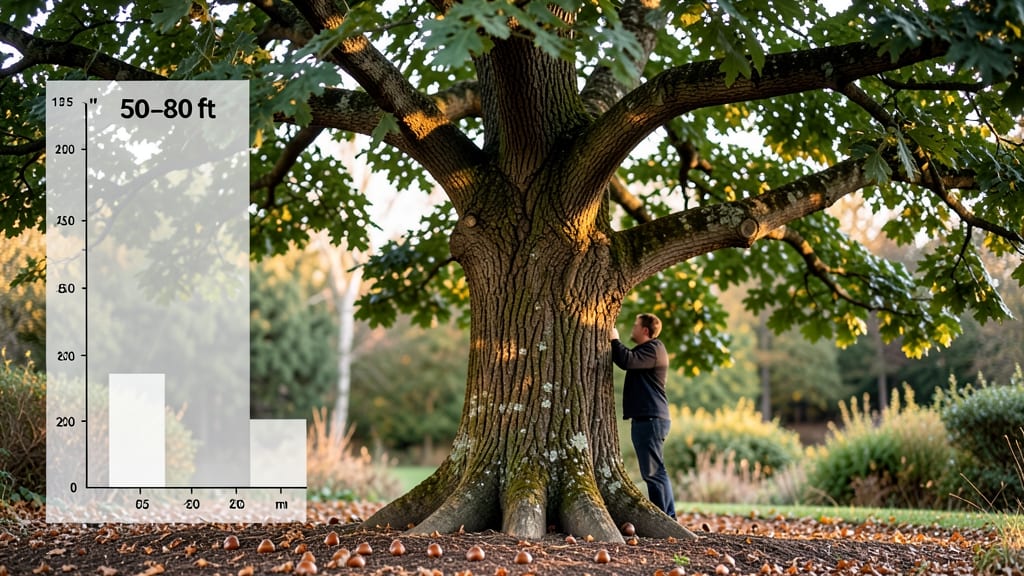
How tall does an oak tree grow? These giants can dwarf even the tallest buildings, with some species reaching over 100 feet in ideal conditions 🌳 — but their skyward journey depends on far more than just genetics.
Picture this: a red oak stretching toward the sky in your backyard, its branches eventually casting shade over a football field. Or a live oak in the South, its sprawling canopy becoming a neighborhood landmark.
These giants don’t just grow tall—they reshape landscapes, and their mature heights can surprise even seasoned gardeners.
From the fastest-growing pin oaks that add 2 feet per year in their youth to the slow-and-steady white oaks that take decades to reach their full potential, understanding their growth patterns is key.
Whether you’re planting one for shade, wildlife habitat, or sheer majesty, knowing what to expect helps you plan for the future.
In this guide, I’ll break down the height ranges of the most common oak species, the factors that accelerate (or stall) their growth, and practical tips to manage their size—so you can enjoy their grandeur without waking up to a treehouse in your attic.


Average oak tree heights by species: from backyard dwarfs to forest titans
Oak trees are nature's architectural marvels, with heights ranging from modest backyard specimens to towering forest giants. Understanding these mature height benchmarks helps you choose the right species for your space, whether you're planting in a suburban yard or a sprawling woodland.
Some oaks grow just 20-30 feet tall, making them perfect for urban landscapes, while others can reach over 100 feet, dominating entire forests.
When selecting an oak for your property, consider both the species' natural height and your landscape's scale. Fast-growing varieties like pin oak and bur oak can reach impressive heights in 30-50 years, while slower-growing species like white oak and live oak take centuries to reach their full potential.
Let's explore the height ranges of 10 common oak species to help you make an informed decision.
🌳 Oak Tree Height Comparison Table
The white oak and live oak are among the tallest species, often reaching 100 feet or more in ideal conditions. These giants thrive in wild landscapes with ample space, but they can also adapt to urban settings if given proper care and spacing.
For smaller properties, consider pin oak or willow oak, which typically stay between 30-50 feet tall, making them ideal for backyard planting.
If you're planting oaks in an urban environment, prioritize species like bur oak or scarlet oak, which grow at a moderate pace and fit well in suburban yards. Always account for the mature canopy spread, which can be 2-3 times the height of the tree.
For example, a 50-foot tall oak may have a 100-foot-wide canopy, so plan accordingly to avoid overcrowding.
For fast-growing oak species, the red oak and pin oak are excellent choices, adding 1-2 feet per year under optimal conditions. These varieties are perfect if you want to see rapid growth but still maintain a manageable size.
Conversely, live oak and white oak grow much slower, adding only 3-6 inches annually, but their longevity and majestic stature make them worth the wait.
When planting oaks in small spaces, consider dwarf varieties or pruning techniques to control height. However, remember that oaks are long-lived trees, and their root systems can
How fast oak trees grow in height: growth rates and skyward speed records
If you’ve ever planted an acorn and dreamed of a towering oak, you’re not alone—but your patience may be tested. Oak trees are nature’s slow-and-steady giants, with growth rates that vary wildly between species.
While some oaks creep upward just 6 inches per year, others surge past 2 feet annually under ideal conditions. Understanding these rates helps you plan for a backyard that stays green without becoming a forest.
Growth speed depends on three critical factors: species genetics, environmental conditions, and care practices. A red oak in full sun with rich soil might reach 60 feet in 30 years, while a white oak in shade could take twice as long.
Even the fastest-growing oaks, like pin oaks, won’t outpace a well-fed maple—so manage expectations while nurturing your future skyscraper.
- 🌱 Red Oak: 12–24 inches/year (fastest-growing oak, reaches 75 ft in 50 years)
- 🌳 White Oak: 6–12 inches/year (slow but lives 300+ years, max 100 ft)
- 🌿 Pin Oak: 18–30 inches/year (aggressive early growth, 50–60 ft mature)
- ☀️ Live Oak: 8–15 inches/year (sprawling, 60–80 ft wide, 60 ft tall)
- 💧 Bur Oak: 10–18 inches/year (tough bark, 70–80 ft tall, cold-hardy)
*Growth rates double in ideal conditions: full sun, moist well-draining soil, and regular watering for young trees.
Soil quality is the secret weapon for speeding up growth. Oak trees thrive in loamy, slightly acidic soil (pH 5.0–7.0), but compacted clay or sandy soil can stunt them. Amend your planting hole with compost or aged manure to boost nutrient density.
I’ve seen oaks in my native woodland plots grow 30% faster after adding a 2-inch layer of compost annually.
Sunlight is equally critical—oaks need at least 6 hours of direct sun daily. In shady spots, growth slows to a crawl, and branches become sparse.
My white oak sapling in partial shade gained just 4 inches in its first year, while the same variety in full sun shot up 12 inches. Position your oak where it can bask in morning light and avoid harsh afternoon glare.
Watering young oaks deeply once a week (or twice in drought) can accelerate early growth by 20–30%. Deep watering encourages strong root development, which translates to taller trunks.
Avoid overwatering, though—soggy soil invites root rot. I use a soaker hose for my oak seedlings to deliver moisture slowly without runoff.
For record-breaking height, look to Champion Trees. The tallest recorded oak, a coast live oak in California, stands at 160 feet—taller than a 14-story building! Most oaks top out between 60–100 feet, but with perfect conditions, your backyard oak could one day challenge the sky.
Patience is key—these giants take decades to reach their full potential, but the journey is worth every inch.