
How To
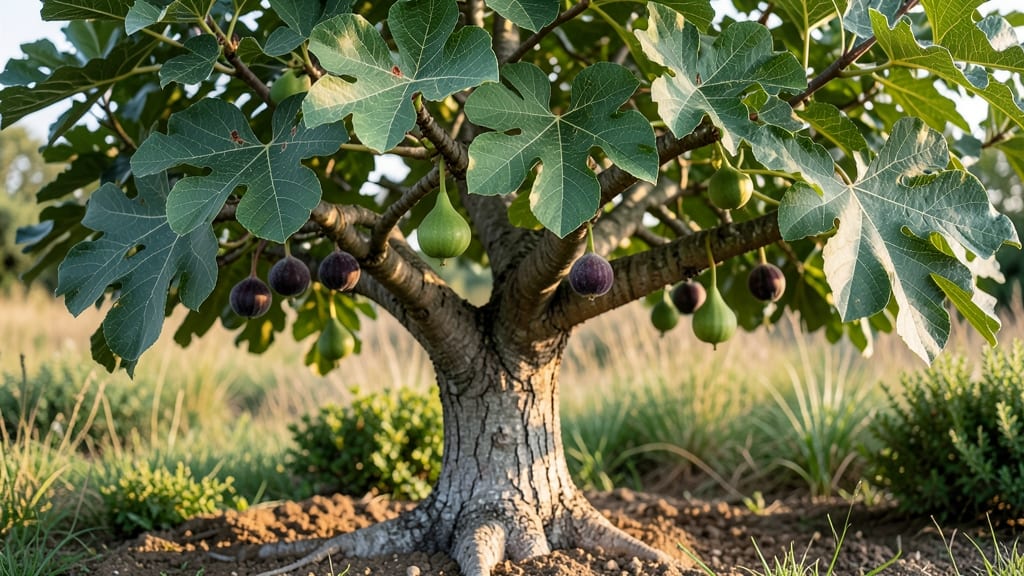
A fig tree can grow anywhere from 8 feet to towering 30 feet tall, depending on the variety you choose.
If you're dreaming of a lush fig tree in your yard but wondering whether it’ll tower over your house or fit neatly in a pot, the answer depends entirely on the variety—and this guide breaks it all down.
Dwarf varieties like 'Little Miss Figgy' stay compact, perfect for containers or small gardens, while standard types like 'Brown Turkey' can reach heights that dwarf even a two-story home.
Below, we’ll explore how pruning, climate, and even your planting spot can influence your fig tree’s height, plus the best varieties for tight spaces or sprawling yards.


Fig tree height by variety: dwarf vs standard growth charts
Choosing the right fig tree variety is the first step to controlling its height. Some varieties stay compact enough for containers or small yards, while others grow into towering ornamental trees that need space to spread.
The Ficus carica species alone offers over 800 varieties, but we’ll focus on the most popular ones that fit into dwarf, semi-dwarf, and standard categories.
If you’re working with limited space, dwarf fig trees (typically under 6 feet tall) are your best bet. These varieties thrive in pots, raised beds, or small gardens and still produce delicious fruit.
Meanwhile, standard fig trees can reach heights of 20-30 feet, making them perfect for large yards or as shade trees. Let’s break down the height expectations for each category.
The Little Miss Figgy is one of the most popular dwarf fig varieties because it stays under 6 feet tall and produces sweet, black figs perfect for containers. This makes it ideal for balconies, patios, or small urban gardens.
In contrast, the Brown Turkey variety can grow up to 30 feet tall, making it better suited for large rural properties where it can spread its roots and branches freely.
For semi-dwarf varieties, the Celeste fig tree is a standout with its pink and white fruit and a mature height of 10-15 feet. It’s perfect for gardeners who want a medium-sized tree that still provides ample shade and fruit.
Meanwhile, the Osborn Prolific is a high-yielding variety that reaches 15-20 feet, making it a favorite for those who prioritize fruit production over compact size.
If you’re growing fig trees in containers or small spaces, choose dwarf varieties like Little Miss Figgy or Violette de Bordeaux. These thrive in 15-20 gallon pots and can be moved indoors during winter months in colder climates.
Just ensure your container has drainage holes to prevent root rot, and use a well-draining potting mix.
For outdoor planting, consider the space requirements of each variety. A standard fig tree like Brown Turkey needs at least 15-20 feet of clearance from structures, power lines, and other plants.
Plant it 10-15 feet away from your house or fence to allow for its spreading branches and root system.
How to control fig tree height: pruning, training, and container tips
Managing your fig tree height starts with understanding its natural growth patterns. Without intervention, standard varieties like 'Brown Turkey' can reach 20-30 feet, while dwarf types like 'Little Miss Figgy' stay compact at 6-8 feet.
The good news? With the right techniques, you can shape your tree to fit your space—whether that's a balcony container or a backyard focal point.
For container-grown figs, pruning and training are your best tools. I’ve found that dwarf varieties respond well to annual pruning in late winter, while larger types benefit from structured training like espalier or staking.
The key is balancing fruit production with height control, as aggressive pruning can reduce yields if not done carefully.
If your fig tree is already too tall, selective pruning can help. Focus on removing lower branches to open up the canopy and reduce overall height. I’ve seen 10-foot trees reduced to 6 feet in one season with targeted cuts.
Just remember: fig trees produce fruit on new wood, so avoid over-pruning in fruiting years.
For container gardening, root pruning is a game-changer. When repotting, trim circled roots to encourage outward growth instead of upward. Pair this with a well-draining potting mix (like 60% soil, 30% perlite, 10% compost) to keep roots healthy without fueling rapid height growth.
Finally, mulch heavily around the base to retain moisture and suppress weeds, which compete with your fig tree’s nutrients. A 3-inch layer of straw works wonders for dwarf varieties in pots, keeping them compact and thriving.
With these techniques, you’ll have a fig tree that’s exactly the height you want—no guesswork involved!