
How To
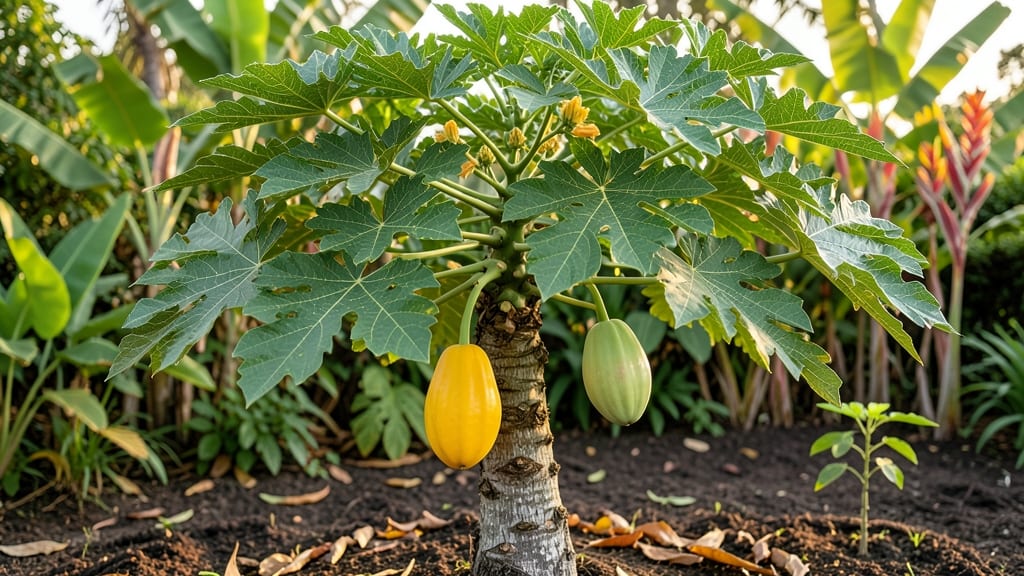
A papaya tree grows between 10 and 30 feet tall, depending on the variety and growing conditions—some dwarf types stay under 10 feet while standard varieties can reach treehouse height.
If you're dreaming of a backyard papaya grove, you might be surprised by how fast these tropical trees grow—some varieties shoot up 5 feet in just a year—but their final height depends on pruning, sunlight, and climate.
In USDA Zones 10-12, where they thrive, they can become towering features of your landscape.
For container growers, choosing a compact variety like Solo or SunUp keeps heights manageable, while standard types need space to stretch toward the sky. The key to controlling their growth? Pruning, soil quality, and consistent watering—all factors we’ll break down to help you pick the perfect papaya for your space.
Ready to grow one? You’ll discover how to maximize fruit production while keeping your tree at the ideal height, whether you’re aiming for a small patio tree or a full-sized tropical giant.


Papaya tree height by variety: dwarf vs. standard vs. giant types
Papaya trees (Carica papaya) are tropical wonders that can dramatically vary in height depending on the variety and growing conditions. While some standard types reach towering heights of 20-30 feet, others like dwarf varieties stay manageable at just 6-8 feet.
Choosing the right type ensures your space and climate are well-suited for cultivation, whether you're growing in containers or open ground.
The Solo and SunUp varieties are among the most popular for home gardeners, offering a balance between fruit production and manageable size. Meanwhile, Kapoho and other heirloom types can grow exceptionally tall, making them ideal for tropical estates or large backyards.
Understanding these differences helps you plan for pruning, support structures, and even container sizes to keep your papaya tree thriving.
If you're limited on space, the Solo variety is an excellent choice, reaching only 6-10 feet at maturity. This makes it perfect for container gardening or small urban patios, especially when paired with regular pruning to control height. For those with larger properties, the Kapoho or Red Mar
Factors that influence papaya tree height: climate, pruning, and care
Your papaya tree's height isn't just a matter of genetics—it's heavily influenced by your local climate and the care you provide. In tropical zones (USDA 10-12), these trees can reach 20-30 feet tall with ideal conditions, while cooler climates may limit growth to 10-15 feet or less.
Even within the same region, small changes in sunlight exposure or pruning habits can dramatically alter how tall your tree becomes.
One of the biggest misconceptions is that papaya trees grow at the same rate regardless of their environment. In reality, temperature fluctuations can stunt growth—even in warm climates. For example, nighttime temps below 60°F (15°C) slow vertical growth, while consistent 75-85°F (24-29°C) days promote rapid height increases.
This is why container-grown papayas often stay shorter than those planted in well-draining garden soil with full sun exposure.
🚨
Over-pruning can stunt growth permanently. Papaya trees grow fastest when allowed to develop their natural central leader. Removing more than 20% of foliage at once triggers compensatory growth that often results in bushier (not taller) trees. For container papayas, regular root pruning is safer than aggressive canopy cuts.
If you're growing a papaya in a container (5+ gallons), expect heights of 6-12 feet at maturity, even with ideal care. The key is root restriction—when roots circle the pot, they compete for nutrients, slowing vertical growth.
I've found that repotting every 2 years into slightly larger containers (just 2-3 inches wider) helps maintain a balanced height-to-pot ratio. For in-ground trees, well-aerated soil with organic matter encourages deeper root systems, which support taller growth.
Pruning isn't just about height control—it's also about fruit production. Removing suckers (side shoots) too early can redirect energy upward, causing rapid but weak growth. Instead, I recommend selective pruning: remove only 1-2 dominant suckers per season to maintain a balanced canopy.
For fruit-bearing branches, prune just enough to improve air circulation—never more than 30% of the branch length at once.
Another critical factor is watering consistency. Papaya trees respond to drought stress by slowing all growth, including height. In my USDA Zone 11 garden, I water deeply every 2-3 days during summer, but reduce to weekly watering in cooler months.
Overwatering, however, can cause root rot, which stunts growth entirely. Always check the top 2 inches of soil—if it's dry, it's time to water.
For those in cooler microclimates (USDA 9), consider winter pruning to control height. After the first frost threat passes, prune back 1/3 of the tree's height to encourage new spring growth that's better adapted to your climate.
Pair this with mulching (3-4 inches of straw) to protect roots and maintain soil warmth—this combo can add 2-3 feet of controlled growth in a single season.