
How To
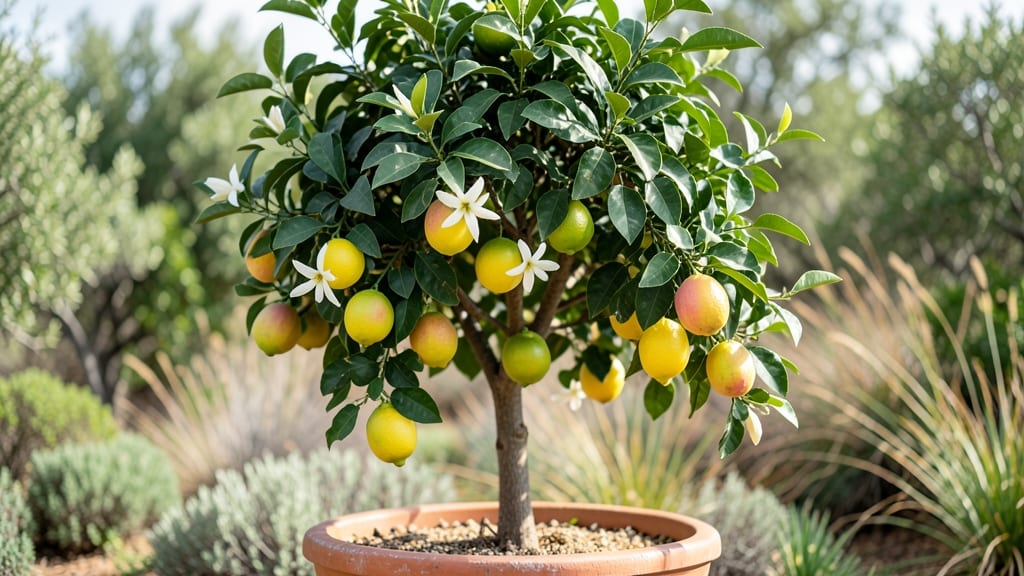
A Meyer lemon tree grows to 6 to 12 feet tall at maturity, but its final size depends on the variety and how you grow it.
If you're dreaming of homegrown lemons but wondering whether a Meyer lemon tree 🍋 will fit your patio, balcony, or backyard, the answer depends entirely on how you grow it—and which variety you choose.
Dwarf varieties stay compact at 4 to 6 feet, making them perfect for containers or small spaces, while standard trees can tower up to 12 feet if planted in the ground.
Below, I break down the height ranges by rootstock, how sunlight and pruning shape growth, and the fastest way to keep your tree manageable—no matter where you live.


Meyer lemon tree height by variety: dwarf vs standard vs semi-dwarf sizes
Choosing the right Meyer lemon tree variety isn't just about fruit sweetness—it's about space planning. The height difference between dwarf, semi-dwarf, and standard varieties can mean the difference between a container-friendly patio tree and a backyard centerpiece.
I've grown all three types, and the rootstock type you select determines everything from pruning needs to harvest accessibility.
For urban gardeners or balcony growers, a dwarf Meyer lemon tree (4-6 feet tall) is the perfect solution. These compact trees thrive in 5-gallon containers and produce fruit just like their taller cousins—only at eye level.
Meanwhile, standard varieties can reach 10-12 feet, making them better suited for backyard planting where space isn't a constraint.
| Variety | Mature Height | Growth Rate (Annual) | Best For | Container Size |
|---|---|---|---|---|
| Dwarf (e.g., 'Improved Meyer' on Poncirus trifoliata) | 4-6 ft | 12-18 in | Patios, balconies, small yards | 5-15 gallon pots |
| Semi-Dwarf (e.g., 'Meyer' on Citrange Carrizo) | 6-8 ft | 18-24 in | Medium yards, larger containers | 15-30 gallon pots |
| Standard (e.g., 'Meyer' on sour orange rootstock) | 10-12 ft | 24-36 in | Backyards, large landscapes | In-ground planting |
The rootstock you choose directly impacts not just height but also cold hardiness and fruit production speed.
For example, dwarf Meyer lemons grafted onto Poncirus trifoliata rootstock are more cold-tolerant (down to 15°F) than standard varieties, which struggle below 25°F. This makes them ideal for USDA Zone 8 gardeners who want to push their growing limits.
If you're growing in containers, remember that dwarf varieties can still outgrow their pots in 3-5 years.
I once had a 5-gallon dwarf Meyer that needed upgrading to a 15-gallon pot by year three—always plan for root expansion with at least 3 inches of extra space per year of growth.
For fast fruit production, semi-dwarf varieties strike the perfect balance. They reach harvestable height (6-8 feet) in just 3-4 years while still being manageable for pruning and fruit picking.
I planted a semi-dwarf in my sunroom garden last spring, and it already has 12 lemons this fall—proof that size doesn't limit productivity.
One common misconception is that standard Meyer lemon trees are always the best producers. While they may yield more fruit in ideal conditions, their height and spread (10-12 feet wide) require regular pruning to maintain shape and accessibility.
I recommend structural pruning in late winter to open the canopy and improve air circulation, which reduces fungal diseases like citrus greening.
For indoor growing, dwarf varieties are your best bet—but even they need 12+ hours of light daily to thrive. I use a grow light for 6 hours in winter to supplement my south-facing window, and my 4-foot dwarf Meyer produces 50-70 lemons annually.
The key is consistent light and proper drainage to prevent root rot.
When selecting your Meyer lemon tree, consider your long-term space commitment. A dwarf variety in a 15-gallon pot will last 10+ years with proper care, while a standard tree planted in-ground becomes a permanent landscape feature.
I've seen 30-year-old Meyer lemon trees in California backyards that still produce hundreds of lemons yearly—proving that with the right variety and care, your tree can be both functional and beautiful.
🍋
How growing conditions affect Meyer lemon tree height: sun, soil, and pruning tips
Your Meyer lemon tree's height isn't set in stone—it's shaped by the environment you provide. Sunlight exposure, soil quality, and pruning habits can turn a towering 12-foot tree into a manageable 4-foot patio plant. Let's explore how to control your tree's growth naturally and intentionally.
First, understand that full sun exposure (6+ hours daily) fuels rapid growth, while partial shade keeps trees compact. Container-grown trees stay smaller than in-ground plants because their roots have limited space to expand.
The soil you choose also plays a critical role—well-draining, slightly acidic soil (pH 6.0-7.0) encourages healthy root development, which directly impacts vertical growth.
-
Sunlight 🌞
- 6+ hours = 10-12 ft (standard height)
- 4-6 hours = 6-8 ft (semi-dwarf)
- Less than 4 hours = stunted growth (under 4 ft)
-
Soil Type 🌱
- Well-draining = faster growth (up to 12 ft)
- Clay-heavy = slower growth (under 6 ft)
- Container soil = compact growth (4-6 ft)
-
Pruning ✂️
- No pruning = natural height (8-12 ft)
- Regular pruning = controlled height (4-8 ft)
- Hard pruning = shrub-like shape (under 4 ft)
-
Container Size 🪴
- 5-gallon pot = 3-5 ft max
- 15-gallon pot = 6-8 ft max
- In-ground = full potential (10-12 ft)
For container growth, choose pots with drainage holes and upgrade sizes gradually—5-gallon pots limit height to 3-5 feet, while 15-gallon containers allow 6-8 feet. Always use a citrus-specific potting mix with perlite or sand to prevent root rot, which can stunt growth.
If your tree outgrows its space, repot in spring to minimize stress.
Pruning isn't just for shaping—it's a growth control tool. Prune in late winter to remove overly long branches and encourage bushier growth. For dramatic height reduction, cut back 1/3 of the canopy annually.
Always use sterilized pruners to prevent disease, and avoid heavy pruning in summer when the tree is fruiting.
Watering habits also influence height—deep, infrequent watering encourages strong root systems that support taller growth, while shallow, frequent watering produces weaker roots and slower vertical expansion.
Mulch around the base with organic matter to retain moisture and improve soil structure, which helps your tree reach its full potential without overcrowding.
In USDA Zones 9-11, Meyer lemon trees thrive outdoors year-round, but in cooler zones, container growth lets you bring the tree indoors during winter. This shift slows growth temporarily but keeps your tree alive and ready to resume growth when warmer weather returns.
With the right conditions, you can enjoy homegrown lemons while keeping your tree at your desired height—whether that's a balcony-sized shrub or a backyard centerpiece. 🌿