
How To
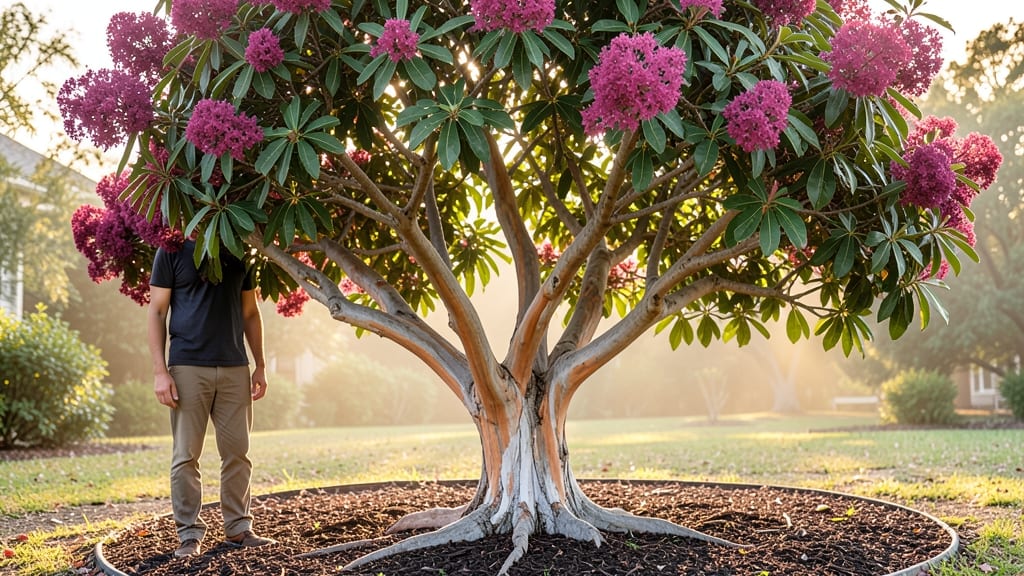
If you're dreaming of a stunning, low-maintenance tree that blooms like a firework display, crepe myrtles might be your perfect match—but first, you need to know how big they'll get.
Some varieties top out at just 6 feet, while others soar to 30 feet or more, making size a critical factor in placement and care.
Fast-growing cultivars like 'Natchez' or 'Tonto' can reach 20 feet in just a few years, while dwarf varieties stay compact at 6-12 feet. Whether you're working with a small patio or a sprawling backyard, choosing the right type ensures your 🌳 thrives without overwhelming your space.
Below, I’ll break down the height ranges for the fastest-growing cultivars, how to control growth with pruning, and which varieties work best for small yards versus large landscapes—so you can pick the perfect fit for your garden.


Crepe myrtle height ranges: fastest-growing cultivars and their mature sizes
Choosing the right crepe myrtle cultivar depends heavily on how much space you have and your vision for your landscape. Some varieties grow aggressively, reaching towering heights of 30 feet, while others stay compact at just 6 feet tall.
Understanding these height ranges helps you plan for proper spacing, sunlight exposure, and long-term maintenance.
Fast-growing crepe myrtles like 'Natchez' and 'Arapaho' can add 2-3 feet of height per year under ideal conditions. These varieties are perfect for creating quick privacy screens or dramatic focal points in larger yards.
Meanwhile, dwarf varieties like 'Tonto' or 'Muskogee' grow at a more manageable pace, making them ideal for smaller gardens or container planting.
Before planting, check your yard dimensions and consider mature height. A standard crepe myrtle can easily outgrow its space, while dwarf varieties may need protection from harsh winds. Let’s explore the fastest-growing cultivars and their mature sizes to help you make the best choice for your landscape.
The 'Natchez' cultivar is one of the fastest-growing and tallest varieties, reaching heights of 20-30 feet. This makes it ideal for creating dramatic backdrops or privacy screens in large properties.
Its rapid growth means you’ll see noticeable height increases within just a few years, but it requires ample space to thrive without crowding nearby plants.
For those with medium-sized yards, the 'Arapaho' cultivar offers a balanced option, growing 15-20 feet tall. It’s slightly slower-growing than 'Natchez' but still adds significant height each year. This variety is perfect for gardeners who want a statement tree without the overwhelming size of the tallest cultivars.
If you're working with limited space, dwarf varieties like 'Tonto' or 'Muskogee' are excellent choices. These cultivars top out at 6-12 feet, making them suitable for small yards, patios, or even large containers. Their slower growth rate also means less frequent pruning, which is ideal for busy gardeners.
When planting a crepe myrtle, always consider its mature size and growth rate. For example, a 'Natchez' planted near a house might require early pruning to prevent overgrowth and avoid damaging roofs or foundations. Meanwhile, dwarf varieties can be placed closer to walkways or seating areas without risking obstruction.
To visualize the differences, imagine a 'Natchez' reaching the height of a two-story house, while a 'Tonto' stays around waist height for an average adult. This stark contrast highlights why choosing the right cultivar is essential for both aesthetic and practical reasons in your landscape design.
Proper spacing is another critical factor. Plant standard varieties at least 15-20 feet from structures, while dwarf types can be placed 6-10 feet away. Always check local planting regulations, as some areas restrict tree sizes near sidewalks or roads to prevent root damage or obstruction.
Finally, remember that crepe myrtles thrive in full sun and well-draining soil. Their height potential is maximized when given ideal growing conditions, so choose a location with at least 6-8 hours of sunlight daily.
With the right variety and placement, you’ll enjoy a stunning, low-maintenance tree that fits perfectly in your landscape.
How to control crepe myrtle growth: pruning tips for managing height and shape
Crepe myrtles are stunning additions to any landscape, but their growth habits can quickly overwhelm small spaces if left unchecked. With the right pruning techniques, you can maintain your tree's desired height—whether you want a compact 6-foot specimen or a towering 20-foot statement piece.
The key is timing, proper cuts, and knowing which branches to remove.
Many gardeners make the mistake of pruning at the wrong time or using improper cuts, which can stunt growth or even harm the tree. By following these step-by-step pruning tips, you'll encourage healthy growth while keeping your crepe myrtle looking its best year after year.
Prune your crepe myrtle late winter or early spring (just before new growth begins). Avoid pruning in fall or winter, as this can leave cuts vulnerable to disease.
Start by cutting out any dead, diseased, or crossing branches at the branch collar (the swollen area where the branch meets the trunk). Use clean, sharp pruners for a smooth cut.
Selectively remove 10-20% of the oldest branches to improve airflow and sunlight penetration. Focus on branches growing inward or rubbing against others.
To limit height, cut back the tallest branches by 1/3 to 1/2 of their length. Avoid cutting into old wood (the brown, woody part of the branch), as this can reduce flowering.
Cut out suckers (shoots from the base) and water sprouts (fast-growing vertical shoots) at ground level. These compete with the main tree for nutrients.
For a bushier shape, prune the outer branches slightly shorter than the inner ones. Avoid over-pruning, which can lead to a leggy, sparse appearance.
Remove all pruned debris from the area and disinfect your tools with rubbing alcohol to prevent the spread of disease.
One of the most common pruning mistakes is the so-called "crepe murder"—over-pruning by cutting into old wood or removing too many branches at once. This can leave your tree bare and vulnerable to pests or disease.
Instead, focus on selective pruning to maintain the tree's natural shape while encouraging new growth.
For dwarf varieties, like 'Dwarf Natchez,' you’ll need less aggressive pruning—just light shaping and sucker removal. Meanwhile, standard varieties like 'Muskogee' can handle more dramatic height control if pruned correctly. Always step back and assess the tree’s shape after pruning to ensure balance.
With consistent pruning, your crepe myrtle will reward you with vibrant blooms and a manageable size, making it a low-maintenance star in your landscape. Start with these techniques, and you’ll keep your tree healthy and looking its best for years to come. 🌳