
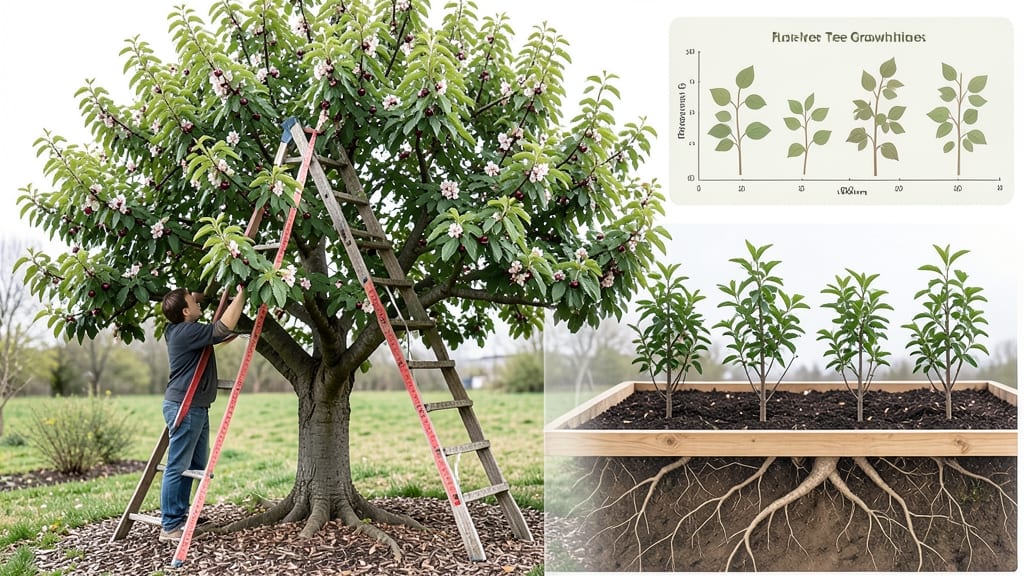
How Tall Do Cherry Trees Grow: Mature Heights by Type and Growth Habits

How To

How Tall Do Cherry Trees Grow: Mature Heights by Type and Growth Habits

How tall does a cherry tree grow? Depending on the variety, cherry trees reach heights between 8 feet and 40 feet, making them a versatile choice for everything from a backyard orchard to a compact patio tree—size truly matters.

Picture this: a dwarf 'Stella' cherry tree stays under 12 feet, perfect for small yards, while a standard 'Black Tartarian' can shoot up to 30 feet or more, requiring serious space. That’s why choosing the right type is the first step to avoiding a tree that outgrows your garden.

Beyond species, soil quality, pruning habits, and even your climate zone can push a tree toward its upper limits—or keep it in check. For example, well-drained soil and regular pruning can slow rapid growth, while rich, moist conditions might encourage a tree to reach its maximum height faster.

In this guide, you’ll find out how to pick the perfect size for your space, how fast different types grow, and the practical tricks to manage a cherry tree—no matter how tall it gets.

Dwarf
8-12 ft
Container friendly
Semi-Dwarf
12-18 ft
Most popular
Standard
20-40 ft
Full orchard size

Cherry tree height by species: dwarf vs standard vs giant varieties

If you're dreaming of a cherry tree but worried about space, don't panic! The height of cherry trees can vary dramatically depending on the species and variety. Some stay compact enough for containers, while others become majestic giants that need acres to thrive.

Understanding these differences helps you choose the perfect tree for your yard or garden.

Whether you want sweet cherries for fresh eating, tart cherries for pies, or stunning ornamental varieties for shade, selecting the right height is key.

Below, I’ve broken down 12+ popular varieties, including their mature heights, growth habits, and ideal spacing requirements to ensure your cherry tree thrives without crowding your neighbors—or your house!

Pro Tip: Always check the rootstock when buying dwarf varieties, as this determines the final size. Grafted trees on dwarfing rootstock (like Gisela or Mazzard) stay small, while those on standard rootstock grow tall regardless of the scion variety.

How fast do cherry trees grow to mature height?

If you're planning to plant a cherry tree, understanding its growth rate helps you set realistic expectations. Most cherry trees take 5 to 15 years to reach their mature height, depending on the variety.

Fast-growing types like the 'Stella' cherry can add 2 to 3 feet per year in ideal conditions, while slower-growing varieties may only gain 1 to 2 feet annually. Factors like sunlight, soil quality, and pruning play a huge role in how quickly your tree grows.

For example, a standard sweet cherry tree might reach 20 to 30 feet tall in about 10 years, while a dwarf ornamental cherry could max out at 8 to 12 feet in just 5 years.

Knowing these differences helps you choose the right variety for your space and manage growth effectively. Poor soil or inadequate sunlight can slow growth significantly, so preparing the planting site is key.

  1. Year 1: 2-4 feet of growth (fastest in first year)
  2. Year 3: 12-18 feet (standard varieties)
  3. Year 5: Dwarf varieties reach 6-8 feet (ideal for containers)
  4. Year 10: Standard trees hit 20-30 feet (full maturity)
  5. Year 15: Giant varieties (e.g., 'Black Tartarian') reach 30-40 feet

Sunlight is the most critical factor for fast growth. Cherry trees need 6 to 8 hours of direct sunlight daily to maximize their growth rate. Planting in well-draining, slightly acidic soil (pH 6.0-6.5) also boosts growth.

Without enough sunlight, trees may grow slowly or develop weak branches. I once planted a 'Lapins' cherry in partial shade, and it took 3 years longer to reach half its expected height.

Pruning also influences height. If you want to control growth, prune in late winter or early spring before new buds form. Remove 1/3 of the weakest branches each year to encourage stronger, upward growth.

Avoid heavy pruning in summer, as it can stress the tree and slow growth. For dwarf varieties, regular pruning keeps them compact and manageable in small gardens.

Climate matters too. Cherry trees grow fastest in USDA zones 5-8, where winters are cold but not extreme. In warmer zones, growth can be slower due to less distinct seasonal changes.

If you're in a hotter climate, mulch around the base of the tree to retain moisture and encourage steady growth. I’ve seen 'Rainier' cherries grow 50% faster in cooler climates compared to hotter regions.

Remember, patience is key. Even fast-growing varieties won’t reach their full height overnight. Plan your garden layout with 10-15 years of growth in mind, especially for standard trees. With the right care, your cherry tree will reward you with delicious fruit and stunning spring blooms for decades to come. 🌱

★★★★★4.9(9 reviews)
Categories How To
Variety Type Mature Height (ft) Spread (ft) Growth Rate Spacing Needs Best For
Stella® Sweet 8-12 ft 6-8 ft Moderate 10-12 ft from structures Containers, small yards
Montmorency Tart 12-15 ft 10-12 ft Fast 15-20 ft from structures Pie cherries, urban yards
Black Tartarian Sweet 20-25 ft 15-20 ft Moderate 25-30 ft from structures Large properties, shade trees
Bing Sweet 25-35 ft 20-25 ft Fast 30-40 ft from structures Commercial orchards, rural areas
Rainier Sweet 20-30 ft 15-20 ft Moderate 25-30 ft from structures Fresh eating, ornamental
Lapins Sweet 12-15 ft 8-10 ft Slow 10-12 ft from structures Dwarf containers, patios