
How To
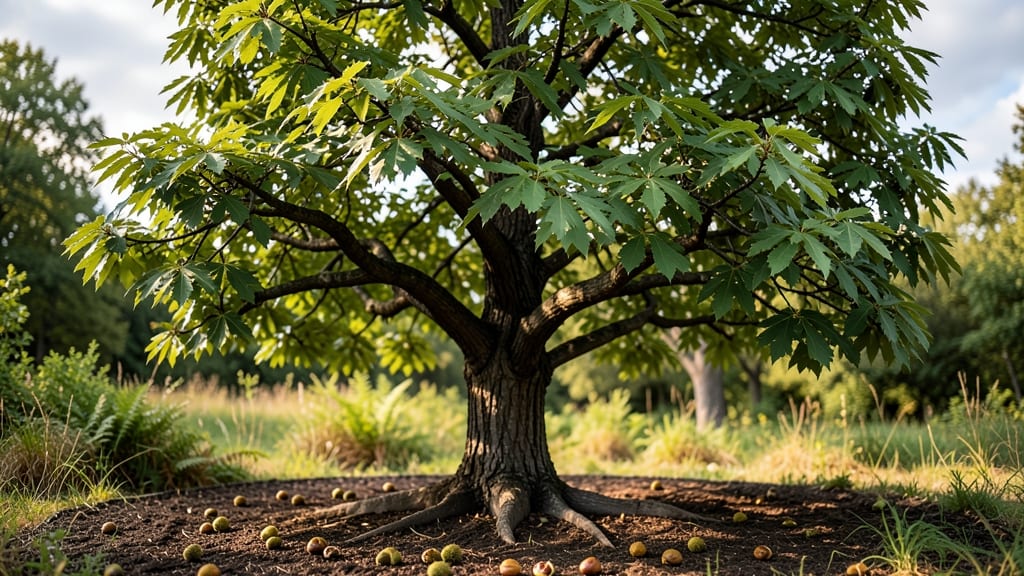
A black walnut tree 🌳 can grow between 40 and 100 feet tall, depending on its environment and care—far taller than most homeowners expect.
If you're dreaming of planting one but worried it’ll overshadow your backyard, you’re not alone. This tree’s mature height varies dramatically, from a modest 50 feet in tight spaces to towering 100-foot giants in ideal conditions.
The key factors? Soil quality, regional climate, and pruning habits all play a role. In USDA Zone 6a, for example, black walnuts often hit 70 feet without intervention, while proper care can keep them more manageable.
Below, I’ll break down how to estimate your tree’s future height, when to prune for control, and how it compares to other large nut trees—so you can plan ahead with confidence.


Black walnut tree height by region: mature size ranges and growth patterns
The black walnut tree (Juglans nigra) is one of North America's most impressive native trees, capable of reaching stunning heights that vary dramatically by region.
In ideal conditions, these trees can tower over 70 to 100 feet, with some exceptional specimens exceeding 120 feet in their native habitats. However, their mature height depends heavily on climate, soil quality, and regional growing conditions.
Understanding these variations helps you plan for the right space and care approach.
In the southeastern U.S., black walnut trees often grow taller due to warmer climates and richer soils, while those in the northeast and midwest may reach slightly shorter heights unless given optimal care. Soil drainage and nutrient availability also play critical roles—poor, compacted soil can stunt growth, while well-draining, fertile soil encourages rapid vertical expansion.
Let’s break down what to expect in your specific region.
🌳 Regional variations matter: A black walnut in USDA Zone 7 (e.g., Missouri or Tennessee) might hit 80-90 feet, while one in Zone 5 (e.g., Minnesota or upstate New York) may max out at 60-70 feet without ideal conditions. Growth rates also differ—young trees gain 1-2 feet per year, but mature specimens grow slower as they age.
| Region | Mature Height Range | Growth Rate (Annual) | Key Influencing Factors |
|---|---|---|---|
| Southeast (Zones 7-9) | 70–100+ ft | 1.5–3 ft/year (young) | Rich, well-draining soil; warm winters |
| Northeast (Zones 4-6) | 50–75 ft | 1–2 ft/year (young) | Cooler climates; slower growth in poor soil |
| Midwest (Zones 5-6) | 60–85 ft | 1–2.5 ft/year (young) | Moderate climate; drought-prone areas limit height |
| Pacific Northwest (Zones 6-8) | 65–90 ft | 2–3 ft/year (young) | High humidity; faster growth with consistent moisture |
In the southeast, black walnut trees thrive due to longer growing seasons and nutrient-rich soils, often reaching their maximum potential height of 100 feet or more. The warm, humid climate accelerates early growth, but competition with other trees can limit height if planted too closely.
In contrast, northeastern regions experience shorter growing seasons and colder winters, which can cap mature heights at 50–75 feet unless you provide extra care and protection.
The midwest offers a middle ground, where black walnut trees typically grow 60–85 feet tall.
However, drought conditions in states like Kansas or Nebraska can stunt growth, while well-watered trees in Missouri or Illinois may approach 90 feet. Soil pH also matters—black walnuts prefer slightly acidic to neutral soil (pH 6.0–7.0), and alkaline soils can slow their development significantly.
If you’re planting a black walnut in the Pacific Northwest, expect rapid early growth due to high humidity and consistent rainfall.
These trees often reach 65–90 feet, but compacted urban soils can reduce their height. Pruning young trees to encourage a stronger branch structure can also influence their final height—removing competitive leaders early helps direct energy toward a single, sturdy trunk.
For home gardeners, the black walnut’s height can be a double-edged sword. While its majestic stature adds value to landscapes, it also requires ample space and long-term planning.
In suburban areas, pruning during dormancy (late winter) can help manage height, but avoid heavy pruning in summer or fall, as this can stress the tree and reduce growth.
One often-overlooked factor is the black walnut’s allelopathic properties—its roots release juglone, a chemical that inhibits the growth of many plants underneath it.
This means you’ll need to plan companion plantings carefully to avoid stunted shrubs or ground covers near the tree’s canopy. Grasses like fescue or clover are more tolerant and can thrive in its shade.
To maximize height potential, focus on well-draining soil, regular watering during droughts, and minimal disturbance to roots once established. In urban settings, consider planting near property lines or shared borders to avoid encroachment issues.
With the right conditions, your black walnut could become a century-old landmark—but only if you give it the space and care it deserves.
🌿
How to control black walnut tree height: pruning and care tips for smaller growth
If your black walnut tree is reaching for the sky faster than you'd like, don't panic. While these trees can grow to 70–100 feet under ideal conditions, strategic care can help manage their height.
The key lies in understanding pruning techniques, soil management, and companion planting to slow vertical growth without harming the tree's health.
Black walnuts grow at a moderate to fast rate—adding 2–4 feet annually in ideal conditions. To control height, you'll need to intervene early with proper pruning and adjust growing conditions.
Start by assessing your tree's current height and growth rate, then implement a plan to guide its development toward a more manageable size.
⚠️ WARNING: Pruning Risks and Black Walnut Tree Growth Pruning a black walnut tree incorrectly can stimulate vigorous regrowth or invite disease. These trees produce juglone, a natural chemical that suppresses nearby plants—so pruning too aggressively can also stress the tree.
Always: - Prune in late winter or early spring (dormant season) - Remove no more than 25% of the canopy per year - Use sterilized tools to prevent disease spread - Avoid topping (cutting the main trunk), which causes weak regrowth
For height control, focus on selective pruning of upward-growing branches. Remove suckers (shoots from the base) and water sprouts (vertical shoots) to redirect energy toward lateral growth. Thin the canopy to allow sunlight penetration, which encourages bushier, slower-growing branches.
Pair this with root pruning—carefully trimming roots near the trunk—to limit nutrient flow to the upper canopy.
Soil amendments play a crucial role in managing growth. Black walnuts thrive in well-draining, slightly acidic soil (pH 6.0–7.0). To slow vertical growth, amend the soil with organic matter like compost to improve drainage and reduce nutrient overload.
Avoid high-nitrogen fertilizers, which fuel rapid growth. Instead, use a balanced 10-10-10 fertilizer sparingly—only in early spring—to promote steady, controlled development.
Companion planting can also help manage height indirectly. Black walnuts release juglone, which inhibits many plants. Choose juglone-tolerant companions like butterfly weed, black-eyed Susan, or Russian sage to create a balanced ecosystem.
These plants won’t compete with your walnut tree’s roots for nutrients, reducing stress that could spur excessive height growth.
Finally, monitor your tree’s growth annually. If it’s still growing too tall, adjust your approach: prune more aggressively in one season (but never exceed 25% of the canopy), or consider root restriction by planting in a raised bed with limited root space.
With patience and consistent care, you can enjoy your black walnut tree’s beauty while keeping it at a manageable height. 🌳