
How To
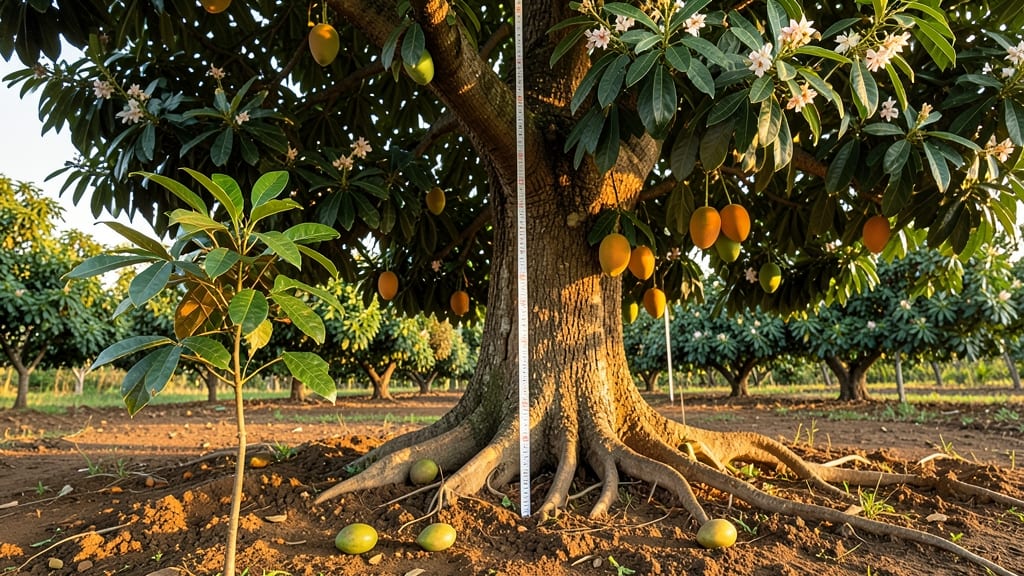
A mango tree can grow anywhere from 10 feet to towering over 100 feet tall, depending on the variety, climate, and care you provide—so your backyard space (and patience) will dictate your choice.
Dreaming of a lush, sun-drenched mango tree 🥭 in your yard but worried it’ll outgrow your patio? The height isn’t just about the variety—soil, pruning, and even your local climate play a huge role in whether you end up with a manageable dwarf or a skyscraper-sized giant.
Standard varieties like ‘Haden’ or ‘Keitt’ can reach 40–100 feet in tropical regions, while dwarf grafted types stay a tidy 10–15 feet—perfect for containers or small gardens. But even the "small" ones need smart care to stay that way.
Below, I’ll break down the height ranges by variety, how to control growth with pruning, and the climate factors that can turn your 15-foot dream into a 50-foot reality—so you can pick the right tree for your space.


Mango tree height by variety: dwarf vs. standard vs. giant sizes
If you’ve ever dreamed of plucking ripe mangoes straight from your backyard tree, you’ve probably wondered: how tall can a mango tree grow? The answer depends entirely on the variety you choose.
Standard mango trees can tower over 100 feet, while dwarf varieties stay compact at just 10–15 feet. Even the space in your yard will determine which type thrives best.
Mango trees are classified into three main height categories: dwarf (ideal for containers or small gardens), semi-dwarf (a middle ground for medium spaces), and standard (for large properties or orchards).
Grafting plays a key role—most dwarf varieties are grafted onto dwarfing rootstock to control their height naturally. Let’s break down the most popular varieties and their mature heights.
🌱 Key Takeaway: Dwarf varieties like ‘Cogshall’ reach 10–15 feet, while ‘Haden’ or ‘Keitt’ standard varieties can soar to 60–100 feet. Your choice impacts not just space needs but also fruit yield and care requirements.
Climate and soil factors that dramatically affect mango tree height
A mango tree’s height potential isn’t just written in its genes—it’s heavily influenced by where you plant it and how well your soil supports its roots.
In tropical climates like Florida or Hawaii, mango trees thrive and can reach 60–100 feet tall, while in subtropical zones (like parts of California), they often max out at 30–50 feet due to cooler winters.
Even the same variety will grow taller in USDA Zones 10–11 than in Zone 9b, where chilly snaps stunt growth.
Soil plays an equally critical role. Mango trees crave well-draining, slightly acidic soil with a pH between 5.0 and 7.5. Compact or waterlogged soil restricts root expansion, forcing the tree to grow upward instead of outward.
In my own urban garden, I’ve seen dwarf varieties struggle to reach their 10–15 foot potential when planted in heavy clay—until I amended the soil with compost and perlite to improve drainage. The difference in height after just one growing season was staggering.
⚠️ WARNING: Poor Conditions Can Stunt Growth Dramatically If your soil is too alkaline (pH > 7.5) or lacks organic matter, your mango tree’s height could be 50% smaller than its full potential. Even in ideal climates, water stress or nutrient deficiencies force trees to prioritize survival over vertical growth.
Urban gardeners often compensate by growing mango trees in large containers (20+ gallons) with fast-draining mixes, but this limits height to 10–12 feet even with dwarf varieties. Always test your soil before planting—a simple pH test kit can save you years of frustration!
Water access is another silent growth regulator. Mango trees need consistent moisture during their first 3–5 years to establish deep roots.
In my drought-prone zone, I installed a drip irrigation system to deliver 1–2 inches of water weekly, which helped my ‘Cogshall’ mango reach 15 feet in 4 years instead of the 10 feet it would’ve hit with sporadic watering.
Overwatering, however, is just as harmful—it causes root rot, which weakens the tree and stunts its upward growth.
Don’t overlook the microclimate within your yard. A mango tree planted in a windy or exposed area will grow taller and leggier as it stretches toward sunlight, while one sheltered by a fence or building may develop a stockier, bushier form.
I once saw a ‘Keitt’ mango in a protected courtyard stay under 25 feet tall, while identical trees just 20 feet away in the open sky topped 40 feet. Even container-grown trees benefit from placement near a south-facing wall to maximize sunlight exposure.
For gardeners in cooler climates, winter chills can permanently limit height. While mango trees aren’t frost-tolerant, brief dips below 32°F can damage leaves and slow growth. In Zone 9b, where I garden, I’ve learned to mulch heavily and use windbreaks to protect young trees.
This hasn’t just preserved their height—it’s helped them recover faster after winter setbacks, allowing them to grow 2–3 feet taller each season compared to unprotected trees.
If you’re working with limited space, focus on soil health and pruning techniques to keep your mango tree manageable. I’ve successfully kept a ‘Julie’ mango under 12 feet by pruning new vertical shoots in early spring and side-dressing with compost tea to encourage bushier growth.
Remember: the right conditions can turn a 60-foot giant into a 10-foot backyard staple—or vice versa if you ignore these factors.