
How To
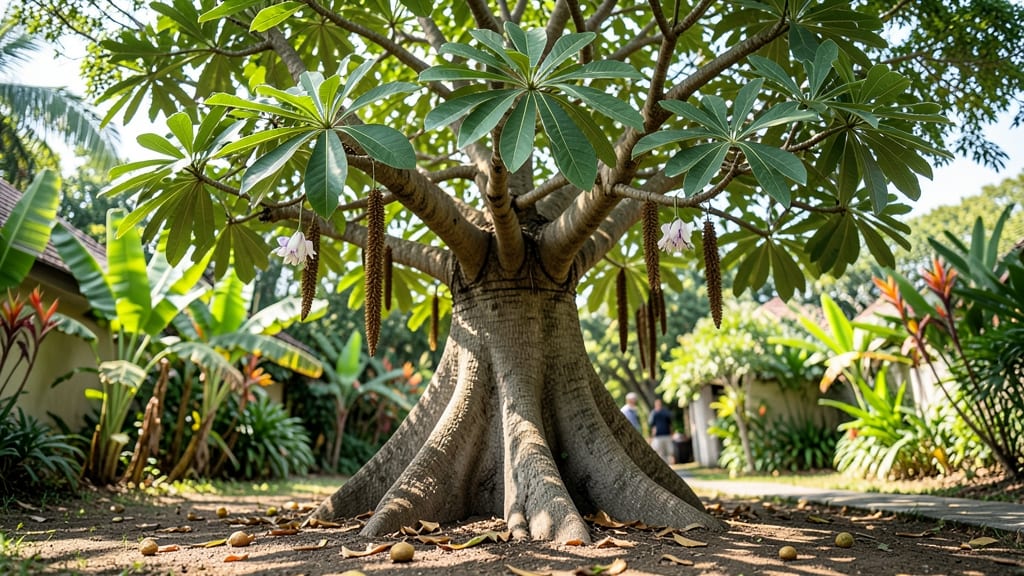
How tall can a kapok tree grow in the wild? It can reach 200 feet or more — taller than a 15-story building — but its height depends entirely on where it lives.
Picture this: a towering rainforest giant with silvery bark and massive buttress roots, its branches stretching for miles. But in a backyard or urban garden, that same tree might never reach half its potential.
Why the difference? Climate, soil, and space play huge roles. In tropical forests, kapok trees (Ceiba pentandra) thrive with rapid growth, while cultivated specimens need careful management to control their size.
Here’s how to maximize (or minimize) their height, whether you’re dreaming of a shade canopy or just want to keep it from outgrowing your property.


Kapok tree height in the wild: record-breaking giants of the rainforest
The kapok tree (Ceiba pentandra), also called the silk-cotton tree, is one of the most impressive giants in tropical rainforests. In its natural habitat, these trees can reach heights of 160–230 feet (50–70 meters), rivaling the tallest hardwoods like the African baobab or coast redwood.
Their towering stature makes them iconic rainforest landmarks, with some specimens documented at over 200 feet tall under ideal conditions.
Wild kapok trees thrive in the tropical lowlands of Central and South America, Africa, and Southeast Asia. Their rapid growth—up to 3–6 feet per year—allows them to dominate the forest canopy within just a few decades.
This explosive growth is fueled by their deep root systems and ability to photosynthesize year-round in warm climates.
| Growth Metric | Wild Specimens | Cultivated Specimens | Optimal Conditions |
|---|---|---|---|
| Mature Height | 160–230 ft (50–70 m) | 40–100 ft (12–30 m) | Full sun, rich soil, no competition |
| Annual Growth Rate | 3–6 ft (1–2 m) | 1–3 ft (0.3–1 m) | Warm climate, high humidity |
| Canopy Spread | 60–100 ft (18–30 m) | 30–50 ft (9–15 m) | Spacious planting, minimal pruning |
| Lifespan | 50–100+ years | 20–50 years | Disease-free environment |
| Genetic Potential | 200+ ft possible | Limited by pruning | Unrestricted root growth |
In the wild, kapok trees reach their maximum height when growing in undisturbed rainforests with deep, nutrient-rich soils. These conditions allow their roots to extend 100+ feet deep, accessing water and minerals that fuel their vertical growth.
The lack of competition from other trees further accelerates their ascent, enabling them to outgrow most tropical species within a few decades.
Genetics play a crucial role in their height potential. Some wild kapok trees carry dominant growth genes that push them toward 200+ feet when conditions are perfect. These genetic outliers are often found in primary rainforests, where ancient, undisturbed ecosystems provide the ideal environment for their development.
Climate also shapes their growth trajectory. Kapok trees in humid, lowland tropical zones (USDA Zones 10–12) grow the fastest, while those in drier or higher-altitude regions may max out at 100–150 feet.
The combination of consistent warmth, high rainfall, and year-round growing seasons creates the perfect storm for these record-breaking giants.
Soil quality is another critical factor. Wild kapok trees thrive in well-draining, slightly acidic soils (pH 5.5–7.0) with high organic content. In nutrient-poor soils, their growth slows dramatically, often resulting in shorter, stunted specimens. Gardeners attempting to cultivate kapok trees must replicate these conditions to encourage maximum height potential.
Competition with other plants significantly impacts height. In dense forests, kapok trees may grow taller but thinner as they stretch for sunlight, while in open spaces, they develop broader canopies with more robust trunks.
This adaptability explains why wild kapok trees exhibit such varied height ranges even within the same region.
For those curious about cultivating kapok trees, understanding these wild growth patterns is key. While home gardeners rarely achieve 200-foot heights, creating optimal conditions—like spacious planting areas and regular fertilization—can encourage growth toward the upper limits of 100 feet in suitable climates.
If you're dreaming of a kapok tree in your landscape, focus on mimicking tropical rainforest conditions: full sun, rich soil, and minimal competition. With patience and the right environment, even cultivated kapok trees can become stunning, shade-providing giants—just on a more manageable scale.
Cultivated kapok trees: how to control height for landscaping and farming
The kapok tree (Ceiba pentandra) can reach staggering heights in the wild, but cultivated specimens require careful management to maintain structural integrity while maximizing yield. In controlled environments, their height typically ranges from 40 to 100 feet—a fraction of their wild counterparts.
The key to managing growth lies in pruning techniques, soil amendments, and strategic spacing, especially when cultivating for fiber production or ornamental purposes.
Urban gardeners often face challenges with kapok trees due to limited space, while rural farmers prioritize height control to avoid shading out crops.
Whether you're aiming for a landscaping feature or a fiber farm, understanding these factors will help you cultivate a kapok tree that thrives without overwhelming your space.
Kapok Tree Height in Cultivated vs. Wild Environments
- Height: 100–200 ft
- Growth rate: 3–5 ft/year
- Environment: Tropical rainforests
- Pros: Maximized fiber production
- Cons: Uncontrollable growth
- Height: 40–100 ft
- Growth rate: 1–3 ft/year
- Environment: Controlled farms/urban spaces
- Pros: Manageable size
- Cons: Reduced fiber yield
To control height, start with proper spacing. In rural settings, plant kapok trees at least 60 feet apart to prevent root competition and allow airflow, which reduces disease risk. Urban gardeners should consider container growing for smaller specimens, though this limits height to 20–30 feet over 10 years.
Pruning is essential for managing height. Use selective pruning to remove water sprouts and dead branches while preserving the tree’s natural shape. For fiber production, avoid heavy pruning, as it can reduce seed and fiber yields. Instead, focus on structural pruning to maintain stability, especially in wind-prone areas.
Soil amendments play a critical role in controlling growth. Kapok trees thrive in well-draining, slightly acidic soil (pH 5.5–6.5). Amend clay soils with compost or sand to improve drainage, while sandy soils benefit from organic matter like leaf mold.
Avoid over-fertilizing with nitrogen, as it promotes rapid, weak growth that’s prone to breakage.
For farmers prioritizing fiber and seed production, balance height control with yield goals. Prune lightly to encourage lateral branching, which increases seed pods and fiber quality.
In contrast, gardeners focusing on aesthetics can prune more aggressively to shape the tree, but monitor for stress signs like yellowing leaves or stunted growth.
Regular monitoring is key. Inspect trees seasonally for signs of overgrowth or structural weakness. In rural areas, kapok trees may outgrow their space within 10–15 years, requiring relocation or removal. Urban trees, when properly managed, can remain in place for decades without becoming hazards.