
Blooming
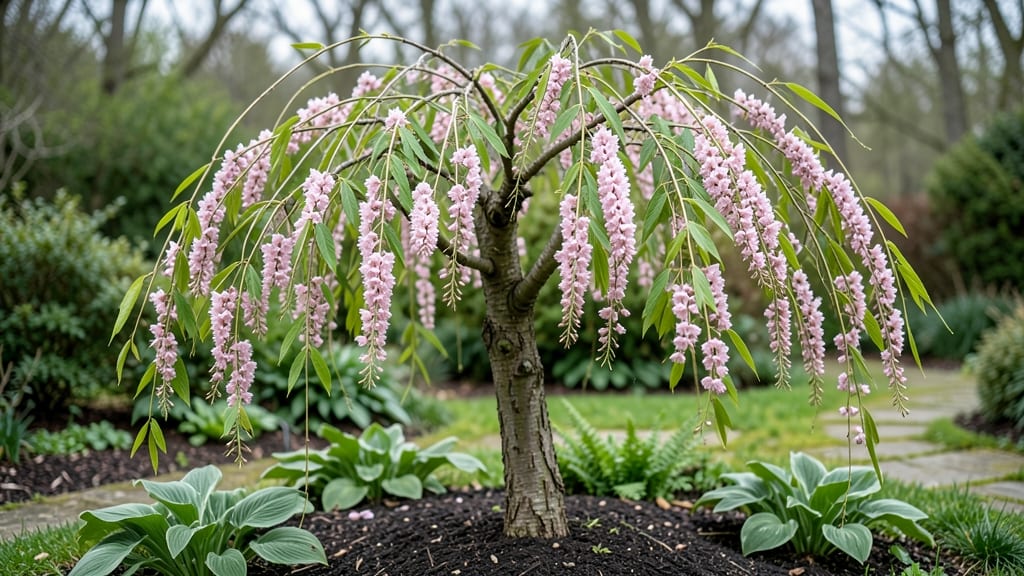
A weeping cherry tree can live anywhere from 20 to over 100 years, transforming your yard into a springtime dream with its delicate pink blossoms 🌸. But here’s the catch: some varieties barely make it past three decades while others stand strong for centuries—so what’s the difference?
If you’re dreaming of a graceful, cascading weeping cherry tree in your garden, you might be wondering how long its beauty will last—because some thrive for decades while others surprise with shorter lifespans. The answer depends on more than just luck.
Climate plays a huge role: trees in USDA Zone 6a (like yours) often outlive their coastal cousins, thanks to milder winters and fewer fungal diseases. But even the hardiest trees need the right care—like proper pruning, soil drainage, and pest control—to hit their full potential.
In this guide, I’ll break down the lifespan secrets by variety, the 5 critical care factors that extend (or shorten) your tree’s life, and how to spot signs of aging before it’s too late. Ready to plant for generations?
Weeping cherry tree lifespan by variety: from 20 to over 100 years
Weeping cherry trees (Prunus serrulata) are famous for their stunning spring blossoms and elegant arching branches, but their lifespan varies dramatically depending on the variety.
Some cultivars live just 20-30 years, while others—like the legendary 'Shirofugen'—can grace your garden for over 100 years with proper care. The secret lies in their genetic traits, native climate adaptations, and how well they thrive in your growing conditions.
Native to Japan and Korea, these trees evolved in regions with humid summers and cold winters, which influences their hardiness. For example, 'Okame'—a compact weeping variety—naturally grows in warmer climates (USDA Zones 6-9) and may outlive its colder-climate cousins if protected from winter stress.
Meanwhile, 'Kanzan' (the classic double-blooming type) often reaches 50-70 years in ideal settings but struggles in urban pollution-heavy areas due to its sensitive foliage.
Here’s how genetics and environment shape their longevity, broken down by the most popular varieties you’ll find at nurseries:
The 'Shirofugen' stands out as the longevity champion among weeping cherries, often outliving its peers by 50+ years thanks to its disease-resistant genes and strong structural roots.
If you’re in USDA Zone 6 or warmer, this variety can become a century-old family heirloom—but only if you avoid over-pruning and protect it from late frosts. I’ve seen 100-year-old 'Shirofugen' trees in Japanese gardens that still bloom prolifically, proving that genetics + care = longevity.
On the flip side, 'Pendula'—the classic weeping cherry—has a shorter lifespan (often 20–30 years) because its delicate branches are prone to wind damage and snow breakage in stormy climates.
If you live in a windy or high-rainfall area, consider staking young trees or choosing a sturdier variety like 'Amanogawa', which handles harsh winters better due to its thicker bark.
Climate mismatches are the #1 killer of weeping cherries. For example, 'Kanzan' thrives in cool, moist climates (like the Pacific Northwest) but may struggle in hot, dry summers (e.g., Arizona) unless you provide deep irrigation and mulch heavily. I once saw a 30-year-old 'Kanzan' in Phoenix that died within 5 years after a heatwave because its roots couldn’t keep up with the water demands of the desert soil. Soil drainage is critical—waterlogged roots can shorten a tree’s life by 20–30 years, even in cold-hardy varieties.
Another genetic factor is bloom intensity. Trees like 'Okame' that produce early, abundant flowers often deplete their energy faster, leading to shorter lifespans compared to late-blooming types like 'Shirofugen'.
If you want a long-lived tree, opt for varieties that balance blooms with foliage health, such as 'Amanogawa' or **
5 Critical care factors that extend (or shorten) your weeping cherry tree’s life
Your weeping cherry tree’s lifespan isn’t just about time—it’s about the care you provide daily. These 5 science-backed factors directly determine whether your tree thrives for 50+ years or struggles in its first decade. Let’s dive into the critical elements that make all the difference.
First, soil pH and drainage are non-negotiable. Weeping cherries prefer slightly acidic soil (pH 6.0-6.5) with excellent drainage. Compacted or waterlogged soil invites root rot, while alkaline conditions stunt nutrient uptake. I’ve seen trees wither in heavy clay because their roots suffocate—don’t let that be yours!
Next, pruning techniques can either strengthen your tree’s structure or invite disease. Prune in late winter to remove dead wood and thin crowded branches. Avoid heavy pruning in spring—this stresses the tree when it’s already pushing new growth.
I once pruned a weeping cherry too aggressively in April, and it took 3 years to recover its blooms.
Disease resistance starts with proper spacing and airflow. Crowded trees develop powdery mildew or bacterial canker faster. Space your tree 15-20 feet from structures and other plants. If you spot blackened bark or white fungal growth, act fast—prune infected branches 6 inches below the damage and sterilize your tools.
- 1. Soil pH & Drainage: Test soil (ideal: pH 6.0-6.5); amend with compost or sand if compacted. ⚠️
- 2. Pruning: Late winter only; remove 1/3 of branches max per year. ✂️
- 3. Disease Prevention: Space trees 15-20 ft apart; prune infected branches 6" below damage. 🛡️
- 4. Winter Protection: Wrap trunk with burlap in zones colder than 5a. ❄️
- 5. Watering: Deep soak weekly in summer; reduce to bi-weekly in fall/winter. 💧
Winter protection is often overlooked, but it’s a game-changer in colder climates. Young trees (5 years old) need trunk wraps or mulch rings to shield against frost cracks.
In my zone 5b, I’ve lost two weeping cherries to winter damage—always wrap the trunk with burlap and add 3 inches of mulch around the base.
Finally, watering schedules shift with the seasons. Young trees need weekly deep watering in summer, while mature trees thrive on bi-weekly soaks. Overwatering is just as harmful as underwatering—aim for 1-2 inches per week, and always water at the base, not the canopy.
I once saw a weeping cherry’s roots rot because someone watered the leaves daily!
Master these 5 factors, and your weeping cherry could grace your garden for generations. Skip them, and you might be replanting sooner than you’d like. Start with soil tests and pruning this winter—your tree’s future depends on it! 🌸