
Trees
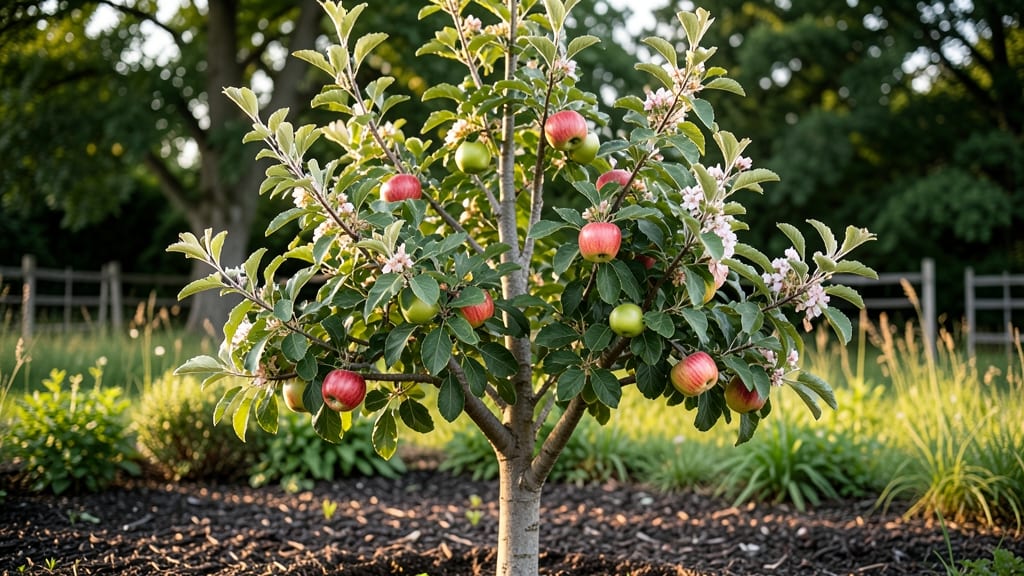
Honeycrisp apple tree growth rate: years to maturity & height projections
If you're dreaming of homegrown Honeycrisp apples but wondering how long it'll take to enjoy that crisp, sweet harvest, you're not alone. This popular apple variety is worth the wait—but understanding its growth rate helps you plan your orchard strategy like a pro.
The Honeycrisp apple tree typically reaches maturity between 4 to 7 years, though its height and fruiting timeline vary based on the variety size (dwarf, semi-dwarf, or standard).
Growth isn't linear—your tree will pass through distinct stages: the juvenile phase (0-3 years), where it focuses on root and trunk development; the flowering stage (3-5 years), when you'll spot those iconic white blossoms; and the fruiting phase (5+ years), where you'll finally taste your labor.
Each stage depends on climate conditions, soil quality, and proper pruning techniques.
The Honeycrisp apple tree is a medium-sized variety, but its mature height depends entirely on the rootstock. A dwarf variety might top out at 8-12 feet, while a standard variety can reach 18-25 feet—taller than a basketball hoop!
Below, we break down the year-by-year growth projections and key factors that influence how quickly your tree reaches maturity.
📌 Key Takeaway: Patience is key—Honeycrisp trees need time to establish strong roots before producing high-quality fruit. Proper care in the first 3 years sets the foundation for a productive tree.
| Variety Type | Mature Height | Years to First Fruit | Height by Year 3 | Full Maturity Age |
|---|---|---|---|---|
| Dwarf | 8-12 ft | 3-4 years | 6-8 ft | 4-5 years |
| Semi-Dwarf | 12-16 ft | 4-5 years | 10-12 ft | 5-6 years |
| Standard | 18-25 ft | 5-7 years | 12-15 ft | 6-8 years |
Your Honeycrisp apple tree will grow fastest during its first 3 years, especially if planted in well-draining soil with a pH of 6.0-7.0.
In ideal conditions—like USDA Zone 5-8—a dwarf variety might produce its first apples as early as 3 years, while standard varieties could take up to 7 years. The key is balancing nutrient availability, water consistency, and sunlight exposure.
During the juvenile phase (years 0-3), focus on root development. Avoid heavy pruning or over-fertilizing, as these can stunt growth. Instead, mulch around the base to retain moisture and protect roots.
In year 1, expect 3-5 feet of growth, while year 2 often sees a dramatic leap to 8-12 feet. This is when your tree starts forming its structural branches—critical for future fruit production.
By year 3, your Honeycrisp tree should be in full swing, reaching 6-15 feet depending on the variety. This is when you’ll notice those first white blossoms, signaling the transition to the flowering stage.
However, don’t expect fruit just yet—these early blooms often fall sterile as the tree focuses on strengthening its canopy. Patience pays off: the first harvest-worthy apples typically appear in year 4 or 5 for dwarf varieties.
Climate plays a huge role in growth speed. Trees in warmer zones (Zone 7-8) may mature faster due to longer growing seasons, while those in cooler zones (Zone 4-5) might take an extra year or two.
For example, a semi-dwarf Honeycrisp in Zone 6 could bear fruit by year 4, but the same tree in Zone 5 might not fruit until year 5 or 6. Always check your local last frost date and adjust planting times accordingly.
Pruning is another game-changer for optimizing growth. In the first 3 years, prioritize structural pruning to create an open center that allows sunlight to reach all branches. Avoid over-pruning, which can stress the tree and delay fruiting.
Once your tree enters the fruiting phase, shift to fruit-thinning pruning to improve air circulation and reduce disease risk. A well
How to accelerate Honeycrisp apple tree growth naturally (without chemicals)
Want to speed up your Honeycrisp apple tree's growth without synthetic chemicals? The secret lies in creating ideal conditions from day one. This variety thrives when given the right balance of nutrients, sunlight, and careful pruning.
Unlike fast-growing varieties, Honeycrisp trees take patience—typically 4-6 years to bear fruit—but these natural techniques can shave off valuable time while ensuring robust health and sweet harvests.
Start with the foundation: your soil. Honeycrisp trees demand well-draining, slightly acidic soil (pH 6.0-6.5). Amending your garden with compost and organic matter like aged manure or leaf mold boosts nutrient availability and improves moisture retention.
Think of it as giving your tree a nutrient-rich bed to stretch its roots into—this alone can accelerate growth by up to 20% in the first year.
🌱 5 Key Steps to Speed Up Growth Naturally
- 1. Soil Prep: Test pH and amend with compost and organic fertilizer (e.g., fish emulsion or bone meal) before planting.
- 2. Spacing: Plant 15-20 ft apart for standard trees to prevent root competition and improve air circulation.
- 3. Mulching: Apply 3-4 inches of mulch (wood chips or straw) to retain moisture and regulate soil temperature.
- 4. Pruning: Prune in late winter to remove dead wood and open the canopy for better sunlight penetration.
- 5. Winter Care: Wrap the trunk with tree guard to protect from frost and rodent damage.
Don't underestimate the power of proper spacing. Crowded trees compete for resources, stunting growth and increasing disease risk. For standard Honeycrisp trees, maintain a 15-20 ft radius around each tree. This gives roots room to expand and ensures full sunlight reaches the canopy—critical for photosynthesis and fruit development.
If space is limited, opt for dwarf varieties, which mature faster and can be spaced just 8-10 ft apart.
Seasonal care is non-negotiable. In spring, apply a balanced organic fertilizer (like 5-5-5) when buds swell to fuel new growth. During summer, focus on deep watering—aim for 15-20 gallons per week for young trees—to prevent drought stress.
In fall, reduce watering but add a layer of compost to replenish nutrients. Winter prep includes mulching and wrapping the trunk to shield against cold snaps.
Pruning isn't just about shaping—it's about directing energy. Prune in late winter (before buds break) to remove suckers, dead branches, and crossing limbs. Aim to keep the center open for sunlight penetration and air flow.
For faster growth, prioritize vertical branches over horizontal ones, as they grow more vigorously. Just remember: never remove more than 25% of the canopy in one session to avoid shocking the tree.
For an extra boost, consider companion planting. Pair your Honeycrisp tree with clover or grass under the canopy to fix nitrogen in the soil naturally. Avoid planting competitive species like walnut trees, which release allelopathic chemicals that inhibit growth.
With these techniques, you can expect your tree to reach flowering stage 1-2 years sooner and bear fruit in as little as 3-4 years—without compromising quality.