
Flowers
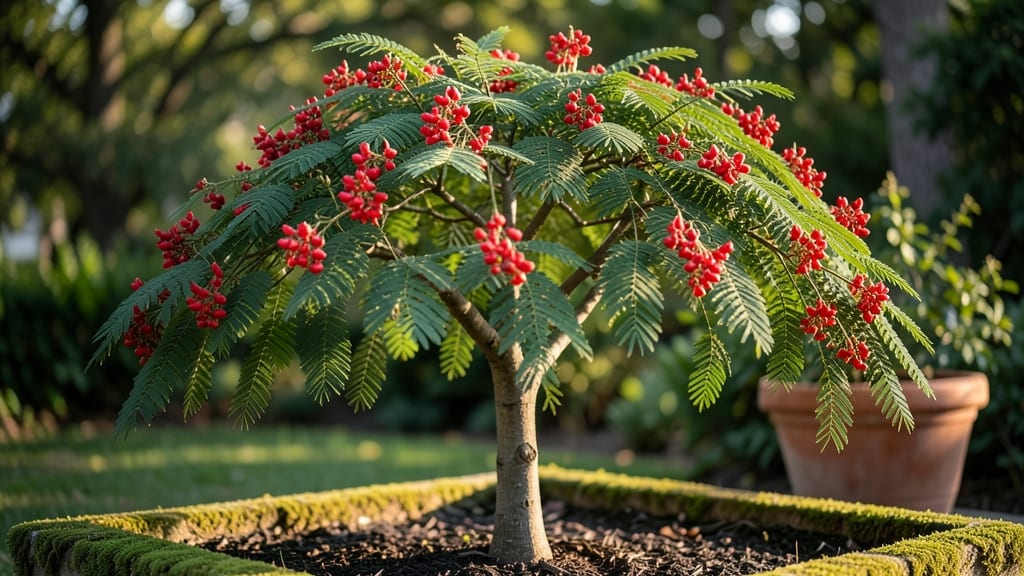
That fern-like tree with red flowers could be a Fothergilla—a small, deciduous shrub that bursts with vibrant blooms every spring. 🌸 I’ve grown mine in containers for years, and the way it transforms from delicate ferny foliage to clusters of red flowers is nothing short of magical.
It thrives in partial shade and well-draining soil, making it perfect for patios, borders, or even as a standalone specimen.
The key to keeping it happy is regular watering without soggy roots—think of it like a thirsty friend who doesn’t like puddles. Mulching helps retain moisture while keeping the soil cool, and a light pruning after flowering keeps it compact and encourages fresh growth.
The foliage turns fiery shades of orange and red in fall, adding seasonal interest long after the flowers fade.
What makes this plant special is its dual appeal: the airy, fern-like leaves create texture, while the red flowers attract pollinators like bees and butterflies. In containers, it’s even easier to control its size and move it to catch the best light.
With the right care, you’ll have a showstopper that blooms reliably year after year.
Whether you’re growing it in a pot or planting it in the ground, Fothergilla adapts well to different settings. Just avoid heavy clay soil, and you’ll be rewarded with a plant that’s as low-maintenance as it is stunning. Ready to bring this beauty into your garden?
Understanding The Blooming Triggers
If you’re captivated by the sight of a fern-like tree with red flowers—likely a Ficus benghalensis (Banyan) or Corokia cotoneaster—you might wonder why these plants burst into vibrant blooms while others stay dormant.
The answer lies in a mix of natural cues and environmental factors that signal the perfect time to flower. Let’s break down the science behind why these trees produce their striking red blossoms.
Most fern-like trees with red flowers are deciduous or semi-evergreen species, meaning their blooming cycles are hardwired into their DNA. These plants often originate from temperate or subtropical climates, where seasonal changes trigger flowering. For example:
- Photoperiodism: Many of these trees rely on day length (hours of sunlight) to initiate blooming. As days shorten in late summer or lengthen in spring, the plant’s phytochrome pigments detect the shift and produce florigen, a hormone that kickstarts flower development. Pro tip: If your tree isn’t blooming, check if it’s receiving 12+ hours of light during its natural flowering season.
- Dormancy Breaking: Some species, like the Corokia, need a period of cool temperatures (50–60°F) to "reset" their growth cycle. Without this chill, they may skip flowering entirely. Actionable fix: Move potted trees to a cool, shaded spot for 4–6 weeks in winter to mimic natural conditions.
Red-flowering fern-like trees thrive in moderate climates, but extreme heat or cold can disrupt their blooming process. Here’s how temperature plays a role:
| Factor | Ideal Range | What Happens If Off? |
|---|---|---|
| Daytime Temp | 65–80°F (18–27°C) | Above 90°F (32°C): Heat stress halts flower buds. Below 50°F (10°C): Dormancy locks in, delaying blooms. |
| Nighttime Temp | 55–65°F (13–18°C) | Too warm at night (<75°F/24°C): Flowers may abort. Too cold (<40°F/4°C): Bud damage occurs. |
| Humidity | 50–70% | Below 40%: Bud desiccation (drying out). Above 80%: Fungal risks (e.g., powdery mildew) can smother blooms. |
💡 Pro Tip: Use a humidifier near potted trees in dry climates or mist leaves daily during bud formation to support hydration.
Flowering is an energy-intensive process, and your tree needs the right nutrients to fuel it. Common issues include:
- Phosphorus (P) Shortage: The "P" in NPK (nitrogen-phosphorus-potassium) is critical for flower production. A deficiency (yellowing leaves, weak stems) means the tree prioritizes foliage over blooms. Fix: Switch to a balanced 10-20-10 fertilizer during spring/summer.
- Potassium (K) Deficit: Low potassium leads to poor flower color or stunted buds. Signs include brown leaf edges. Fix: Add banana peel tea or a potassium-rich supplement like kelp meal.
- Nitrogen (N) Overload: Too much nitrogen (green, leafy growth but no flowers) starves the tree of resources needed for blooms. Fix: Reduce nitrogen-heavy fertilizers (like lawn fertilizers) and opt for low-N, high-P formulas.
✨ Expert Tip: Conduct a soil test to check pH (ideal: 6.0–7.0). Acidic soil (pH <5.5) can lock out nutrients, while alkaline soil (pH >8.0) may cause magnesium deficiencies, further stressing the plant.
Some fern-like trees bloom in response to stress, but not the kind you’d expect! Mild stress can trigger flowering, while extreme stress shuts it down:
- Beneficial Stress:
- Root Pruning: Gently trimming roots (20–30% of the root ball) in early spring can shock the tree into flowering. This mimics natural crowding conditions in the wild.
- Water Cycling: Alternating between slight drought (let topsoil dry) and deep watering mimics seasonal rainfall, prompting blooms.
- Harmful Stress:
- Overwatering: Root rot (yellow leaves, foul smell) cuts off nutrient flow to flowers.
- Pests/Disease: Aphids or fungal infections (black spots, sticky residue) divert the tree’s energy away from blooming.
🔥 Action Step: If your tree is pest-free but still not flowering, try pruning 1/3 of the oldest stems in late winter. This rejuvenates growth and can spur new flower clusters.
By aligning these factors—light, temperature, nutrients, and stress levels—you’ll give your fern-like tree with red flowers the best chance to thrive and bloom spectacularly. Keep experimenting with small adjustments, and you’ll unlock its full floral potential!
Reviving Your Blooming Beauty
Got a fern-like tree with striking red flowers struggling to thrive? Don’t worry—most issues have simple fixes! Below, we’ll tackle common problems with practical solutions and prevention tips to keep your plant vibrant year-round.
Whether it’s wilting, sparse blooms, or pest troubles, these steps will help you nurse it back to health.
Cause: Overwatering, poor drainage, or root rot. Solution:
- 🔥 Check the soil moisture – Stick your finger 1–2 inches deep. If damp, hold off on watering.
- 🍳 Repot if needed – Use a pot with drainage holes and fresh, well-draining soil (a mix of potting soil + perlite works well).
- 👨🍳 Trim damaged roots – If roots look mushy or black, snip them off before repotting.
💡 Prevention Tip:
- Water only when the top inch of soil is dry. Avoid soggy conditions!
Cause: Lack of sunlight, improper fertilization, or stress. Solution:
- 🔪 Move to brighter light – Place near a south- or west-facing window (6+ hours of sunlight daily).
- 🥘 Feed with bloom-boosting fertilizer – Use a balanced liquid fertilizer (10-10-10) every 4–6 weeks in spring/summer.
- ⏰ Prune spent blooms – Deadhead flowers regularly to encourage new growth.
💡 Prevention Tip:
- Rotate the pot occasionally for even light exposure.
Cause: Spider mites, aphids, or fungal infections (like powdery mildew). Solution:
- 🌡️ Isolate the plant – Quarantine it to prevent spread.
- 🎯 Spray with neem oil – Mix 1 tsp neem oil + 1 tsp mild soap in 1 quart of water. Spray leaves thoroughly.
- ✨ Wipe leaves with rubbing alcohol – For stubborn pests, dab a cotton swab dipped in alcohol on affected areas.
💡 Prevention Tip:
- Inspect new plants before bringing them indoors. Keep humidity moderate (40–60%).
Cause: Low humidity, nutrient deficiency, or overcrowding. Solution:
- 💦 Mist leaves daily – Or place the pot on a tray of pebbles with water (humidifier helps too!).
- 📊 Test soil pH – Aim for slightly acidic (6.0–6.5). Adjust with peat moss or lime if needed.
- 🔪 Thin out dense growth – Trim overcrowded branches to improve airflow.
💡 Prevention Tip:
- Fertilize lightly in winter (every 8–10 weeks) to avoid overfeeding.
Final Thought: With these fixes, your fern-like tree with red flowers should bounce back in no time! Consistency is key—monitor its needs and adjust care as seasons change. Happy gardening! 🌺✨
Frequently asked questions
What are the most common fern-like trees with red flowers?
The two most likely candidates are Fothergilla (with its bottlebrush-like red blooms) and Cornus sericea (Red Osier Dogwood), both prized for their delicate fern foliage and vibrant flowers. Crape Myrtle (Lagerstroemia) also fits the description, especially the dwarf varieties that stay compact like small trees.
How do I encourage more red flowers on my fern-like tree?
Focus on three key factors: light (6+ hours daily), balanced fertilizer (10-10-10 ratio), and pruning. After flowering, trim back 1/3 of oldest stems to stimulate new growth. For potted plants, ensure proper drainage and avoid overwatering—root stress can actually trigger more blooms!
Can I grow a fern-like tree with red flowers in a container?
Many varieties like Dwarf Fothergilla thrive in containers (15+ gallon pots) with well-draining soil. Use a mix of potting soil and perlite, and place near a south-facing window or under grow lights for 12+ hours of light daily. Just remember to water when the top inch of soil feels dry—containers dry out faster than garden beds.
Why did my fern-like tree stop flowering?
Common causes include too much nitrogen (promotes leaves over flowers), lack of winter chill (some need 4–6 weeks below 50°F), or overcrowded roots. Try moving potted plants to a cooler spot in winter or repotting if roots are circling. A low-N, high-P fertilizer (like 5-10-5) in spring can also help reset flowering cycles.
Are these trees good for attracting pollinators?
Yes! Their red flowers are especially attractive to bees, butterflies, and hummingbirds. The Fothergilla and Crape Myrtle varieties produce nectar-rich blooms that support local ecosystems. For maximum pollinator appeal, plant near other native flowers and avoid pesticides—even natural ones can harm beneficial insects.