
Pruning
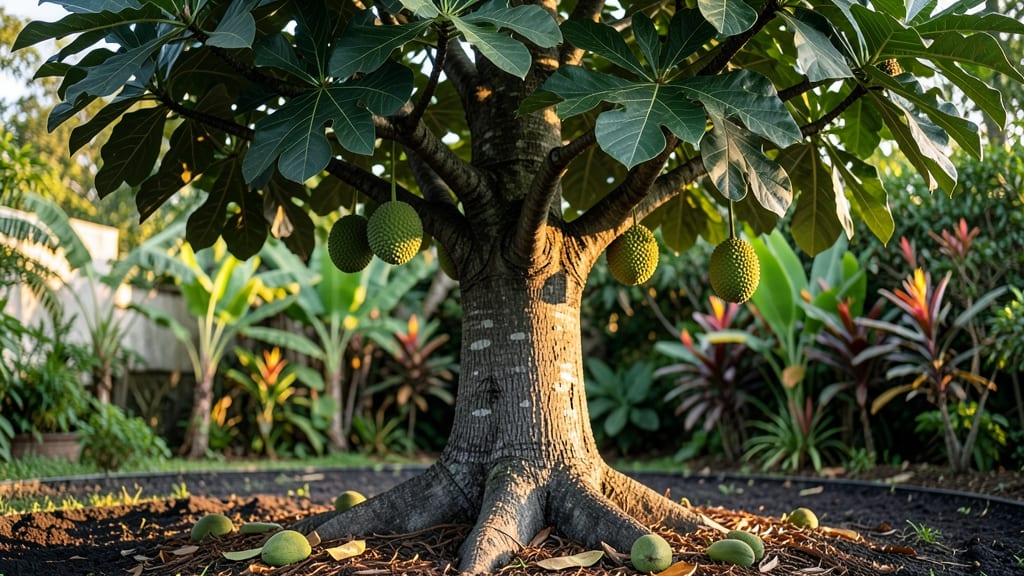
Your breadfruit tree care starts with the right cuts—because pruning isn't just about shaping, it's about unlocking year-round harvests and keeping your tree healthy. 🌿 I've learned the hard way that breadfruit trees reward precision over brute force, and the difference between a productive tree and a struggling one often comes down to when and how you prune.
The key is timing: prune after harvests to encourage new growth, but avoid heavy cuts during the dry season when the tree is already stressed. You'll need sharp pruners, a ladder (for higher branches), and some patience—breadfruit trees respond best to gradual shaping rather than drastic cuts.
The goal is to open up the canopy for sunlight while maintaining a sturdy structure that can support those massive fruit clusters.
What you end up with is a tree that produces consistently larger, sweeter fruit and stays disease-resistant. The first harvest after proper pruning is always the sweetest payoff—imagine fresh breadfruit year-round, not just during peak seasons.
Plus, your tree will look more balanced and inviting, making it the star of your tropical landscape.
Works for both backyard growers and large-scale producers, though container-grown trees will need more frequent pruning to manage size. Here's how to get started without overcomplicating it—your tree will thank you with a bountiful harvest.
📚 In This Guide
- What you need
- Instructions
- Tips and common mistakes
- Wrapping up and next steps
What you need
- ● Breadfruit tree (Artocarpus altilis) – A healthy sapling or young tree (1–3 years old) with no signs of disease. Pro tip: 🌡️ Choose a variety suited to your climate (tropical/subtropical regions).
- ● Well-draining soil – Mix 50% garden soil with 30% compost and 20% coarse sand or perlite for optimal aeration.
- ● Organic fertilizer – 10-10-10 NPK blend (1 lb per tree, applied every 3–4 months) or composted manure (chicken, cow, or worm castings).
- ● Mulch – 3–4 inches of wood chips or straw to retain moisture and regulate soil temperature.
- ● Pruning shears – Bypass pruners (for small branches, ¼–½ inch thick).
- ● Loppers – Long-handled (24–30 inches) for thicker branches (½–1½ inches).
- ● Pruning saw – For branches >1½ inches thick (avoid bolt cutters—they crush wood).
- ● Gloves – Heavy-duty leather or cut-resistant gloves (breadfruit sap can irritate skin!).
- ● Disinfectant – 70% isopropyl alcohol or bleach solution (1:9 ratio) to sterilize tools between cuts.
- ● Rope or twine – 3/8-inch nylon or jute rope for supporting young trees or training branches.
- ● Drip irrigation system – For consistent watering (breadfruit loves moisture!).
- ● Tree support stakes – 2–3 bamboo or metal stakes to stabilize young trees in windy areas.
- ● Pest control – Neem oil spray or horticultural oil for aphids/mites.
- ● Soil pH test kit – Ideal pH: 6.0–7.0 (breadfruit thrives in slightly acidic to neutral soil).
Step-by-Step guide to pruning your breadfruit tree
Here's how I keep my breadfruit tree thriving—with pruning that boosts fruit production and keeps the shape manageable.
✂️ Step 1: Prune for Shape and Airflow in Late Winter
Start your pruning in late winter when the tree is dormant but before new growth begins. This is the best time because the tree can heal quickly and focus energy on fruit production instead of recovering from cuts. I always begin by removing any dead, diseased, or crossing branches first—these compete with healthy growth and can harbor pests.
Use clean, sharp pruning shears to make cuts just above a leaf node or outward-facing bud. Avoid leaving stubs, as they can rot and invite fungal infections. For larger branches, use a pruning saw and seal the wound with pruning sealant to prevent sap loss. You'll notice the tree's natural shape start to emerge as you remove branches that disrupt airflow.
🌿 Step 2: Thin the Canopy in Early Spring
Once the tree wakes up in early spring, focus on thinning the canopy to let sunlight reach the inner branches. Breadfruit trees need plenty of light to produce fruit, so I remove about 20-30% of the foliage—especially branches that are too dense or growing inward. This step encourages the tree to develop stronger, fruit-bearing branches instead of just leafy growth.
Look for branches that are growing straight up or rubbing against others. These are prime candidates for removal. Make your cuts just outside the branch collar—the swollen area where the branch meets the trunk. You'll see new shoots form within 4-6 weeks, signaling the tree is responding well to the pruning.
☀️ Step 3: Encourage Fruit Production Mid-Season
When the tree is in full bloom, usually in mid-summer, give it a light pruning to redirect energy toward fruit production. At this stage, I focus on removing any suckers—those small, vigorous shoots that grow from the base or along the trunk. These saplings drain energy from the main tree and rarely produce fruit.
Also, trim back any overly long branches that are shading the lower canopy. Breadfruit trees produce fruit on new growth, so pruning at this time stimulates fresh shoots that will bear fruit for next season. After pruning, water the tree deeply to help it recover and support new growth.
⏰ Step 4: Light Pruning in Fall for Winter Prep
In fall, as the tree prepares for dormancy, do a final light pruning to clean up any remaining dead or weak branches. This keeps the tree tidy and reduces the risk of pests overwintering in debris. I also remove any fruit that didn’t ripen—while it’s tempting to leave them, they can drain the tree’s energy and attract pests.
Now is also a great time to fertilize if you haven’t already. A balanced, slow-release fertilizer will help the tree store nutrients for next year’s growth. Avoid heavy pruning now, as the tree needs to focus on hardening off for winter. You’ll see the difference in next season’s fruit production if you keep up this routine.
Tips & tricks for perfect breadfruit tree pruning
Pruning your breadfruit tree might seem intimidating, but these practical tips will help you avoid common mistakes and maximize fruit production.
Timing is Everything: Late winter pruning (as mentioned in Step 1) is critical because the tree is dormant but ready to heal quickly. If you miss this window, you risk stressing the tree when it's already pushing new growth. I've learned the hard way—skipping this timing led to slower recovery and fewer fruits the following season. Mark your calendar for late winter to stay on track.
Tool Prep Makes All the Difference: Before you start, sharpen your pruning shears and saw to make clean cuts. Dull tools crush branches instead of cutting them cleanly, which invites disease. I sterilize my tools with rubbing alcohol between cuts on different branches to prevent spreading any potential infections. This small step keeps your tree healthy and growing strong.
Visual Cues for Pruning Success: In Step 2, when thinning the canopy, look for branches that are growing straight up or rubbing against others—these are your targets. You'll know you're doing it right when you see new shoots forming within 4-6 weeks, as mentioned in the instructions. This is your tree's way of saying, "Thank you for helping me focus my energy!"
Fertilizing After Pruning: The fall pruning in Step 4 is the perfect time to fertilize, but don't overdo it. A balanced, slow-release fertilizer works best because it mimics natural nutrient cycles. I've found that applying fertilizer right after pruning gives the tree a boost as it prepares for dormancy, setting it up for a stronger start in spring.
Pro Tips for Breadfruit Tree Care
- Pruning your breadfruit tree might seem intimidating, but these practical tips will help you avoid common mistakes and maximize fruit production.
- Timing is Everything: Late winter pruning (as mentioned in Step 1) is critical because the tree is dormant but ready to heal quickly.
- Tool Prep Makes All the Difference: Before you start, sharpen your pruning shears and saw to make clean cuts.
Frequently asked questions
Got questions about keeping your breadfruit tree thriving?
Here are answers to the most common concerns—from pruning timing to troubleshooting—so you can grow a productive, healthy tree all year long.
When is the best time to prune a breadfruit tree?
The ideal time to prune is during the dry season (late winter to early spring) when the tree is dormant. This minimizes stress and reduces disease risk. Light pruning can also be done after harvests to encourage new growth. Avoid heavy pruning during wet seasons, as it can invite fungal infections.
How often should I prune my breadfruit tree?
Young trees (under 5 years) benefit from annual pruning to shape their structure, while mature trees (5+ years) can be pruned every 2–3 years for maintenance. Focus on removing dead, diseased, or overcrowded branches. Regular light pruning (2–3 times a year) helps improve airflow and fruit production.
What should I do if my breadfruit tree isn’t producing fruit?
Low fruit production often stems from poor pruning (e.g., over-pruning young trees) or nutrient deficiencies. Check for balanced sunlight, well-draining soil, and adequate water. Apply compost or a slow-release fertilizer in early spring. If the tree is mature but still barren, it may need pollination assistance—breadfruit trees are often self-pollinating but benefit from gentle shaking of branches during flowering.
Can I prune breadfruit trees too much?
Yes! Over-pruning—especially more than 25% of the canopy at once—can stress the tree, reduce fruit yield, and make it vulnerable to pests. Always remove branches gradually, focusing on dead wood or water sprouts first. If you’ve already pruned too much, reduce future cuts and fertilize to help recovery.
Are there alternatives to traditional pruning for breadfruit trees?
While traditional pruning is best for shaping and productivity, you can use selective thinning to improve airflow without heavy cuts. For large trees, consider coppicing (cutting back to the base) every 5–10 years to rejuvenate growth. Just avoid drastic changes—breadfruit trees are resilient but prefer gradual adjustments.
Wrapping up and next steps
Caring for your breadfruit tree with year-round pruning is the secret to a thriving, fruit-filled future! 🌱 By staying consistent—whether it’s trimming for shape, removing dead branches, or encouraging new growth—you’ll enjoy a bountiful harvest for years.
Remember, patience and observation are key; your tree will reward you with delicious, nutrient-packed fruit.
Ready to take the next step? Start small—pick one pruning task this week and build from there. Before you know it, your breadfruit tree will be the star of your garden! 🌟