
Orchid Care
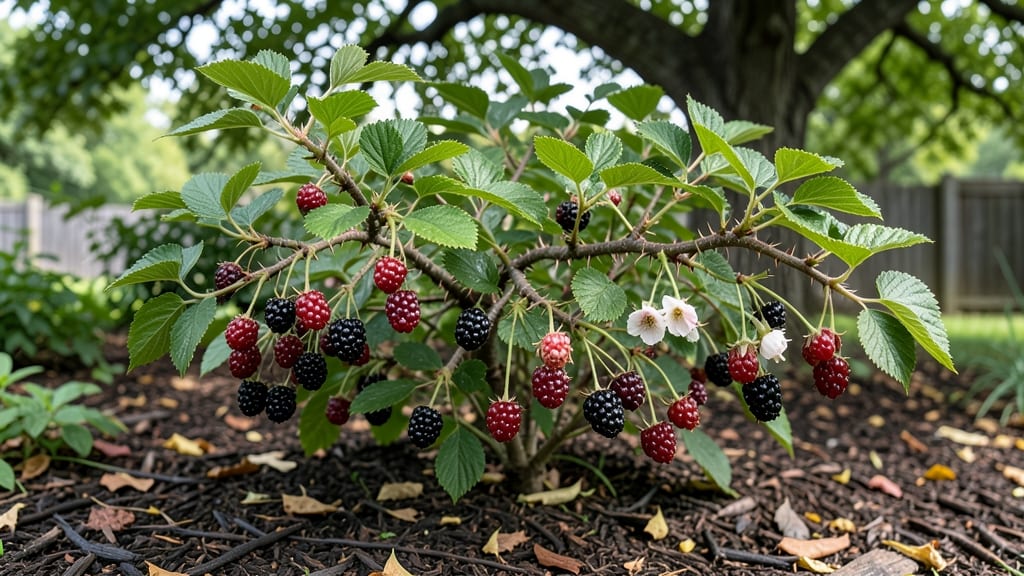
Deciding between a boysenberry tree or bush comes down to your available space and care preferences: sprawling vining types stretch 10-20 feet, demanding sturdy support structures, while compact bushes max out at 4-6 feet but produce smaller berries. Their growth patterns also create different maintenance challenges, from pruning frequency to disease vulnerability.
Boysenberries aren't one-size-fits-all—your choice between sprawling vines and contained bushes shapes everything from harvest size to garden layout. 🌿 Vining varieties like 'Brian' need 15-20 feet of trellis space and produce larger clusters, but their sprawling nature makes them vulnerable to mildew in humid climates.
Compact bushes like 'Black Diamond' thrive in tight spaces with minimal support, though their smaller fruit means fewer berries per plant. I've found that semi-dwarf hybrids offer the best compromise for urban gardens, giving you 6-8 feet of growth with manageable yields.
Another key factor is your pruning style. Vining types require aggressive annual pruning to control their aggressive growth, while bush varieties need only light shaping. The trade-off? Vines produce fruit later in the season but in greater abundance, while bushes fruit earlier but more modestly.
For small yards, I recommend starting with a dwarf variety—you'll still get delicious berries without the maintenance headache of a sprawling vine.
💡 In This Article
- How Growth Habits Affect Boysenberry Plant Care
- Best Boysenberry Varieties for Small Yards vs Large Gardens
How growth habits affect Boysenberry plant care
The fundamental difference between boysenberry vines and bushes lies in their canes—vining varieties develop long, woody stems that can reach 15-20 feet if unchecked, while bush types produce shorter, more upright canes (4-6 feet).
This structural difference stems from their genetic heritage: vines descend from blackberries with elongated growth habits, while bushes are often hybrids bred for containment.
The vine's sprawling nature requires stronger root systems to anchor against wind and support its weight, while bush varieties develop deeper but more compact roots to stabilize their upright form.
Sunlight needs also vary dramatically. Vines thrive with full sun exposure (6-8 hours daily) but benefit from afternoon shade in hot climates to prevent sunburn on tender new growth.
Bush varieties tolerate partial shade (4-6 hours of sun) better, making them ideal for north-facing gardens or areas with intense afternoon sunlight. The vine's extensive canopy creates microclimates that can trap humidity, increasing susceptibility to powdery mildew—a fungal disease that thrives in still, moist air.
Bush varieties, with their more open structure, allow better air circulation and reduce this risk.
Pruning requirements create another critical divide. Vining types demand aggressive annual pruning to control their spread, with 20-30% of canes removed each year to maintain vigor. The process involves cutting back old canes to 2-3 feet while training new growth along trellises.
Bush varieties need only light shaping pruning, focusing on removing dead wood and thinning crowded branches.
What most gardeners don't realize is that vines produce fruit primarily on second-year canes, while bushes fruit on both current and previous year's growth—this affects when and how you should prune for optimal harvests.
Pest pressure differs too. The dense foliage of vines creates ideal hiding spots for spider mites and aphids, which thrive in protected environments. Bush varieties, with their more open structure, experience less pest buildup but may attract bird damage due to easier access to exposed fruit.
The vine's sprawling nature also makes it more vulnerable to winter dieback in colder climates, as exposed canes are more susceptible to freezing temperatures than the protected growth of bush varieties. This is why northern gardeners often prefer bush types for their hardier growth habits.
Consider these key biological factors when planning your garden:
- Root systems: Vines develop shallow but extensive roots, while bushes have deeper, more concentrated root balls
- Canes: Vines produce 10-15 canes per plant vs 3-5 canes for bushes
- Fruiting zones: Vines fruit primarily on second-year wood; bushes fruit on both current and previous year's growth
- Disease tolerance: Bush varieties generally resist powdery mildew better due to improved air circulation
The choice between vine and bush ultimately affects your entire gardening approach. Vines offer dramatic visual impact but require dedicated trellis systems and more intensive maintenance, while bushes provide low-maintenance elegance with 30-50% smaller yields.
For urban gardeners, I recommend evaluating your space's vertical potential first—many city dwellers successfully grow vines on balcony trellises or vertical garden frames, transforming limited space into productive growing areas.