
Diseases
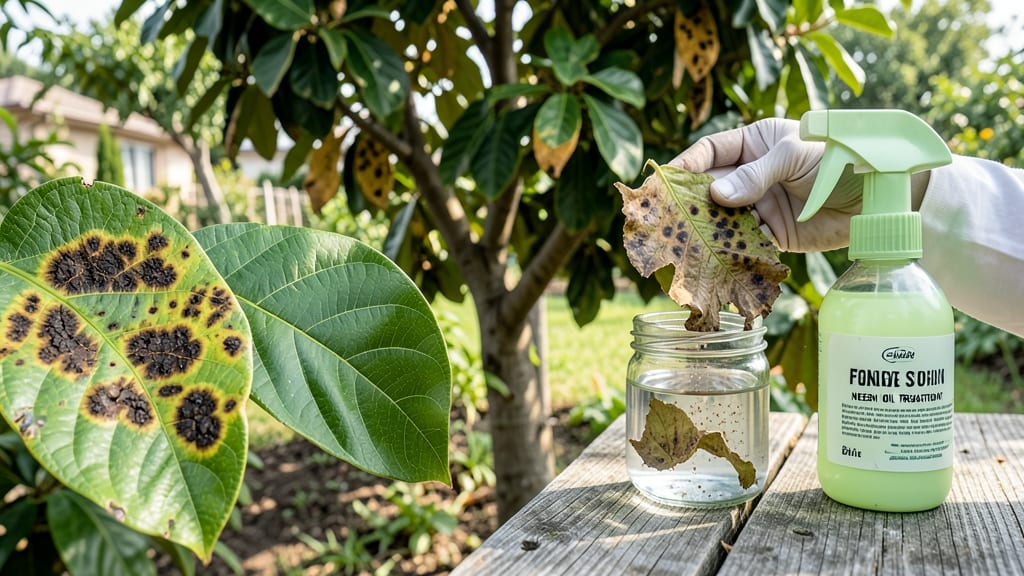
Brown spots on your 🥑 avocado tree leaves are usually a sign of fungal infections, nutrient stress, or environmental damage—but they’re almost always fixable with the right steps.
Picture this: you’ve spent months nurturing your avocado tree, only to wake up one morning and spot unsightly brown patches creeping across the leaves. Before you panic, know that most cases are treatable, and preventing future outbreaks is simpler than you think.
In this guide, I’ll walk you through the most common causes—from anthracnose to sunburn—so you can identify the problem fast. Then, I’ll share organic treatments that work, whether you’re dealing with a mild case or a full-blown fungal spread.
By the end, you’ll know exactly how to prune, spray, and adjust care to keep your avocado tree thriving—no harsh chemicals required.
Common fungal causes of brown spots on avocado tree leaves
If you’ve noticed brown spots appearing on your avocado tree leaves, you’re not alone—this is one of the most common issues home gardeners face. While it’s easy to panic, most fungal infections are treatable with the right approach.
The key is identifying the specific fungal pathogen causing the problem, as symptoms can overlap with environmental damage or pest activity.
Fungal diseases thrive in warm, humid conditions and often start as small discolorations that expand into larger, necrotic spots. Unlike sunburn or nutrient deficiencies, fungal infections typically spread across leaves and can affect younger foliage first.
The three most common culprits—anthracnose, leaf spot diseases, and powdery mildew—each leave distinct clues about their presence.
Anthracnose is the most aggressive fungal threat to avocado trees, causing dark brown to black spots with yellow halos. These spots often appear on older leaves first and may develop a velvety texture as the fungus spreads. In severe cases, infected leaves will crust and fall prematurely, weakening the tree’s ability to photosynthesize.
Leaf spot diseases (like Phyllosticta or Cercospora) create small, circular brown spots with darker centers and light yellow borders. Unlike anthracnose, these spots rarely merge and often appear on younger leaves. Over time, infected leaves may develop shot-hole symptoms, where the tissue dies and falls out, leaving behind hollowed-out holes.
Powdery mildew is easier to spot but often misdiagnosed as a dusting of white powder on leaf surfaces. While it doesn’t cause brown spots directly, it weakens leaves, making them more susceptible to secondary infections. The mildew appears on both leaf surfaces and can spread to stems and fruit if left unchecked.
Environmental damage or pest activity can mimic fungal symptoms, so it’s crucial to distinguish between them. For example, sunburn causes irregular brown patches on leaf edges, while avocado lace bug damage appears as yellow stippling with black fecal spots. Unlike fungal infections, these issues don’t spread systematically across the tree.
| Fungal Disease | Spot Appearance | Leaf Location | Additional Symptoms | Key Distinction |
|---|---|---|---|---|
| Anthracnose | Dark brown/black with yellow halos | Older leaves first | Velvety texture, leaf drop | Spots merge, crusty edges |
| Leaf Spot (Phyllosticta) | Small circles with dark centers | Younger leaves | Shot-holes, yellow borders | Spots don’t merge, clean edges |
| Powdery Mildew | White powdery coating | Both leaf surfaces | Weakens leaves, stunted growth | No brown spots, but predisposes to them |
| Sunburn | Irregular brown patches | Leaf edges | No fungal texture, dry appearance | Affects only sun-exposed leaves |
| Lace Bug Damage | Yellow stippling, black fecal spots | Lower leaf surfaces | Pests visible on undersides | No fungal growth, just feeding marks |
To confirm a fungal infection, examine the leaf undersides for signs of spore development. Anthracnose and leaf spot fungi often produce tiny black dots (fruiting bodies) in the center of spots, while powdery mildew leaves a fluffy residue that can be wiped off with a finger.
If you’re unsure, collect a sample leaf and place it in a plastic bag with a damp paper towel for 24 hours—fungal spores will grow visibly.
Early detection is critical because fungal infections spread rapidly in avocado trees. If you notice more than 10% of leaves affected, act quickly to prune infected foliage and apply organic fungicides. The next section will guide you through step-by-step treatments to eliminate brown spots and restore your tree’s health.
Remember, prevention is just as important as treatment. Improving air circulation, avoiding overhead watering, and maintaining healthy soil can drastically reduce the risk of fungal outbreaks in your avocado tree.
Step-by-step organic treatments to eliminate brown spots
Once you’ve identified the brown spots on your avocado tree leaves as fungal-related, it’s time to act fast. Organic treatments can stop the spread and restore your tree’s health without harsh chemicals.
The key is combining pruning, natural fungicides, and preventive care for lasting results. Start by removing infected leaves immediately—they’re the primary source of fungal spores.
For organic treatments, I recommend a three-step approach: prune aggressively, apply targeted fungicides, and boost your tree’s immunity. Each method works best at different stages of infection severity. Mild cases may only need pruning and neem oil, while severe outbreaks require copper fungicides and cultural fixes.
Always treat in the early morning to allow foliage to dry quickly and reduce fungal growth.
Your 7-Step Organic Treatment Plan
- Step 1
- Step 2
- Step 3
- Step 4
- Step 5
- Step 6
- Step 7
Use sterilized pruners to remove all spotted leaves and any nearby healthy leaves showing signs of stress. Dispose of them in a sealed bag—never compost infected plant material. Focus on lower branches first where humidity is higher.
Mix 1 tbsp neem oil with 1 tsp mild liquid soap and 1 quart water. Spray both sides of leaves thoroughly, including the undersides where spores hide. Reapply every 7-10 days for 3 weeks. Neem oil smothers spores and disrupts fungal growth.
For spreading infections, apply a copper fungicide (like copper sulfate or copper soap) every 10-14 days. Follow label instructions—copper can burn leaves if overused. Spray in the early morning on a dry, calm day to avoid drift.
Thin out crowded branches to allow airflow and reduce humidity. Space branches 6-12 inches apart and prune suckers at the base. Consider a small fan on low speed near potted trees to dry leaves faster.
Water at the base of the tree rather than overhead to keep leaves dry. Use drip irrigation or soaker hoses for deep, slow watering. Avoid evening watering—wet foliage overnight invites fungal growth. Let the top inch of soil dry between waterings.
Spread 3-4 inches of organic mulch (like wood chips or straw) around the base of the tree, keeping it 2 inches away from the trunk. Mulch regulates soil temperature, retains moisture, and reduces spore splash from soil to leaves.
Feed your tree with a balanced organic fertilizer (like fish emulsion or compost tea) to strengthen its defenses. Add kelp meal for extra silica, which toughens cell walls. Repeat every 4-6 weeks during the growing season.
Monitor your avocado tree closely for 2-3 weeks after treatment. New growth should appear free of spots, and existing leaves may recover if caught early.
If brown spots persist or worsen, repeat the copper fungicide step and consider consulting a local arborist for advanced fungal issues like anthracnose.
Prevention is your best tool—once your tree recovers, maintain proper spacing, drainage, and watering practices to keep fungal diseases at bay. With consistent care, your avocado tree can bounce back stronger than ever. 🌿