
Pruning
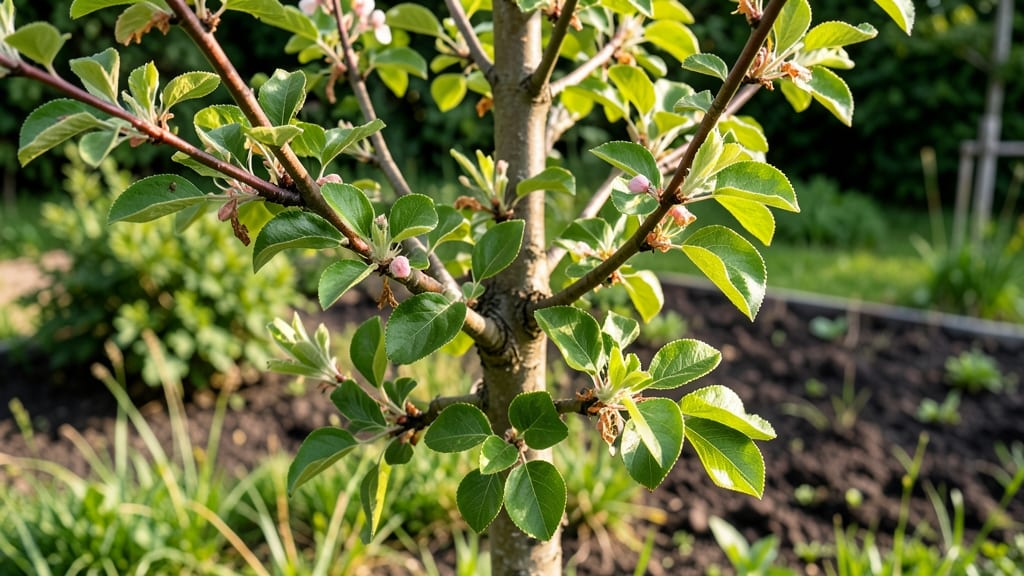
Your apple tree’s new growth is where all the magic happens—and pruning it right means stronger branches, better fruit, and a tree that’ll last decades. 🌳 I’ve spent years watching these trees transform from scraggly saplings into sturdy producers, and the difference comes down to a few sharp cuts at the right time.
The goal? Encourage upward growth, open the canopy to sunlight, and train the tree to focus energy where you want it.
Start by identifying healthy new growth—it’s bright green, flexible, and grows outward from the branch. Unhealthy growth is yellowing, brittle, or growing inward (a classic sign of weak structure).
Grab your pruners, disinfect them with rubbing alcohol, and cut just outside the branch collar (that little bump where the branch meets the trunk). This simple technique prevents damage and speeds healing—my trees recover faster than those I’ve seen pruned sloppily.
Timing matters most: prune in late winter or early spring before buds swell, or right after harvest in summer. You’ll see the difference immediately—new shoots will emerge within weeks, and by next season, your tree will have a balanced shape that produces fruit more reliably.
The key is patience: a well-pruned apple tree rewards you with stronger wood and heavier harvests year after year.
For beginners, focus on removing water sprouts (those vertical shoots) and crossing branches first. They’re the easiest targets and make the biggest impact. Even experienced gardeners can refine their approach—try thinning out crowded areas to improve airflow, which cuts down on disease.
The result? A tree that looks like it belongs in a professional orchard, not just your backyard.
📚 In This Guide
- What you need
- Instructions
- Tips and common mistakes
- Wrapping up and next steps
What you need
- ● Pruning shears: Bypass pruners (for cuts 1 pair (e.g., Felco F-2 or Corona Tools)
- ● Loppers: For branches 1–2 inches thick – 1 pair (e.g., Felco 2 or Fiskars)
- ● Pruning saw: For thicker branches (2+ inches) – 1 (e.g., Felco F-8)
- ● Disinfectant: 70% isopropyl alcohol or bleach solution (1 part bleach to 9 parts water) – small bottle
- ● Gloves: Heavy-duty gardening gloves (cut-resistant) – 1 pair
- ● Rubbing alcohol or hand sanitizer – travel-sized (for tool cleaning)
- ● Tarp or bucket – medium-sized (to collect debris)
- ● Permanent marker – 1 (for labeling cuts, if needed)
- ● Pruning sealant: Tree wound paint (e.g., Tanglefoot Tree Wound Pruning Sealer) – small jar (controversial but useful for large cuts)
- ● Extension pole: For hard-to-reach branches – 1 (e.g., 6–10 ft telescoping pole)
- ● Pruning rope or zip ties – small roll (to secure heavy branches temporarily)
- ● Notebook & pen – 1 (to sketch your tree’s structure before/after pruning)
- ● Safety glasses – 1 pair (if working near large, falling branches)
How to prune for apple tree new growth
Here's my method for encouraging vigorous, healthy regrowth in your apple tree—focused on timing, technique, and seasonal care.
✂️ Step 1: Prune During Dormancy for Best Results
Timing matters most for new growth. Prune your apple tree in late winter or early spring, just before buds swell but before leaves emerge. This 3-4 week window (typically February-March in most climates) ensures the tree directs energy into new shoots rather than leaf production. Avoid pruning in fall—it invites disease and weakens the tree before winter.
Use clean, sharp pruning shears or a pruning saw for thicker branches. I always disinfect tools with rubbing alcohol between cuts to prevent bacterial spread. Look for dead, crossing, or diseased branches first—they block sunlight and nutrients from reaching healthy wood. Remove these completely at the branch collar, not mid-branch.
☀️ Step 2: Open the Canopy for Sunlight and Airflow
The goal is to create an open-centered tree where sunlight reaches the center. Start by removing suckers (vigorous shoots growing from the base or trunk) and water sprouts (fast-growing vertical shoots). These compete with fruit-bearing branches for energy. Cut them back to a bud or lateral branch—never leave stubs, as they invite rot.
Thin out competing branches that cross or rub against each other. Aim for a 6-12 inch spacing between branches to improve airflow. This reduces humidity in the canopy, which is critical for preventing apple scab and other fungal diseases. You’ll know you’ve done well when you can see light filtering through the center of the tree.
🌱 Step 3: Encourage New Growth with Strategic Cuts
To stimulate new shoots, make heading cuts just above an outward-facing bud on branches that are at least pencil-thick. Avoid cutting back to a stub—this stresses the tree. Instead, cut at a 45-degree angle about ¼ inch above the bud. You’ll see new growth emerging within 4-6 weeks if conditions are right.
For older, overgrown branches, you can make renewal cuts—shortening them by one-third to one-half to encourage a flush of new, more vigorous growth. This works best on branches that are 3-5 years old. Watch for suckers or water sprouts along the cut branch in spring—they’re the tree’s way of regenerating.
💧 Step 4: Post-Pruning Care for Strong Recovery
After pruning, water deeply to help the tree recover. Apply a 2-3 inch layer of mulch around the base (but not touching the trunk) to retain moisture and regulate soil temperature. This is especially important if you pruned in dry conditions. Avoid fertilizing immediately—wait until new growth appears (usually 6-8 weeks later) to give the tree time to heal.
Monitor the tree for signs of stress, like yellowing leaves or wilting. If you see oozing sap at pruning cuts, it’s normal—just ensure the cuts are clean and sealed naturally. In hot, dry weather, provide light shade for a few days to reduce transpiration stress. You’ll know the pruning worked when you see healthy, dark green new leaves by mid-spring.
⏰ Step 5: Repeat Annually for Long-Term Health
Pruning isn’t a one-time job—it’s an ongoing process. Plan to lightly prune your apple tree every year to maintain shape and encourage new growth. In years 2-3, focus on thinning out excess fruit to improve size and quality. By year 4, you’ll have a balanced, productive tree with strong branches and minimal disease pressure.
Real talk: Over-pruning is a common mistake. Never remove more than 25% of the tree’s canopy in one season—this weakens the tree and reduces fruit production. If you’re unsure, prune conservatively and adjust the next year. You’ll see the difference in thicker branches, more blossoms, and better fruit within a few seasons.
Tips & tricks for pruning apple trees for vigorous new growth
Here's what nobody tells you about pruning—these details separate a good pruning job from a great one.
Timing is Everything: That 3-4 week window in late winter/early spring (February-March) is non-negotiable. I learned this the hard way after pruning too early in January—my tree produced mostly leaves, not fruit. Check for swollen buds but no leaf emergence; that's your sweet spot. If you're in a warmer climate, aim for when forsythia blooms nearby, as this signals your tree's readiness.
Tool Precision Matters: Using clean, sharp tools isn't just about making clean cuts—it's about preventing disease spread. I always disinfect my pruning shears with rubbing alcohol between trees, even if they're all apple trees. For branches thicker than 2 inches, switch to a pruning saw. The key is making cuts at the branch collar (the swollen area where the branch meets the trunk) to promote proper healing. Never leave stubs—they're entry points for pests and diseases.
Visualize the Canopy: Before making any cuts, step back and visualize your tree's center. You want light to filter through like sunlight in a forest. Start with the "4 D's" rule: Dead, Diseased, Damaged, and Crossing branches go first. Then work on spacing—aim for 6-12 inches between branches. This isn't just about looks; proper spacing prevents fungal diseases by improving airflow. You'll know you've done it right when you can see light through the center of the tree.
Strategic Cuts for New Growth: When making heading cuts to encourage new shoots, focus on branches that are at least pencil-thick. Cut at a 45-degree angle about ¼ inch above an outward-facing bud. This angle prevents water from pooling on the cut, which would invite rot. For older branches, renewal cuts (shortening by 1/3 to 1/2) work wonders—just be patient. You'll typically see new growth emerging within 4-6 weeks, but sometimes it takes up to 8 weeks depending on your climate.
Pro Tips for Apple Tree New Growth
- Here's what nobody tells you about pruning—these details separate a good pruning job from a great one.
- Timing is Everything: That 3-4 week window in late winter/early spring (February-March) is non-negotiable.
- Tool Precision Matters: Using clean, sharp tools isn't just about making clean cuts—it's about preventing disease spread.
Frequently asked questions
Got questions about nurturing your apple tree’s new growth? You’re not alone! Here are answers to the most common concerns from gardeners just like you.
When should I prune apple tree new growth?
Prune new growth in late winter or early spring (before buds swell) to shape the tree and encourage strong structure. For summer pruning, wait until after flowering but before fall—this helps control size and disease. Avoid heavy pruning in fall, as wounds take longer to heal.
How much of the new growth can I safely remove?
Remove no more than 25% of the tree’s total foliage in one session to avoid stress. For new growth, focus on thin out water sprouts (vertical shoots) and crossing branches. Cut just above a bud or lateral branch to promote healthy regrowth.
What if my apple tree’s new growth is weak or leggy?
Weak or leggy growth often signals overcrowding or poor nutrition. Thin out dense branches to improve airflow, and fertilize with a balanced 10-10-10 formula in early spring. If growth is still sparse, check for pests (like aphids) or fungal issues (like powdery mildew) and treat accordingly.
Can I prune new growth in fall?
Light pruning in early fall (September) is fine for cleanup, but avoid heavy cuts. Fall-pruned wounds are more vulnerable to disease and winter damage. If you must prune, seal larger cuts with pruning sealant and remove debris to prevent rot.
What’s the best way to encourage thicker, stronger new growth?
Thicker growth starts with proper pruning and care. After trimming, apply a layer of mulch (2–4 inches) around the base to retain moisture. Water deeply during dry spells, and consider a slow-release nitrogen fertilizer in spring to boost vigor.
Wrapping up and next steps
Nurturing apple tree new growth through smart pruning is your ticket to a healthier, fruit-bearing tree! By removing dead wood, thinning crowded branches, and encouraging strong structure, you’re setting the stage for abundant harvests and long-term vitality. 🌱
Ready to take action? Grab your pruners and schedule your next pruning session—early spring or late winter is ideal. Keep an eye on those new shoots, and soon, your apple tree will reward you with lush foliage and delicious fruit!