
Pruning
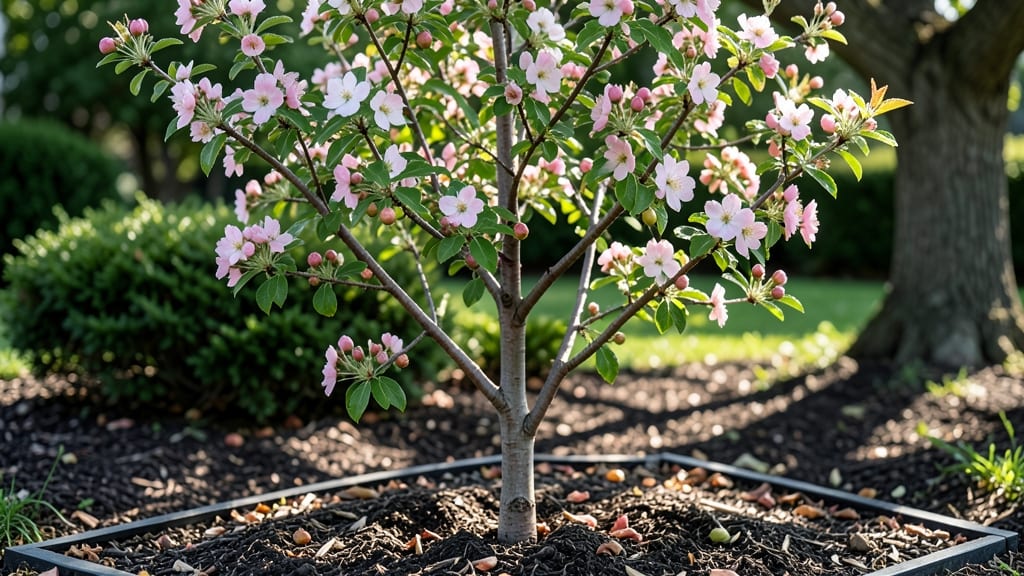
Your young crabapple tree could become the centerpiece of your yard—but only if you prune it right from the start. ✂️ I learned the hard way that skipping early pruning leads to weak branches and poor shape, no matter how beautiful the blooms.
The first year sets the foundation for everything that follows.
Start by removing any crossing branches or those growing inward—they’ll compete for sunlight and nutrients. Use clean, sharp pruners to cut just above a bud or outward-facing branch. Most young crabapples need 10-20% of their branches trimmed in the first year, focusing on structure over aesthetics.
Think of it as teaching the tree to grow strong, not just pretty.
You’ll see a dramatic difference in just a few weeks: straighter branches, better airflow, and fewer disease risks. The tree will invest energy in upward growth instead of struggling with crowded limbs. Prune in late winter or early spring before new growth begins for the best results.
This method works for both ornamental varieties and fruit-bearing types—just adjust timing slightly for fruit production. The key is consistency: a little effort now means years of healthy, vibrant growth with minimal future work.
📚 In This Guide
- What you need
- Instructions
- Tips and common mistakes
- Wrapping up and next steps
What you need
- ● Pruning shears: Sharp, bypass-pruners (for cuts under ½ inch thick). Quantity: 1 pair.
- ● Loppers: For thicker branches (½ to 1½ inches). Quantity: 1 pair.
- ○ Pruning saw: For branches 1½+ inches thick. Quantity: 1 (optional but helpful for larger trees).
- ● Disinfectant: 70% isopropyl alcohol or a 10% bleach solution (to sterilize tools between cuts).
- ● Gloves: Heavy-duty gardening gloves (protects from thorns and sap). Quantity: 1 pair.
- ○ Tree wound dressing: Pruning sealant (optional; controversial—skip if unsure!).
- ○ Extension pole: For hard-to-reach branches (3–6 feet, adjustable). Optional but handy!
- ● Safety gear: Safety glasses (to shield from debris).
- ● Weather check: Prune on a dry, cloudy day (avoid frost or extreme heat).
- ● Tree ID: Confirm it’s a young crabapple (look for small, white/pink blossoms or fruit in fall).
- ● Cleanup supplies: Trash bag (for debris) and a bucket of water (to rinse tools).
Instructions for pruning a young crabapple tree
Here’s how to shape your young crabapple for strong growth and a beautiful form—without stressing the tree.
✂️ Step 1: Identify and Remove Dead or Damaged Branches
Start by scanning the tree for branches that are brown, brittle, or broken. These are easy to spot—they’ll snap when you bend them slightly, or they’ll look dry and cracked. Use clean, sharp pruning shears to cut these branches back to the main trunk or a healthy side branch. Never leave stubs; always cut just outside the branch collar where it meets the trunk.
This step is critical because dead wood attracts pests and diseases. I always prune these first so I can focus on shaping without distractions. If you’re unsure whether a branch is dead, scratch the bark with your fingernail—if it’s green underneath, it’s still alive.
✂️ Step 2: Thin Out Crowded or Rubbing Branches
Next, look for branches that are growing too close together or rubbing against each other. These create weak spots where bark can tear, inviting infections. Use your shears to remove the smaller or weaker branch at its base, cutting just outside the branch collar. If two branches are competing for the same space, keep the one with the better angle and stronger structure.
Thinning improves airflow and sunlight penetration, which keeps the tree healthy and encourages better fruit production. I like to step back every few cuts to visualize the tree’s shape—this helps me decide which branches to keep for balance.
✂️ Step 3: Shape the Tree for Balance and Structure
Now focus on shaping the tree’s overall form. Young crabapples benefit from an open-center structure, where branches spread outward rather than crowding the center. Start by selecting 3-5 strong, well-spaced branches to serve as the main scaffold. These should be evenly distributed around the trunk, growing at wide angles.
Trim back any branches that are growing inward or crossing over others. Cut just above an outward-facing bud to encourage new growth in the right direction. Avoid heavy pruning—never remove more than 25% of the tree’s foliage in one session, or you’ll stress it unnecessarily.
✂️ Step 4: Clean and Seal Cuts for Protection
After pruning, wipe your shears with rubbing alcohol to prevent spreading disease. Then, inspect each cut for smooth edges. If any cuts are jagged, use a small pruning knife to refine them. For cuts larger than ½ inch in diameter, apply a thin layer of pruning sealant to protect the wound from infection and pests.
Sealant isn’t always necessary for small cuts, but it’s a good habit for larger wounds. I like to seal them right after pruning while the tree is still fresh. Avoid overdoing it—only seal what’s needed, and skip it entirely for tiny cuts, which heal naturally.
⏰ Step 5: Schedule Follow-Up Pruning for Ongoing Health
Prune young crabapple trees in late winter or early spring, just before new growth begins. This timing gives the tree time to heal before the growing season. Light maintenance pruning can be done in summer to remove any new suckers or water sprouts, but avoid heavy shaping during this time.
I mark my calendar to revisit the tree every 1-2 years for structural adjustments. This keeps the tree looking its best and prevents overgrowth. Watch for signs of stress, like yellowing leaves or stunted growth—these can signal over-pruning or disease, so adjust your approach accordingly.
Tips & tricks for pruning young crabapple trees
Here's what nobody tells you about pruning that'll keep your young crabapple thriving for years.
Tool Prep is Non-Negotiable: Before you even touch the tree, sharpen your pruning shears and sterilize them with rubbing alcohol. Dull blades tear bark instead of making clean cuts, which slows healing and invites disease. I keep a small bottle of rubbing alcohol in my tool bag specifically for this—it takes 10 seconds and prevents so many problems down the line.
Visualize First, Cut Second: In Step 3 when shaping your tree, step back every 5-10 cuts to visualize the overall form. I like to imagine the tree as a clock face—branches should be spaced like hours on a clock, with no two branches growing directly toward each other. This open-center approach prevents future overcrowding and makes fruit harvesting easier later.
The 25% Rule is Your Safety Net: Never remove more than 25% of the foliage in one session, as mentioned in Step 3. This isn't arbitrary—it's based on how much leaf surface a tree needs to photosynthesize and feed itself. If you're tempted to do more, stop and let the tree recover for a season. I've seen people over-prune and end up with weak, stressed trees that take years to recover.
Seasonal Timing Matters More Than You Think: The late winter/early spring timing in Step 5 isn't just about avoiding sap flow—it's the perfect window to see the tree's structure without leaves getting in your way. If you must prune in summer, do only light maintenance and avoid heavy shaping. I mark my calendar with reminders because I've made the mistake of pruning at the wrong time and regretted it when the tree struggled to recover.
Pro Tips for Crabapple Tree Young
- Here's what nobody tells you about pruning that'll keep your young crabapple thriving for years.
- Tool Prep is Non-Negotiable: Before you even touch the tree, sharpen your pruning shears and sterilize them with rubb...
- Visualize First, Cut Second: In Step 3 when shaping your tree, step back every 5-10 cuts to visualize the overall for...
Frequently asked questions
Got questions about nurturing your young crabapple tree? You’re not alone! Here are some of the most common queries—plus straightforward answers to keep your tree thriving.
When is the best time to prune a young crabapple tree?
Prune your young crabapple tree in late winter or early spring (before buds break) to encourage strong growth and shape. Avoid pruning in fall, as it can stimulate new growth that may not harden off before winter. For minor adjustments, summer pruning is fine—just avoid heavy cuts.
How much can I trim off a young crabapple tree in one session?
Never remove more than 25% of the tree’s foliage in a single pruning session. Young crabapples are resilient, but over-pruning stresses the tree, weakens its structure, and can invite disease. Focus on selective cuts to open the canopy and remove dead/diseased branches.
Why are my young crabapple tree’s leaves turning yellow or brown?
Yellowing or browning leaves often signal overwatering, underwatering, or nutrient deficiencies. Check soil moisture (it should be damp but not soggy) and adjust watering. Yellow leaves with brown edges? Likely underwatering or salt buildup. For persistent issues, test soil pH (ideal: 6.0–6.5) and amend with compost or fertilizer if needed.
Can I shape my crabapple tree like a topiary or formal hedge?
While possible, crabapple trees aren’t ideal for strict topiary due to their natural branching habits and fruit production. For a loose, natural shape, prune to encourage an open center. If you want a hedge-like look, choose a columnar variety (like ‘Adirondack’) and prune lightly to maintain density.
What should I do if my young crabapple tree has fire blight?
Fire blight (blackened, oozing branches) is common in crabapples. Act fast: Cut out infected branches 6 inches below the damage and disinfect pruners with rubbing alcohol. Remove fallen fruit to prevent spread. Apply copper fungicide in spring for prevention—this disease thrives in wet conditions!
How do I encourage more flowers/fruit on my young crabapple?
For bigger blooms and fruit, prune to improve airflow and sunlight penetration. Remove water sprouts (shoots growing straight up) and suckers (shoots at the base). Thin out dense branches to redirect energy to fruit production. Well-draining soil and balanced fertilizer (10-10-10) also help!
Wrapping up and next steps
Growing a young crabapple tree into a stunning, healthy specimen is all about patience and proper care—especially when it comes to pruning! 🌿 By following the right techniques, you’ll encourage strong growth, beautiful blooms, and a well-shaped canopy.
Whether you’re trimming for aesthetics, health, or fruit production, remember that consistency is key.
Now that you’re armed with the knowledge, roll up your sleeves and get pruning! Start small, observe your tree’s progress, and don’t hesitate to revisit your approach as it matures. Happy gardening—your future tree will thank you! 🌳✨